THE ADVENTURE COLLECTIVE® · Independent discovery and booking for outdoor travel

Covering mangroves, heritage forts and lunar-like limestone formations, this full-day tour from Doha pairs cultural history with dramatic desert geology. Expect 7–8 hours of short walks, coastal boardwalks, and accessible viewpoints perfect for first-time visitors to Qatar.
Covering mangroves, heritage forts and lunar-like limestone formations, this full-day tour from Doha pairs cultural history with dramatic desert geology. Expect 7–8 hours of short walks, coastal boardwalks, and accessible viewpoints perfect for first-time visitors to Qatar.
You step into an air-conditioned vehicle in Doha as the city’s skyline slips behind you and the coast slides into view—mangroves braid the shoreline, then the road angles north toward Al Khor and west toward ancient forts and mushroom-shaped rocks. The day moves at a steady, exploratory pace: short walks, coastal boardwalks, a ruined village, and dramatic limestone cliffs that seem to have been carved by an impatient sea.
Verified experiences and guided adventures in the surrounding area.
Operated by Desert Ville Adventure · Doha, Doha
You step into an air-conditioned vehicle in Doha as the city’s skyline slips behind you and the coast slides into view—mangroves braid the shoreline, then the road angles north toward Al Khor and west toward ancient forts and mushroom-shaped rocks. The day moves at a steady, exploratory pace: short walks, coastal boardwalks, a ruined village, and dramatic limestone cliffs that seem to have been carved by an impatient sea.
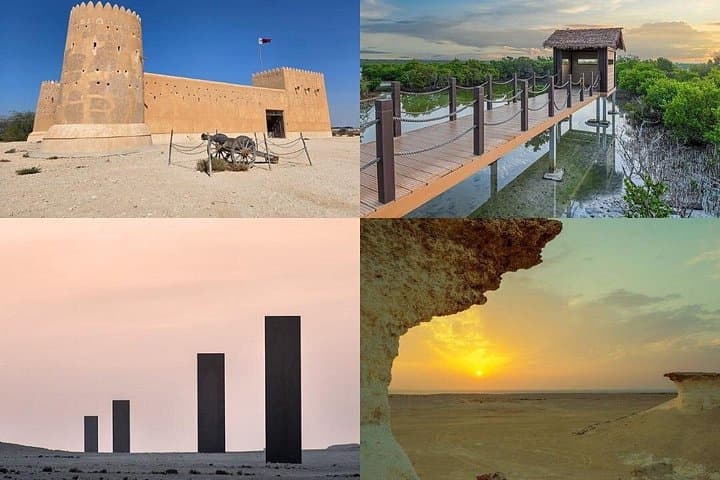
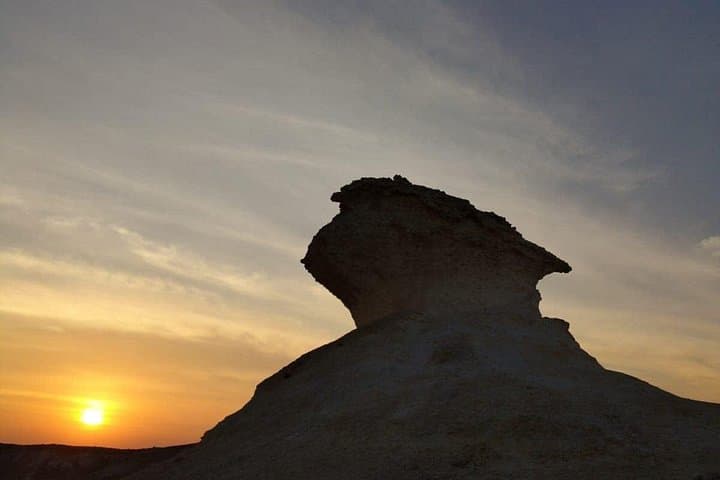
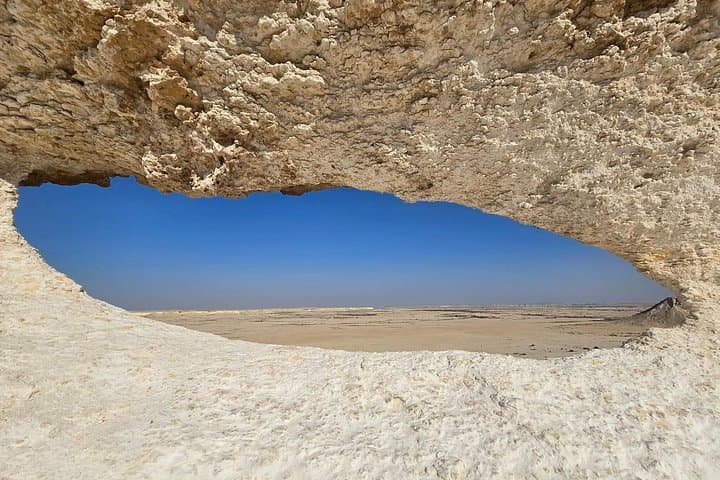
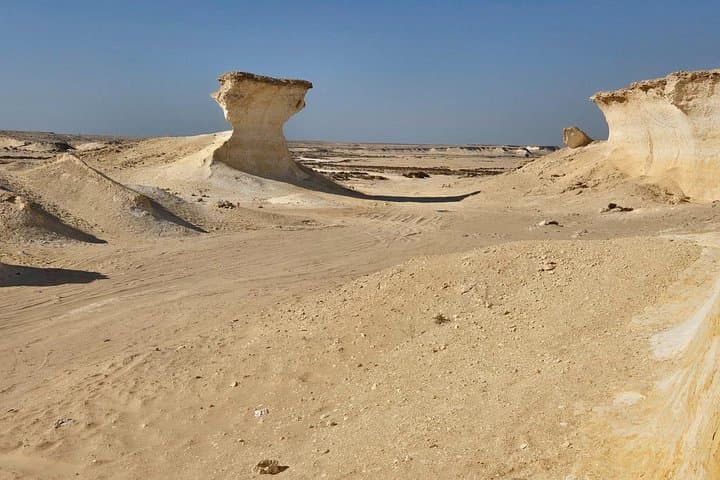
History threads through every stop. Al Khor’s fish market still hums with Gulf trade traditions; Purple Island carries traces of Phoenician-era dye production and dense mangroves that shelter migratory birds. Al Zubarah Fort anchors Qatar’s pearling and trading past as a UNESCO archaeological site, while Al Jumail’s coral-stone houses record a quieter coastal life. Westward, the Zekreet formations and Zekreet Beach expose the Eocene limestone of the Dammam Formation—wind-carved shelves and rounded buttes that make for striking photography.
On the practical side: expect a 7–8 hour loop with mostly flat, short walks (boardwalks and gravel desert tracks), roughly 50 km to Al Khor and about 90 km to Zekreet from Doha. Temperatures can be extreme in summer; the tour provides bottled water and an AC vehicle. Wear closed shoes for rocky sections, bring sun protection, and plan for early starts or late-afternoon light at Zekreet for the best photos. Accessibility is generally good for road stops, but some ruins and sand access require careful footing. This is a full-day primer on Qatar’s coastal ecology, Bedouin culture, and stark desert geology—efficient, immersive, and easy to follow for first-time visitors.
The tour lasts about 7–8 hours with a mix of short guided stops and drive time; most walking is short and low-elevation.
There are basic restroom facilities at major stops and bottled water/tea/coffee are provided; bring snacks for longer stretches.
Yes; the tour is listed as suitable for all fitness levels and provides wheelchair-accessible transport, though some ruins have uneven surfaces.
No special permits are required for general visitor access, but follow site rules at the UNESCO-listed Al Zubarah archaeological area and stay on designated paths.
Desert Ville Adventure operates guided outdoor trips and adventures with an emphasis on safety, stewardship, and memorable experiences.
You step into an air-conditioned vehicle in Doha as the city’s skyline slips behind you and the coast slides into view—mangroves braid the shoreline, then the road angles north toward Al Khor and west toward ancient forts and mushroom-shaped rocks. The day moves at a steady, exploratory pace: short walks, coastal boardwalks, a ruined village, and dramatic limestone cliffs that seem to have been carved by an impatient sea.
You step into an air-conditioned vehicle in Doha as the city’s skyline slips behind you and the coast slides into view—mangroves braid the shoreline, then the road angles north toward Al Khor and west toward ancient forts and mushroom-shaped rocks. The day moves at a steady, exploratory pace: short walks, coastal boardwalks, a ruined village, and dramatic limestone cliffs that seem to have been carved by an impatient sea.
History threads through every stop. Al Khor’s fish market still hums with Gulf trade traditions; Purple Island carries traces of Phoenician-era dye production and dense mangroves that shelter migratory birds. Al Zubarah Fort anchors Qatar’s pearling and trading past as a UNESCO archaeological site, while Al Jumail’s coral-stone houses record a quieter coastal life. Westward, the Zekreet formations and Zekreet Beach expose the Eocene limestone of the Dammam Formation—wind-carved shelves and rounded buttes that make for striking photography.
On the practical side: expect a 7–8 hour loop with mostly flat, short walks (boardwalks and gravel desert tracks), roughly 50 km to Al Khor and about 90 km to Zekreet from Doha. Temperatures can be extreme in summer; the tour provides bottled water and an AC vehicle. Wear closed shoes for rocky sections, bring sun protection, and plan for early starts or late-afternoon light at Zekreet for the best photos. Accessibility is generally good for road stops, but some ruins and sand access require careful footing. This is a full-day primer on Qatar’s coastal ecology, Bedouin culture, and stark desert geology—efficient, immersive, and easy to follow for first-time visitors.