THE ADVENTURE COLLECTIVE® · Independent discovery and booking for outdoor travel

A five-day private overland itinerary through Vietnam’s northern karst and highland roads—Ba Be Lake, Ban Gioc waterfall, Dong Van and Ma Pi Leng—combining boat trips, village homestays and dramatic mountain passes.
A five-day private overland itinerary through Vietnam’s northern karst and highland roads—Ba Be Lake, Ban Gioc waterfall, Dong Van and Ma Pi Leng—combining boat trips, village homestays and dramatic mountain passes.
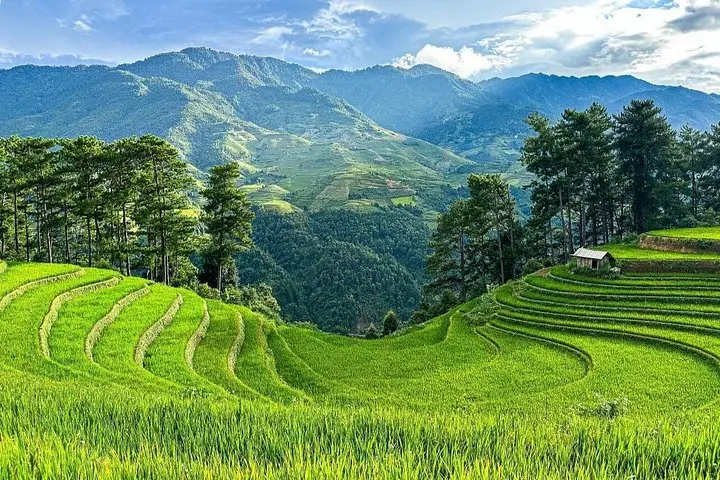
You step out of the air-conditioned car and the mountains take up the rest of the view: steep limestone teeth, a river threading a green vein, and a village where children wave from a low stone wall. This five-day private overland route begins from Hanoi and moves north through Ba Be Lake’s glassy basin, across the long ribbon of road to Cao Bang and Ban Gioc waterfall, then into the ragged karst of Ha Giang where Ma Pi Leng watches over the Nho Que river.
Verified experiences and guided adventures in the surrounding area.
Operated by Vega Travel · Hanoi, Hanoi
You step out of the air-conditioned car and the mountains take up the rest of the view: steep limestone teeth, a river threading a green vein, and a village where children wave from a low stone wall. This five-day private overland route begins from Hanoi and moves north through Ba Be Lake’s glassy basin, across the long ribbon of road to Cao Bang and Ban Gioc waterfall, then into the ragged karst of Ha Giang where Ma Pi Leng watches over the Nho Que river.
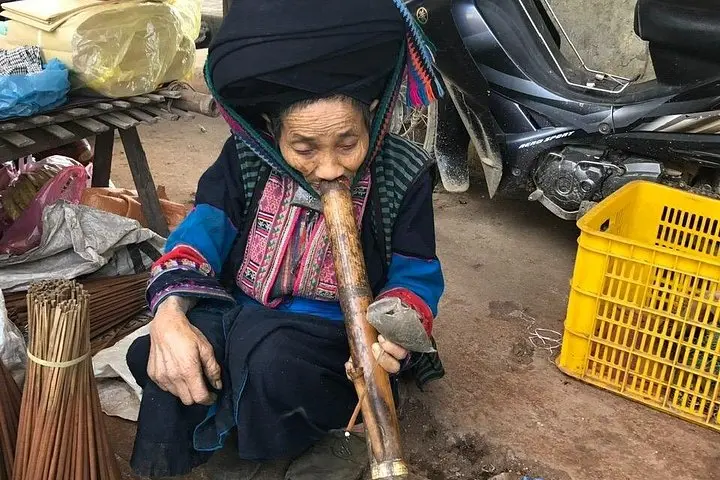
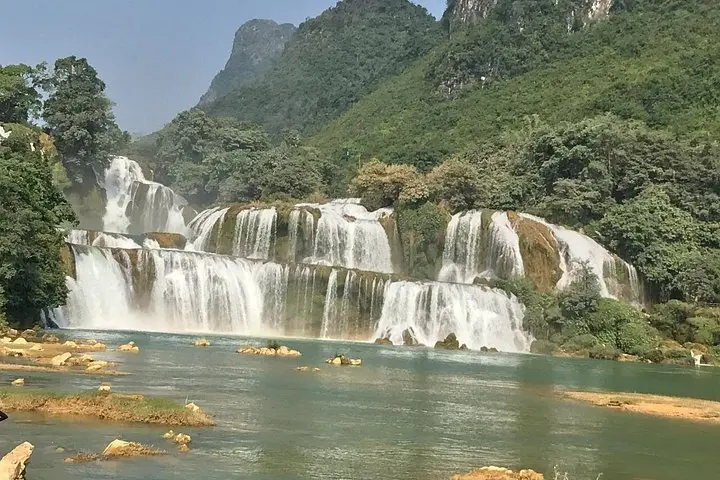
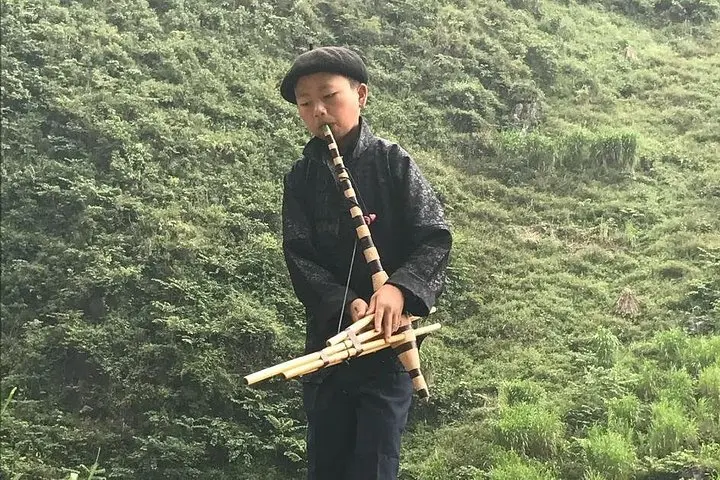
The region mixes recent geopolitics and ancient geology. Ba Be sits in a drowned karst basin carved by underground rivers; Ban Gioc is a multi-tiered limestone cascade that briefly reveals the China border at its edge; Ha Giang’s Dong Van Plateau is part of a UNESCO-recognized karst area shaped over millions of years and threaded with Hmong and Tay cultural sites like the Palace of the H'mong King.
Expect long driving legs (one day includes roughly 160 km between Ba Be and Cao Bang), short village hikes, a motorboat on Ba Be and chances to swim beneath waterfalls. Roads range from good two-lane highways to steep mountain passes with hairpin turns; Ma Pi Leng reaches about 1,200 m and offers expansive views but limited shade. Bring layered clothing for cool mornings and rain, plan for moderate physical activity—walking on uneven village paths and getting in and out of boats—and carry cash for remote stalls. Time photography for mid-morning or late afternoon light; rivers and falls “push” at the landscape, creating the region’s most dramatic scenes.
Most departures begin in Hanoi; the itinerary returns to Hanoi on day five with drop-off at your hotel.
The tour is private and adaptable, but it includes long drives and uneven terrain; it’s not recommended for travelers with serious mobility, spinal or cardiovascular conditions.
No special visa is required beyond your Vietnam entry visa; the tour includes local permits to approach the waterfall viewing areas but crossing the border is not allowed.
The trip includes a mix of homestays in Tay villages, hotels in Cao Bang and Meo Vac, and an eco-resort near Ha Giang; bedding and basic facilities are provided.
Vega Travel operates guided outdoor trips and adventures with an emphasis on safety, stewardship, and memorable experiences.
You step out of the air-conditioned car and the mountains take up the rest of the view: steep limestone teeth, a river threading a green vein, and a village where children wave from a low stone wall. This five-day private overland route begins from Hanoi and moves north through Ba Be Lake’s glassy basin, across the long ribbon of road to Cao Bang and Ban Gioc waterfall, then into the ragged karst of Ha Giang where Ma Pi Leng watches over the Nho Que river.
You step out of the air-conditioned car and the mountains take up the rest of the view: steep limestone teeth, a river threading a green vein, and a village where children wave from a low stone wall. This five-day private overland route begins from Hanoi and moves north through Ba Be Lake’s glassy basin, across the long ribbon of road to Cao Bang and Ban Gioc waterfall, then into the ragged karst of Ha Giang where Ma Pi Leng watches over the Nho Que river.
The region mixes recent geopolitics and ancient geology. Ba Be sits in a drowned karst basin carved by underground rivers; Ban Gioc is a multi-tiered limestone cascade that briefly reveals the China border at its edge; Ha Giang’s Dong Van Plateau is part of a UNESCO-recognized karst area shaped over millions of years and threaded with Hmong and Tay cultural sites like the Palace of the H'mong King.
Expect long driving legs (one day includes roughly 160 km between Ba Be and Cao Bang), short village hikes, a motorboat on Ba Be and chances to swim beneath waterfalls. Roads range from good two-lane highways to steep mountain passes with hairpin turns; Ma Pi Leng reaches about 1,200 m and offers expansive views but limited shade. Bring layered clothing for cool mornings and rain, plan for moderate physical activity—walking on uneven village paths and getting in and out of boats—and carry cash for remote stalls. Time photography for mid-morning or late afternoon light; rivers and falls “push” at the landscape, creating the region’s most dramatic scenes.