THE ADVENTURE COLLECTIVE® · Independent discovery and booking for outdoor travel

Spend a full day exploring northern Bulgaria's dramatic karst landscape: cliff-carved medieval churches, turquoise travertine cascades and a cavernous prehistoric cave. This private tour combines easy walks and short hikes with guided cultural context.
Spend a full day exploring northern Bulgaria's dramatic karst landscape: cliff-carved medieval churches, turquoise travertine cascades and a cavernous prehistoric cave. This private tour combines easy walks and short hikes with guided cultural context.
Dawn finds the limestone cliffs of northern Bulgaria catching the first light, the Rusenski Lom valley unspooling mist beneath carved churches while a river dares you toward moss-green pools.
Verified experiences and guided adventures in the surrounding area.
Operated by Supplier · Lovech, Lovech Province
Dawn finds the limestone cliffs of northern Bulgaria catching the first light, the Rusenski Lom valley unspooling mist beneath carved churches while a river dares you toward moss-green pools.
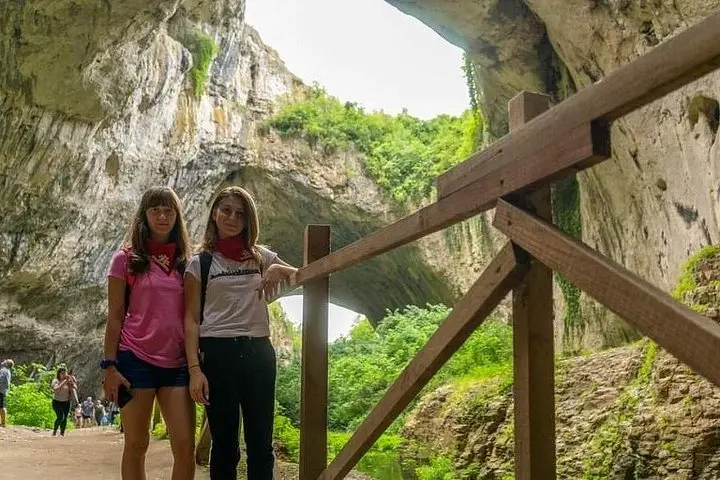
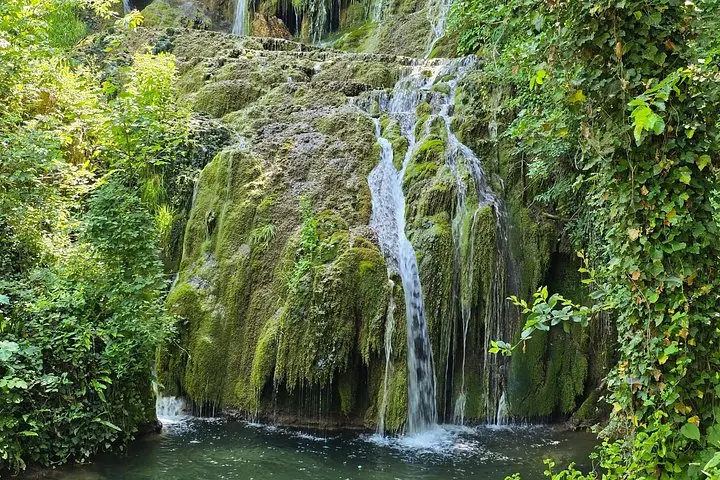
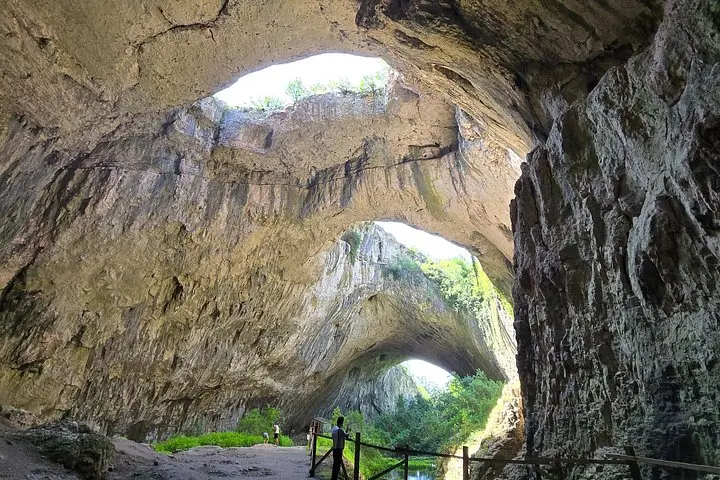
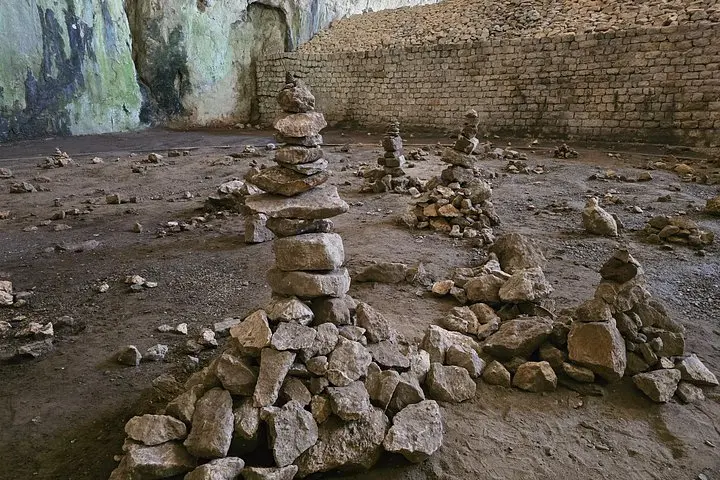
Start at Ivanovo Rock Churches where narrow cliff-face chapels step down to the river; 13th–14th century frescoes survive in sheltered alcoves and reveal the region's medieval Orthodox life. Move inland into karst country: Krushuna Waterfalls pours over travertine terraces, a place where tufa deposits have built natural pools and wooden boardwalks thread through beech and hornbeam forest. The day closes at Devetashka Cave — a cavern with a cathedral-sized mouth and skylights that have sheltered people and wildlife since prehistory.
Geology here is visible at every turn: porous limestone, underground streams and rapid travertine deposition create the turquoise basins at Krushuna and the vast voids of Devetashka. Culturally, the route stitches small villages and monastic remnants, where folk knowledge and Orthodox ritual still shape the landscape.
Practical edge: this is a long, guided day — expect about 10–11 hours on a private, air-conditioned vehicle with shorter on-foot segments. Trails are uneven, sometimes muddy and include stairs and boardwalks; bring grippy shoes, layers, water, and a rain shell. Respect fragile frescoes (no flash) and avoid entering caverns off marked paths — bats and archaeological deposits are protected. Plan for limited services between sites and carry small change for local cafés; start early to beat the buses and capture the best light.
Most guided tours include transport but not always site admission — confirm with your booking; many sites charge modest local fees.
Walks are short but on uneven terrain with steps and boardwalks; a moderate fitness level is recommended.
The cave has large open areas visible from marked paths, but young children should be supervised and not allowed off-trail due to drop-offs and protected wildlife.
If starting in another country (for example Bucharest pickup), carry identification for border checks; within Bulgaria a national ID or passport is advisable.
Supplier operates guided outdoor trips and adventures with an emphasis on safety, stewardship, and memorable experiences.
Dawn finds the limestone cliffs of northern Bulgaria catching the first light, the Rusenski Lom valley unspooling mist beneath carved churches while a river dares you toward moss-green pools.
Dawn finds the limestone cliffs of northern Bulgaria catching the first light, the Rusenski Lom valley unspooling mist beneath carved churches while a river dares you toward moss-green pools.
Start at Ivanovo Rock Churches where narrow cliff-face chapels step down to the river; 13th–14th century frescoes survive in sheltered alcoves and reveal the region's medieval Orthodox life. Move inland into karst country: Krushuna Waterfalls pours over travertine terraces, a place where tufa deposits have built natural pools and wooden boardwalks thread through beech and hornbeam forest. The day closes at Devetashka Cave — a cavern with a cathedral-sized mouth and skylights that have sheltered people and wildlife since prehistory.
Geology here is visible at every turn: porous limestone, underground streams and rapid travertine deposition create the turquoise basins at Krushuna and the vast voids of Devetashka. Culturally, the route stitches small villages and monastic remnants, where folk knowledge and Orthodox ritual still shape the landscape.
Practical edge: this is a long, guided day — expect about 10–11 hours on a private, air-conditioned vehicle with shorter on-foot segments. Trails are uneven, sometimes muddy and include stairs and boardwalks; bring grippy shoes, layers, water, and a rain shell. Respect fragile frescoes (no flash) and avoid entering caverns off marked paths — bats and archaeological deposits are protected. Plan for limited services between sites and carry small change for local cafés; start early to beat the buses and capture the best light.