THE ADVENTURE COLLECTIVE® · Independent discovery and booking for outdoor travel

Leave the city lights and wait with a warm drink as guides scout lakes and ridges for aurora displays. This short minivan expedition in Rovaniemi mixes local knowledge, small-group access, and practical comforts for aurora viewing.
Leave the city lights and wait with a warm drink as guides scout lakes and ridges for aurora displays. This short minivan expedition in Rovaniemi mixes local knowledge, small-group access, and practical comforts for aurora viewing.
A cold wind sharpens the sky as your minivan eases away from Rovaniemi’s sodium glow. Pine silhouettes blur past the window and the guide drops you at a lakeside clearing; a bonfire hisses, hot berry juice steams in your hands, and the northern sky stages its slow performance. The hunt is patient work—darkness, clear air, and the sky’s willingness.
Verified experiences and guided adventures in the surrounding area.
Operated by LAPLAND CAMP · Rovaniemi, Lapland
A cold wind sharpens the sky as your minivan eases away from Rovaniemi’s sodium glow. Pine silhouettes blur past the window and the guide drops you at a lakeside clearing; a bonfire hisses, hot berry juice steams in your hands, and the northern sky stages its slow performance. The hunt is patient work—darkness, clear air, and the sky’s willingness.
Rovaniemi sits on the Arctic Circle where post-glacial geology carved rivers and shallow lakes into a flat, forested landscape. The area has long been home to Sámi and Finnish communities; aurora lore weaves through local stories, and winters have shaped both transport and traditions here. Guides use local knowledge of microclimates—lakes, river valleys, and open ridges—to find clear skies away from city lights.
Practically, expect a 2–3 hour outing by air-conditioned minivan, small groups (up to ~15), and short walks to vantage points by frozen water or open snowfields. Snacks like cookies, sausages, and hot berry juice are common; a fire keeps the group warm while photos are taken. Sightings depend on solar activity and cloud cover—no sighting is guaranteed, and operators sometimes cancel for poor weather. Dress in insulated layers, bring a camera with a tripod and spare batteries, and time your visit between late autumn and early spring for the best odds. If you want clear skies, monitor cloud forecasts and aurora indices before booking. The experience is low-impact but relies on dark skies—keep headlights low, respect private land, and pack out all waste to preserve the fragile Arctic night.
Prime months are late September through April when nights are longest and skies frequently clear; mid-winter offers long dark hours but cold conditions.
No—sightings depend on solar activity and cloud cover; operators may cancel in poor weather and some choose multiple vantage points to improve odds.
Pickup is offered if selected; tours run in shared minivans with up to about 15 guests depending on the operator.
The trip is suitable for most ages, but not recommended for people with serious heart or back problems; infants must sit on laps and infant seats may be available.
LAPLAND CAMP operates guided outdoor trips and adventures with an emphasis on safety, stewardship, and memorable experiences.
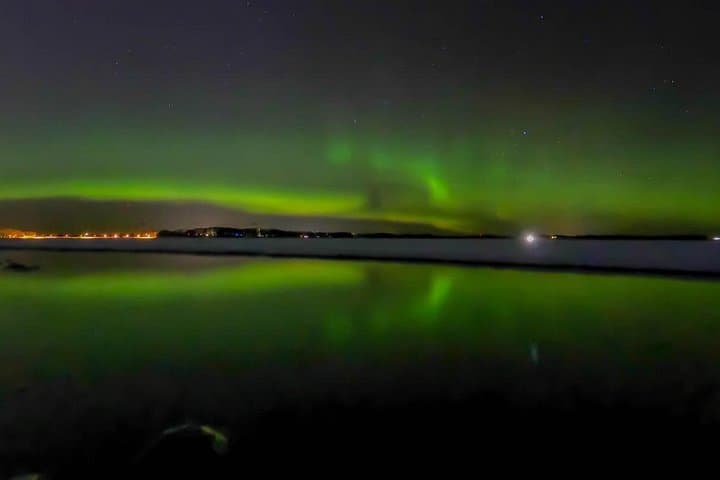


A cold wind sharpens the sky as your minivan eases away from Rovaniemi’s sodium glow. Pine silhouettes blur past the window and the guide drops you at a lakeside clearing; a bonfire hisses, hot berry juice steams in your hands, and the northern sky stages its slow performance. The hunt is patient work—darkness, clear air, and the sky’s willingness.
A cold wind sharpens the sky as your minivan eases away from Rovaniemi’s sodium glow. Pine silhouettes blur past the window and the guide drops you at a lakeside clearing; a bonfire hisses, hot berry juice steams in your hands, and the northern sky stages its slow performance. The hunt is patient work—darkness, clear air, and the sky’s willingness.
Rovaniemi sits on the Arctic Circle where post-glacial geology carved rivers and shallow lakes into a flat, forested landscape. The area has long been home to Sámi and Finnish communities; aurora lore weaves through local stories, and winters have shaped both transport and traditions here. Guides use local knowledge of microclimates—lakes, river valleys, and open ridges—to find clear skies away from city lights.
Practically, expect a 2–3 hour outing by air-conditioned minivan, small groups (up to ~15), and short walks to vantage points by frozen water or open snowfields. Snacks like cookies, sausages, and hot berry juice are common; a fire keeps the group warm while photos are taken. Sightings depend on solar activity and cloud cover—no sighting is guaranteed, and operators sometimes cancel for poor weather. Dress in insulated layers, bring a camera with a tripod and spare batteries, and time your visit between late autumn and early spring for the best odds. If you want clear skies, monitor cloud forecasts and aurora indices before booking. The experience is low-impact but relies on dark skies—keep headlights low, respect private land, and pack out all waste to preserve the fragile Arctic night.