THE ADVENTURE COLLECTIVE® · Independent discovery and booking for outdoor travel

Board a guided hunt from Reykjavik that follows the best forecasts and darkest skies to maximize Northern Lights sightings. Tours run 3–5 hours and include free rebooking if the aurora doesn’t appear.
Board a guided hunt from Reykjavik that follows the best forecasts and darkest skies to maximize Northern Lights sightings. Tours run 3–5 hours and include free rebooking if the aurora doesn’t appear.
A cold Reykjavik evening: the city’s streetlights blur as a small coach slips toward the open coast, headlights cutting through salt-thick air. Passengers settle into heated seats while a guide checks aurora forecasts and satellite maps; the plan is simple — follow clear skies and darkness until the sky answers.
Verified experiences and guided adventures in the surrounding area.
Operated by Gray Line Iceland · Reykjavik, Capital Region
A cold Reykjavik evening: the city’s streetlights blur as a small coach slips toward the open coast, headlights cutting through salt-thick air. Passengers settle into heated seats while a guide checks aurora forecasts and satellite maps; the plan is simple — follow clear skies and darkness until the sky answers.
Iceland’s high latitude and position over an active geomagnetic zone make it one of the most reliable places to see the aurora. Old Norse sagas and farmhouse lore treated the lights as omens and messages; today locals treat them like weather: admired, respected and sometimes stubbornly absent. Geologically, you’re hunting color beneath a landscape shaped by recent volcanism — black lava fields, steaming fumaroles and open fjords that give the sky room to breathe.
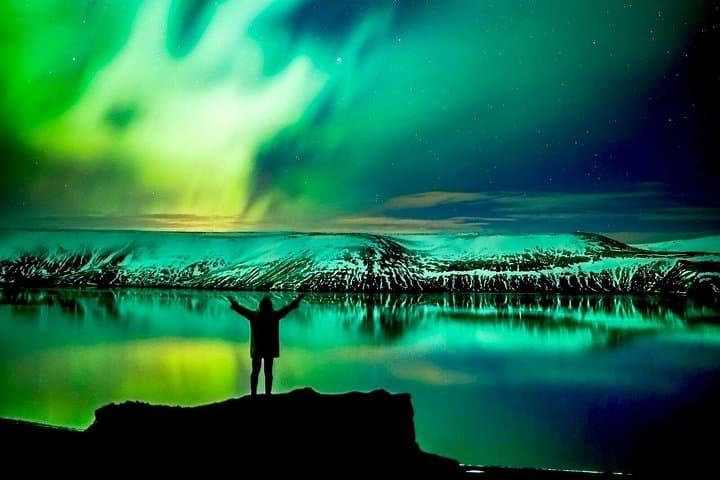
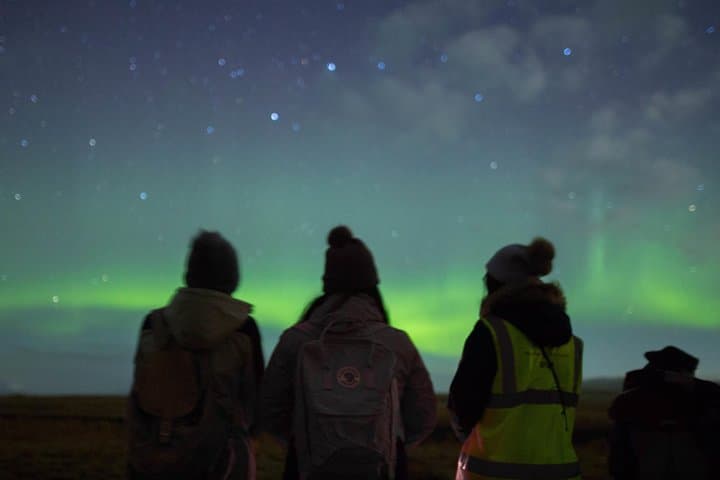
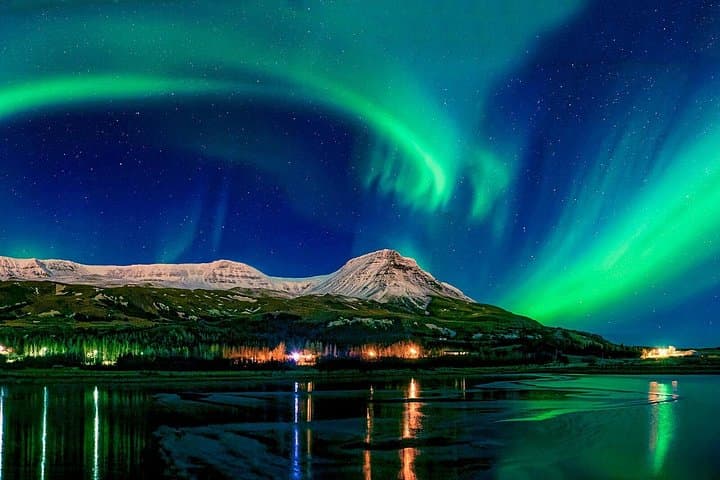
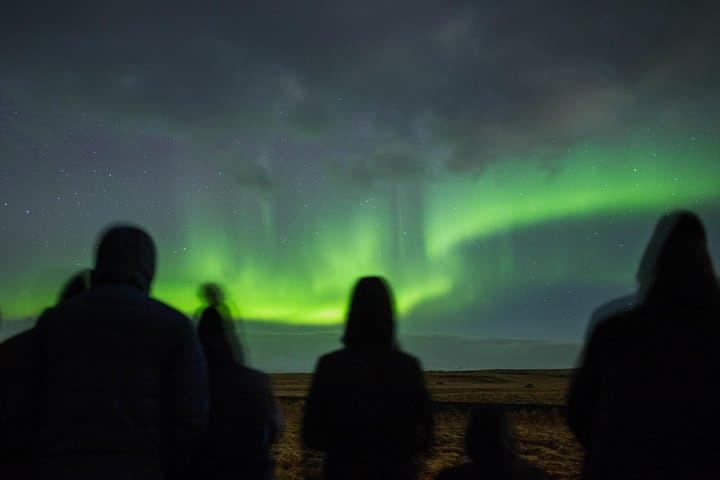
Expect a mobile experience rather than a fixed viewpoint. Guides scan cloud cover and road conditions, heading out of the light-polluted capital toward coastal headlands, lava plains and fjords. Sightings are unpredictable; when the sky erupts, the display can fill the horizon, swirl into curtains and shift from green to pink in minutes.
Practical guidance: dress in layers, bring a tripod for long exposures, and protect batteries from the cold. Tours last roughly 3–5 hours with pickup and drop-off in Reykjavik; company policies often include a free rebook if no aurora appears. Check road conditions, keep a charged phone and arrive well-fed — long nights are part of the reward.
No — the aurora is a natural, variable phenomenon; reputable operators often offer a free rebooking if no lights are seen.
Tours typically depart in the evening and last about 3–5 hours depending on conditions and travel time to dark skies.
Yes for bright displays, but for best results bring a tripod and a camera that allows multi-second exposures and manual ISO control.
If cancelled for weather, most operators refund or allow free rebooking for another evening; check the provider’s cancellation policy at booking.
Gray Line Iceland operates guided outdoor trips and adventures with an emphasis on safety, stewardship, and memorable experiences.
A cold Reykjavik evening: the city’s streetlights blur as a small coach slips toward the open coast, headlights cutting through salt-thick air. Passengers settle into heated seats while a guide checks aurora forecasts and satellite maps; the plan is simple — follow clear skies and darkness until the sky answers.
A cold Reykjavik evening: the city’s streetlights blur as a small coach slips toward the open coast, headlights cutting through salt-thick air. Passengers settle into heated seats while a guide checks aurora forecasts and satellite maps; the plan is simple — follow clear skies and darkness until the sky answers.
Iceland’s high latitude and position over an active geomagnetic zone make it one of the most reliable places to see the aurora. Old Norse sagas and farmhouse lore treated the lights as omens and messages; today locals treat them like weather: admired, respected and sometimes stubbornly absent. Geologically, you’re hunting color beneath a landscape shaped by recent volcanism — black lava fields, steaming fumaroles and open fjords that give the sky room to breathe.
Expect a mobile experience rather than a fixed viewpoint. Guides scan cloud cover and road conditions, heading out of the light-polluted capital toward coastal headlands, lava plains and fjords. Sightings are unpredictable; when the sky erupts, the display can fill the horizon, swirl into curtains and shift from green to pink in minutes.
Practical guidance: dress in layers, bring a tripod for long exposures, and protect batteries from the cold. Tours last roughly 3–5 hours with pickup and drop-off in Reykjavik; company policies often include a free rebook if no aurora appears. Check road conditions, keep a charged phone and arrive well-fed — long nights are part of the reward.