THE ADVENTURE COLLECTIVE® · Independent discovery and booking for outdoor travel

An eight-day circuit from Hanoi to Sapa and Halong Bay that blends night-train travel, valley trekking, ethnic market visits and an overnight karst cruise. Practical routing and local insights help you plan weather, footwear and timing for each active day.
An eight-day circuit from Hanoi to Sapa and Halong Bay that blends night-train travel, valley trekking, ethnic market visits and an overnight karst cruise. Practical routing and local insights help you plan weather, footwear and timing for each active day.
You step out of a taxi into Hanoi’s Old Quarter as the city yawns into day — motorbikes threading lanes like restless rivers, street vendors arranging steam and spice. Within hours you'll be on a night train climbing northwest into rice-terraced highlands, then walking through Muong Hoa Valley where mist and mountain meet.
Verified experiences and guided adventures in the surrounding area.
Operated by Authentic Hanoi Homestay & Travel · Hanoi, Hanoi
You step out of a taxi into Hanoi’s Old Quarter as the city yawns into day — motorbikes threading lanes like restless rivers, street vendors arranging steam and spice. Within hours you'll be on a night train climbing northwest into rice-terraced highlands, then walking through Muong Hoa Valley where mist and mountain meet.
This eight-day loop stitches three very different landscapes. Hanoi’s French-colonial avenues and the Temple of Literature frame the country’s long urban history. In the Northwest, Sapa’s slopes are carved by generations of terrace farming and inhabited by H’Mong and Tay communities whose colorful textiles and markets reflect a living cultural quilt. Geologically, Halong Bay presents a dramatic contrast: karst limestone towers risen from warm emerald water, shaped over millions of years and now dotted with caves and hidden inlets.
Expect a mix of transportation: city transfers, two night trains (Hanoi–Lao Cai roundtrip), shared buses, and an overnight cruise in Halong Bay. Trekking in Sapa includes daily sections of 6–10 km over uneven, sometimes slippery trails with modest elevation change (hundreds of meters across valley routes); footwear and steady footing matter. In Halong, short kayak or sampan excursions and cave walks are the norm.
Practical tips: travel light for night trains, pack quick-dry layers for cool mountain mornings and humid coasts, and carry a small first-aid kit. Timing matters — arrive in Hanoi with a buffer day, and schedule treks for clear-weather windows to see terraces and bay formations at their best.
Most included treks are moderate—6–10 km on uneven ground with gentle ascents/descents; trails can be slippery after rain so allow extra time.
A valid passport is required; visa rules depend on nationality—check Vietnam’s entry requirements before travel.
Accommodations are a mix of 3–4 star hotels in Hanoi and Sapa and a private cabin on a 3–4 star Halong cruise, with meals as specified in the itinerary.
Children can join if accompanied by adults; some walking sections may challenge very young kids and night trains are less comfortable for toddlers.
Authentic Hanoi Homestay & Travel operates guided outdoor trips and adventures with an emphasis on safety, stewardship, and memorable experiences.
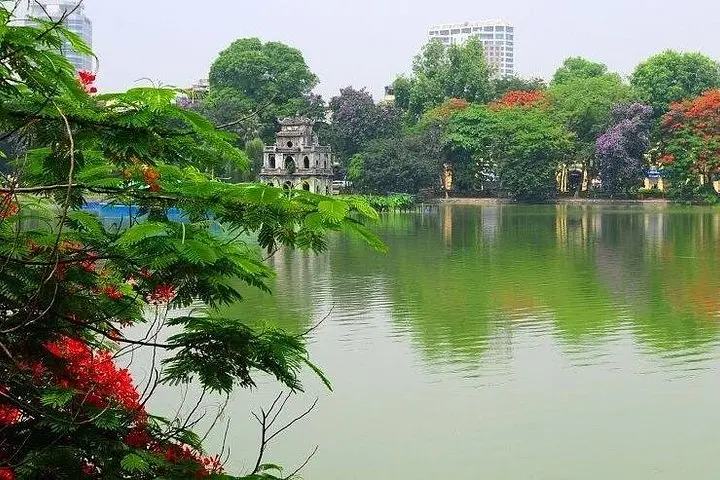


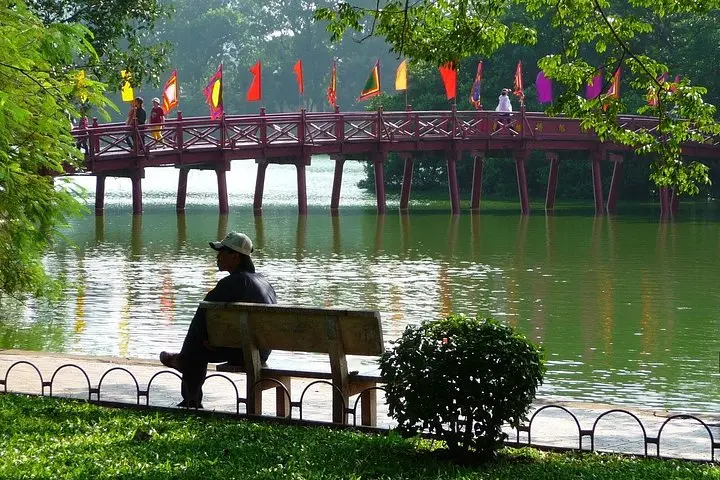
You step out of a taxi into Hanoi’s Old Quarter as the city yawns into day — motorbikes threading lanes like restless rivers, street vendors arranging steam and spice. Within hours you'll be on a night train climbing northwest into rice-terraced highlands, then walking through Muong Hoa Valley where mist and mountain meet.
You step out of a taxi into Hanoi’s Old Quarter as the city yawns into day — motorbikes threading lanes like restless rivers, street vendors arranging steam and spice. Within hours you'll be on a night train climbing northwest into rice-terraced highlands, then walking through Muong Hoa Valley where mist and mountain meet.
This eight-day loop stitches three very different landscapes. Hanoi’s French-colonial avenues and the Temple of Literature frame the country’s long urban history. In the Northwest, Sapa’s slopes are carved by generations of terrace farming and inhabited by H’Mong and Tay communities whose colorful textiles and markets reflect a living cultural quilt. Geologically, Halong Bay presents a dramatic contrast: karst limestone towers risen from warm emerald water, shaped over millions of years and now dotted with caves and hidden inlets.
Expect a mix of transportation: city transfers, two night trains (Hanoi–Lao Cai roundtrip), shared buses, and an overnight cruise in Halong Bay. Trekking in Sapa includes daily sections of 6–10 km over uneven, sometimes slippery trails with modest elevation change (hundreds of meters across valley routes); footwear and steady footing matter. In Halong, short kayak or sampan excursions and cave walks are the norm.
Practical tips: travel light for night trains, pack quick-dry layers for cool mountain mornings and humid coasts, and carry a small first-aid kit. Timing matters — arrive in Hanoi with a buffer day, and schedule treks for clear-weather windows to see terraces and bay formations at their best.