THE ADVENTURE COLLECTIVE® · Independent discovery and booking for outdoor travel

Spend a day on Nusa Penida learning coral biology, planting fragments by hand and snorkeling reef nurseries. This community-run course pairs hands-on restoration with three guided snorkels and a local cultural exchange.
Spend a day on Nusa Penida learning coral biology, planting fragments by hand and snorkeling reef nurseries. This community-run course pairs hands-on restoration with three guided snorkels and a local cultural exchange.
A warm morning breeze pushes across the boat as you slip into saltwater and peer down at a patchwork of nursery frames bobbing just below the surface. The reef here is active — not pristine, but alive with color where volunteers have reattached coral fragments and where juvenile fish dart through tethered branches. Local guides brief the group, point to growth patterns, then lead you to the nursery where you’ll harvest fragments and plant them by hand.
Verified experiences and guided adventures in the surrounding area.
Operated by Ecotourism Nusa Penida · Nusa Penida, Bali
A warm morning breeze pushes across the boat as you slip into saltwater and peer down at a patchwork of nursery frames bobbing just below the surface. The reef here is active — not pristine, but alive with color where volunteers have reattached coral fragments and where juvenile fish dart through tethered branches. Local guides brief the group, point to growth patterns, then lead you to the nursery where you’ll harvest fragments and plant them by hand.
Bali’s offshore islands sit on volcanic foundations with steep drop-offs that shape powerful currents and rich, nutrient-driven reefs. Nusa Penida’s coastline has suffered mass bleaching in the last two decades; community-led coral gardening has become a practical response, combining simple rope-and-frame techniques with reef biology basics. Culturally, island conservation is social: Saturdays often include school visits and beach cleanups, linking restoration work to local education.
Expect three guided snorkels, hands-on planting of roughly 70 corals per participant, and a classroom-style presentation on coral biology and ocean conditions. The terrain is oceanic—sun, wind and chop—so swimmers should be comfortable in open water and aware of shifting currents. Practical tips: hydrate before you go, apply reef-safe sunscreen, and follow guides when handling fragments to reduce stress on corals. Lunch at the Coral Cafe and a knot-tying session round out the day, leaving you with both skills and a measurable impact: about 4 m² of reef restored per person. This is a participatory conservation trip—bring curiosity, basic snorkeling competence, and respect for local practices.
Yes—you should be able to swim comfortably and snorkel independently; guides provide support but do not conduct basic swim lessons.
Participants typically plant about 70 coral fragments, equating to roughly 4 square meters of restored reef per person.
No formal certification is required; however, moderate fitness and basic snorkeling skills are necessary for safety and effectiveness.
The program uses community-run nurseries, manual fragment planting, reef-safe materials and educational outreach with local schools to minimize ecological impact.
Ecotourism Nusa Penida operates guided outdoor trips and adventures with an emphasis on safety, stewardship, and memorable experiences.
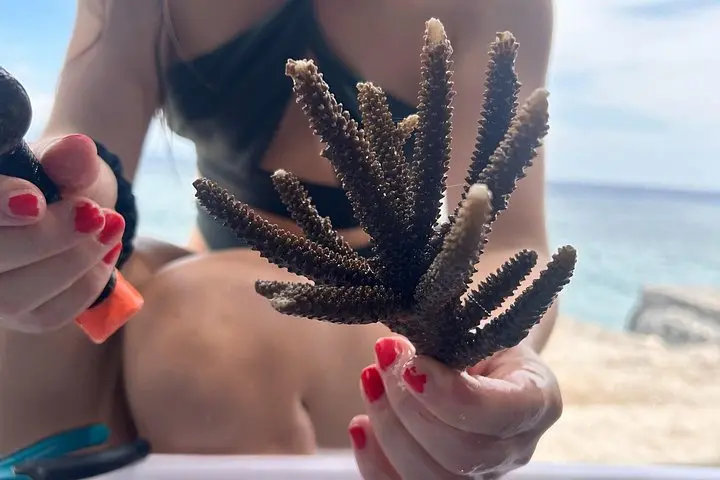
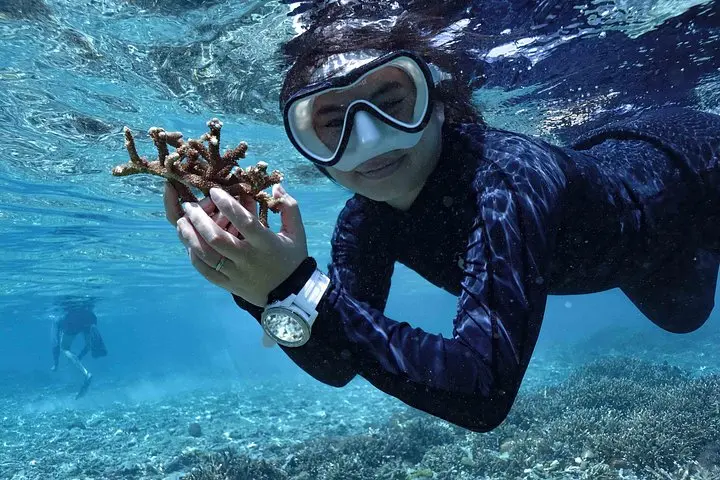
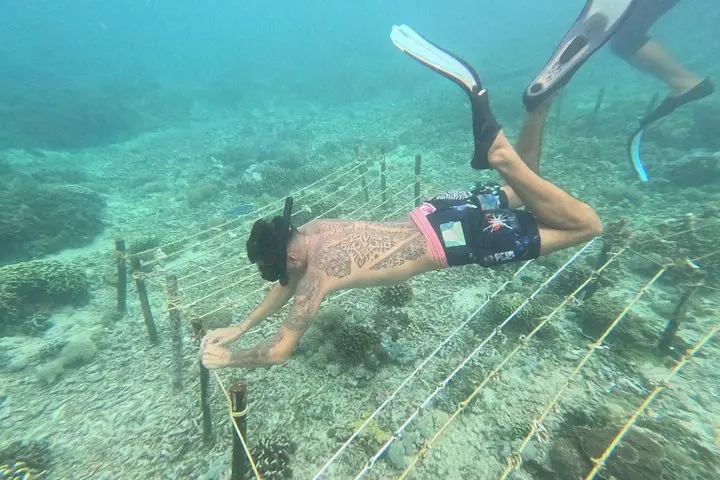
A warm morning breeze pushes across the boat as you slip into saltwater and peer down at a patchwork of nursery frames bobbing just below the surface. The reef here is active — not pristine, but alive with color where volunteers have reattached coral fragments and where juvenile fish dart through tethered branches. Local guides brief the group, point to growth patterns, then lead you to the nursery where you’ll harvest fragments and plant them by hand.
A warm morning breeze pushes across the boat as you slip into saltwater and peer down at a patchwork of nursery frames bobbing just below the surface. The reef here is active — not pristine, but alive with color where volunteers have reattached coral fragments and where juvenile fish dart through tethered branches. Local guides brief the group, point to growth patterns, then lead you to the nursery where you’ll harvest fragments and plant them by hand.
Bali’s offshore islands sit on volcanic foundations with steep drop-offs that shape powerful currents and rich, nutrient-driven reefs. Nusa Penida’s coastline has suffered mass bleaching in the last two decades; community-led coral gardening has become a practical response, combining simple rope-and-frame techniques with reef biology basics. Culturally, island conservation is social: Saturdays often include school visits and beach cleanups, linking restoration work to local education.
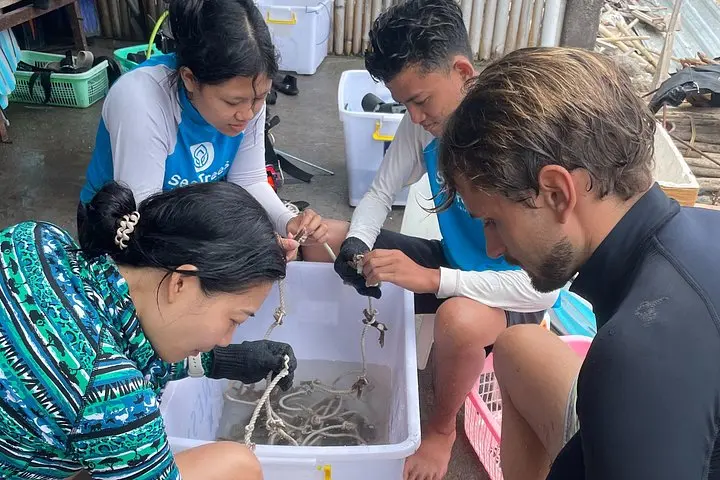
Expect three guided snorkels, hands-on planting of roughly 70 corals per participant, and a classroom-style presentation on coral biology and ocean conditions. The terrain is oceanic—sun, wind and chop—so swimmers should be comfortable in open water and aware of shifting currents. Practical tips: hydrate before you go, apply reef-safe sunscreen, and follow guides when handling fragments to reduce stress on corals. Lunch at the Coral Cafe and a knot-tying session round out the day, leaving you with both skills and a measurable impact: about 4 m² of reef restored per person. This is a participatory conservation trip—bring curiosity, basic snorkeling competence, and respect for local practices.