THE ADVENTURE COLLECTIVE® · Independent discovery and booking for outdoor travel

Spend three days trekking to Mount Nyiragongo’s crater rim and peer into one of the planet’s largest lava lakes. This physically demanding hike combines forest trails, steep volcanic scree and a summit experience defined by heat, gas and raw geology.
Spend three days trekking to Mount Nyiragongo’s crater rim and peer into one of the planet’s largest lava lakes. This physically demanding hike combines forest trails, steep volcanic scree and a summit experience defined by heat, gas and raw geology.
You arrive at dusk on the broad plain near Goma and the mountain looms, a charcoal cone rising over the city. The forested lower slopes swallow sound and then, at higher elevations, the trees fall away to sharp volcanic scree; at the rim the world is reduced to heat, gas, and a boiling lake of lava that pushes and sighs like a living thing.
Verified experiences and guided adventures in the surrounding area.
Operated by Kwafrika Travel · Goma, North Kivu
You arrive at dusk on the broad plain near Goma and the mountain looms, a charcoal cone rising over the city. The forested lower slopes swallow sound and then, at higher elevations, the trees fall away to sharp volcanic scree; at the rim the world is reduced to heat, gas, and a boiling lake of lava that pushes and sighs like a living thing.
Nyiragongo sits on the Albertine Rift and reaches approximately 3,470 m above sea level. Geologically it’s a fast-erupting, low-silica stratovolcano whose central lava lake is one of the few persistent molten surfaces on Earth. Human history here is tightly wound with regional trade routes and, more recently, with scientific monitoring and park-based tourism centered in North Kivu. The lower forest supports chimpanzees, monkeys and bushbuck; cultural life in nearby Goma is shaped by cross-border commerce with Rwanda and resilient local communities.
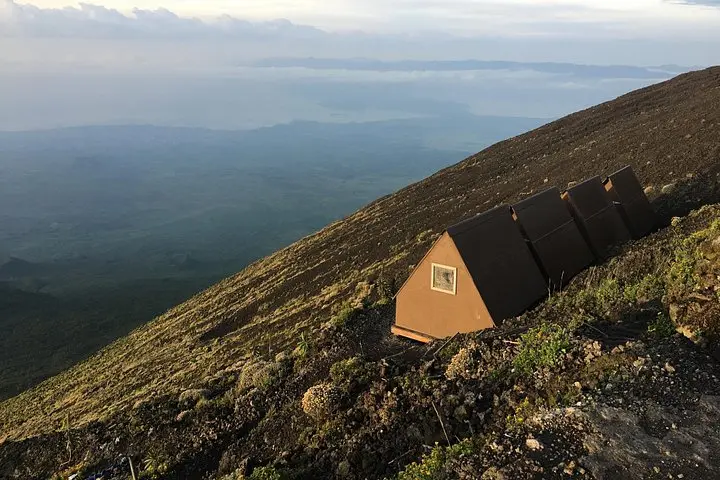
Practically, the trek is a steep ascent of roughly 6–8 km to the crater rim with about 1,000–1,300 m of elevation gain depending on the trailhead; expect loose volcanic scree, muddy trails in wet seasons and cold winds at the summit. Tours include permits and usually two nights’ accommodation; many itineraries collect from Kigali and transfer across the border to Goma. Bring a headlamp for the night hike, layer for temperature swings, pace the climb to avoid altitude sickness, and follow guides closely—trail markers can be faint. The crater rim offers raw, elemental views; listen for the lake’s popping and keep a respectful distance. This is a demanding, unforgettable mountain experience best suited to fit, prepared hikers.
Yes—this itinerary notes Congolese visa fees are required and typically handled or advised by the operator; confirm current visa rules well before travel.
The hike is strenuous with 1,000–1,300 m of gain and loose scree; it suits fit hikers with previous mountain trekking experience rather than casual walkers.
Guides and park permits manage safe viewpoints; remain on marked areas—the crater edge is unstable and hot gases are present.
On lower forested slopes you may spot monkeys, birds and occasionally signs of chimpanzee activity; larger mammals are more reclusive.
Kwafrika Travel operates guided outdoor trips and adventures with an emphasis on safety, stewardship, and memorable experiences.
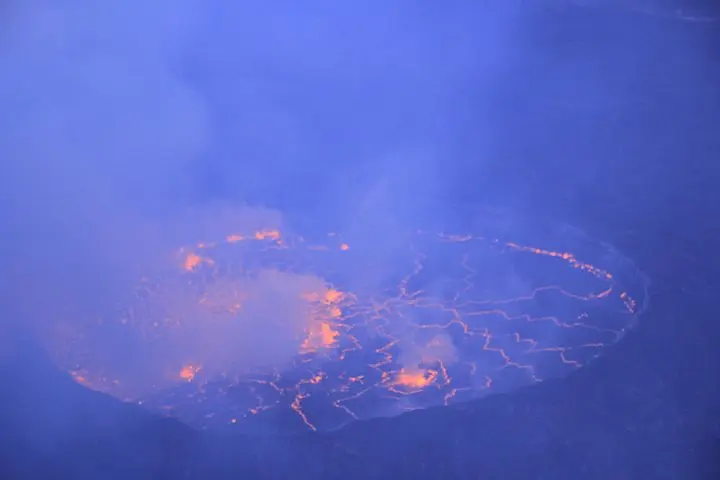

You arrive at dusk on the broad plain near Goma and the mountain looms, a charcoal cone rising over the city. The forested lower slopes swallow sound and then, at higher elevations, the trees fall away to sharp volcanic scree; at the rim the world is reduced to heat, gas, and a boiling lake of lava that pushes and sighs like a living thing.
You arrive at dusk on the broad plain near Goma and the mountain looms, a charcoal cone rising over the city. The forested lower slopes swallow sound and then, at higher elevations, the trees fall away to sharp volcanic scree; at the rim the world is reduced to heat, gas, and a boiling lake of lava that pushes and sighs like a living thing.
Nyiragongo sits on the Albertine Rift and reaches approximately 3,470 m above sea level. Geologically it’s a fast-erupting, low-silica stratovolcano whose central lava lake is one of the few persistent molten surfaces on Earth. Human history here is tightly wound with regional trade routes and, more recently, with scientific monitoring and park-based tourism centered in North Kivu. The lower forest supports chimpanzees, monkeys and bushbuck; cultural life in nearby Goma is shaped by cross-border commerce with Rwanda and resilient local communities.
Practically, the trek is a steep ascent of roughly 6–8 km to the crater rim with about 1,000–1,300 m of elevation gain depending on the trailhead; expect loose volcanic scree, muddy trails in wet seasons and cold winds at the summit. Tours include permits and usually two nights’ accommodation; many itineraries collect from Kigali and transfer across the border to Goma. Bring a headlamp for the night hike, layer for temperature swings, pace the climb to avoid altitude sickness, and follow guides closely—trail markers can be faint. The crater rim offers raw, elemental views; listen for the lake’s popping and keep a respectful distance. This is a demanding, unforgettable mountain experience best suited to fit, prepared hikers.