THE ADVENTURE COLLECTIVE® · Independent discovery and booking for outdoor travel

Two days in Nyungwe combine a vertigo-tinged canopy walk with guided chimpanzee trekking through one of Africa’s largest montane rainforests. Expect wet trails, early starts, and a deeply immersive wildlife experience led by local guides.
Two days in Nyungwe combine a vertigo-tinged canopy walk with guided chimpanzee trekking through one of Africa’s largest montane rainforests. Expect wet trails, early starts, and a deeply immersive wildlife experience led by local guides.
Morning mist hangs in the trees as visitors step onto the cantilevered planks of Nyungwe’s canopy walkway; the forest breathes beneath their feet and the ravine opens like a living map. On day one the walkway offers a treetop vantage that places you amid ancient branches and flitting birds, the understory a dim, humming world far below.
Verified experiences and guided adventures in the surrounding area.
Operated by Judith Safaris · Huye, Southern Province
Morning mist hangs in the trees as visitors step onto the cantilevered planks of Nyungwe’s canopy walkway; the forest breathes beneath their feet and the ravine opens like a living map. On day one the walkway offers a treetop vantage that places you amid ancient branches and flitting birds, the understory a dim, humming world far below.
Nyungwe National Park is one of Africa’s largest montane rainforests, protected since the early 2000s and carved by volcanic soils and highland rains. Its logged-free slopes host endemic plants and a complex canopy structure shaped by millennia of mountain weather. The area around Gisakura and Uwinka reflects both local Kinyarwandan culture and a history of conservation that balances tea estates, small villages, and protected forest.
Expect practical realities: the canopy walk is secured with railings but can sway; chimpanzee trekking on day two means moving quietly on narrow, sometimes steep trails as guides track signs — broken branches, fresh nests, calls — but sightings are never guaranteed. The forest is wet and shaded; light changes quickly, and terrain can be slippery after rain.
Plan for full days: start early for best wildlife chances, bring layered waterproofs, sturdy boots, and a small daypack with water and snacks. Use local guides for tracking and respect the 7-meter rule around primates. Hydrate, protect against insects, and leave no trace — Nyungwe responds best to low-impact visitors. With preparation, these two days deliver a vivid, tactile encounter with Rwanda’s highland rainforest.
Sightings are possible but not guaranteed; skilled local trackers improve odds, and early-morning treks increase the chance of encounters.
The walkway is secured with railings and maintained regularly, but it can sway and exposes you to significant height—consider personal comfort with exposure before joining.
Bring routine travel vaccinations and consult health advice for Rwanda; the tour operator typically handles park permits as part of the booking.
Children can join but suitability depends on age and ability to stay quiet and walk for hours; confirm age limits with the operator and local guides.
Judith Safaris operates guided outdoor trips and adventures with an emphasis on safety, stewardship, and memorable experiences.
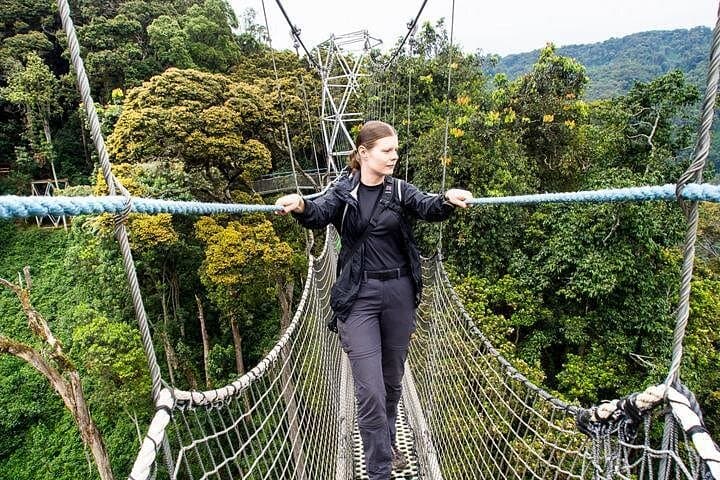


Morning mist hangs in the trees as visitors step onto the cantilevered planks of Nyungwe’s canopy walkway; the forest breathes beneath their feet and the ravine opens like a living map. On day one the walkway offers a treetop vantage that places you amid ancient branches and flitting birds, the understory a dim, humming world far below.
Morning mist hangs in the trees as visitors step onto the cantilevered planks of Nyungwe’s canopy walkway; the forest breathes beneath their feet and the ravine opens like a living map. On day one the walkway offers a treetop vantage that places you amid ancient branches and flitting birds, the understory a dim, humming world far below.
Nyungwe National Park is one of Africa’s largest montane rainforests, protected since the early 2000s and carved by volcanic soils and highland rains. Its logged-free slopes host endemic plants and a complex canopy structure shaped by millennia of mountain weather. The area around Gisakura and Uwinka reflects both local Kinyarwandan culture and a history of conservation that balances tea estates, small villages, and protected forest.
Expect practical realities: the canopy walk is secured with railings but can sway; chimpanzee trekking on day two means moving quietly on narrow, sometimes steep trails as guides track signs — broken branches, fresh nests, calls — but sightings are never guaranteed. The forest is wet and shaded; light changes quickly, and terrain can be slippery after rain.
Plan for full days: start early for best wildlife chances, bring layered waterproofs, sturdy boots, and a small daypack with water and snacks. Use local guides for tracking and respect the 7-meter rule around primates. Hydrate, protect against insects, and leave no trace — Nyungwe responds best to low-impact visitors. With preparation, these two days deliver a vivid, tactile encounter with Rwanda’s highland rainforest.