THE ADVENTURE COLLECTIVE® · Independent discovery and booking for outdoor travel

Trade city hum for spray and rope on a guided waterfall-rappelling adventure above Honolulu. Hike through Palolo Valley’s rainforest to Kaʻau Falls, then descend through cool plumes with expert instruction and full technical gear.
Trade city hum for spray and rope on a guided waterfall-rappelling adventure above Honolulu. Hike through Palolo Valley’s rainforest to Kaʻau Falls, then descend through cool plumes with expert instruction and full technical gear.
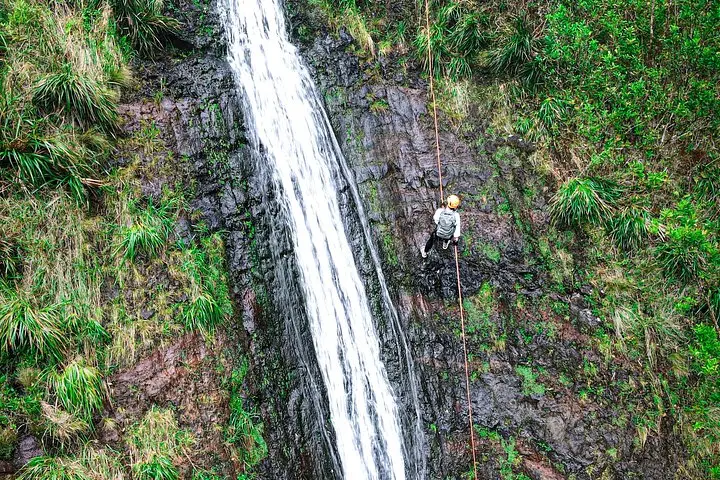
The pavement ends in Palolo Valley and the forest takes over—wet leaves shine, ginger brushes your calves, and a stream chatters as if daring you upstream. The trail to Kaʻau Falls climbs quickly, braided with roots and damp rock, trading city hum for the rush of water. Your guide moves with the patience of the valley, pointing out ʻōhiʻa and strawberry guava, tracing the line of this watershed from mist to ocean. By the time the first cascade appears, white and insistent, the canyon’s cool breath is on your face and the rope is waiting.
Verified experiences and guided adventures in the surrounding area.
Operated by Caleb · Honolulu, Hawaii
The pavement ends in Palolo Valley and the forest takes over—wet leaves shine, ginger brushes your calves, and a stream chatters as if daring you upstream. The trail to Kaʻau Falls climbs quickly, braided with roots and damp rock, trading city hum for the rush of water. Your guide moves with the patience of the valley, pointing out ʻōhiʻa and strawberry guava, tracing the line of this watershed from mist to ocean. By the time the first cascade appears, white and insistent, the canyon’s cool breath is on your face and the rope is waiting.
This experience blends a classic Oʻahu jungle hike with full-value waterfall rappelling—a canyoning day that threads into the bones of the Koʻolau Range. Kaʻau Crater sits high in the eroded ramparts of the ancient Koʻolau volcano, a basin etched by time and rain. Below, Palolo’s historic loʻi kalo (taro terraces) once fed families along an ahupuaʻa that ran ridge to reef. Up here, the falls do the talking. Basalt ledges shine with spray, ferns cling like acrobats, and the current presses forward with a steady push.
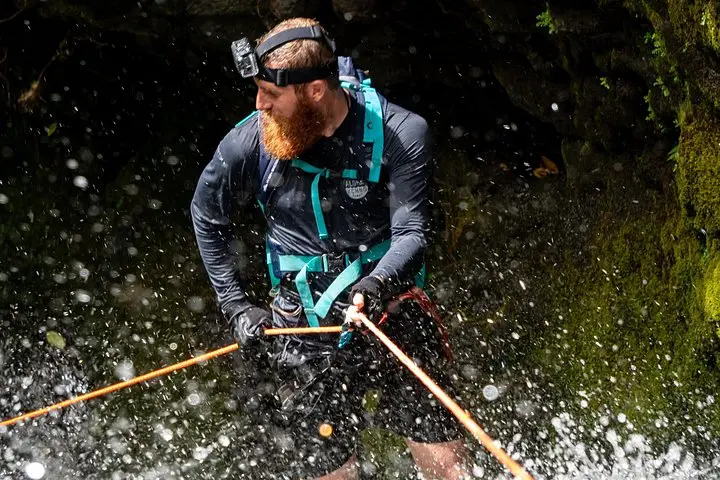
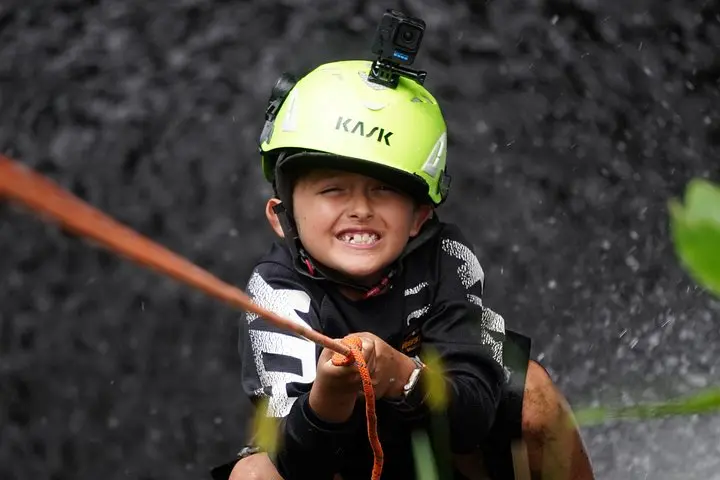
Guides fit you with helmet, harness, gloves, and the hardware that turns a vertical sheet of water into a controlled descent. A thorough ground school covers stance, friction, and communication—enough to make first-timers feel steady while giving experienced climbers a clean system. Step over the lip and the world narrows to breath, grip, and the cool slap of the cascade. The rope hums. The waterfall urges you downward. You touch in on mossy steps, weight the line again, and ease farther into the roar.
Expect a half-day outing—roughly 4.5–5.5 hours including approach, instruction, rappels, and the hike out. The approach typically runs 2–3 miles round-trip with 800–1,000 feet of gain, steep in places, with stream crossings and sections of slick clay. It’s humid, often muddy, and beautiful the whole way. The crew supplies technical gear, water, and snacks; you bring sturdy closed-toe shoes with real traction, quick-dry layers, and a small pack. On Oʻahu, weather shifts fast: light showers are common and keep the forest green, but guides monitor flow and will reschedule if conditions spike.
Between drops, there’s time to learn the forest’s story—the ʻōpae in the pools, the honeycreepers that flash through the canopy, the way rain written on the ridges becomes the streams below. Back at the trailhead, legs tired and ears still full of water, Honolulu feels both close and strangely far away. This is a different angle on the island—one most visitors never see, where gravity, granite, and water all have their say, and you get to answer back on rope.
Yes. Guides provide a full safety briefing and on-rope coaching; no prior rappelling experience is required, but comfort with heights and uneven terrain helps.
Plan on roughly 2–3 miles round-trip with 800–1,000 feet of elevation gain, including steep, muddy sections and stream crossings.
Light showers are normal and tours often run; if water levels or lightning create unsafe conditions, your guide will postpone or reschedule.
Quick-dry clothing, closed-toe shoes with grip, a small daypack, 1.5–2 liters of water, and insect repellent. Technical gear, snacks, and helmets are provided.
Yes, but protect it in a waterproof pouch. Guides can capture photos and video on request so you can focus on the rappel.
It’s not recommended due to variable flows, slippery rocks, and potential leptospirosis exposure—enjoy the water from the rope and shore.
Caleb operates guided outdoor trips and adventures with an emphasis on safety, stewardship, and memorable experiences.
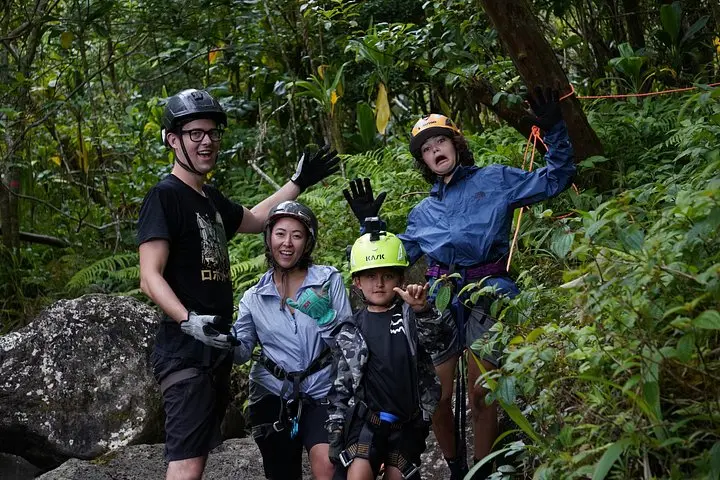
The pavement ends in Palolo Valley and the forest takes over—wet leaves shine, ginger brushes your calves, and a stream chatters as if daring you upstream. The trail to Kaʻau Falls climbs quickly, braided with roots and damp rock, trading city hum for the rush of water. Your guide moves with the patience of the valley, pointing out ʻōhiʻa and strawberry guava, tracing the line of this watershed from mist to ocean. By the time the first cascade appears, white and insistent, the canyon’s cool breath is on your face and the rope is waiting.
The pavement ends in Palolo Valley and the forest takes over—wet leaves shine, ginger brushes your calves, and a stream chatters as if daring you upstream. The trail to Kaʻau Falls climbs quickly, braided with roots and damp rock, trading city hum for the rush of water. Your guide moves with the patience of the valley, pointing out ʻōhiʻa and strawberry guava, tracing the line of this watershed from mist to ocean. By the time the first cascade appears, white and insistent, the canyon’s cool breath is on your face and the rope is waiting.
This experience blends a classic Oʻahu jungle hike with full-value waterfall rappelling—a canyoning day that threads into the bones of the Koʻolau Range. Kaʻau Crater sits high in the eroded ramparts of the ancient Koʻolau volcano, a basin etched by time and rain. Below, Palolo’s historic loʻi kalo (taro terraces) once fed families along an ahupuaʻa that ran ridge to reef. Up here, the falls do the talking. Basalt ledges shine with spray, ferns cling like acrobats, and the current presses forward with a steady push.
Guides fit you with helmet, harness, gloves, and the hardware that turns a vertical sheet of water into a controlled descent. A thorough ground school covers stance, friction, and communication—enough to make first-timers feel steady while giving experienced climbers a clean system. Step over the lip and the world narrows to breath, grip, and the cool slap of the cascade. The rope hums. The waterfall urges you downward. You touch in on mossy steps, weight the line again, and ease farther into the roar.
Expect a half-day outing—roughly 4.5–5.5 hours including approach, instruction, rappels, and the hike out. The approach typically runs 2–3 miles round-trip with 800–1,000 feet of gain, steep in places, with stream crossings and sections of slick clay. It’s humid, often muddy, and beautiful the whole way. The crew supplies technical gear, water, and snacks; you bring sturdy closed-toe shoes with real traction, quick-dry layers, and a small pack. On Oʻahu, weather shifts fast: light showers are common and keep the forest green, but guides monitor flow and will reschedule if conditions spike.
Between drops, there’s time to learn the forest’s story—the ʻōpae in the pools, the honeycreepers that flash through the canopy, the way rain written on the ridges becomes the streams below. Back at the trailhead, legs tired and ears still full of water, Honolulu feels both close and strangely far away. This is a different angle on the island—one most visitors never see, where gravity, granite, and water all have their say, and you get to answer back on rope.