THE ADVENTURE COLLECTIVE® · Independent discovery and booking for outdoor travel

Walk through central London’s lesser-seen corners where Victorian occultism, Egyptian revivalism and fraternal orders left visible marks. This three-hour tour combines historical context with on-the-ground exploration of lodges, bookshops and legendary streets.
Walk through central London’s lesser-seen corners where Victorian occultism, Egyptian revivalism and fraternal orders left visible marks. This three-hour tour combines historical context with on-the-ground exploration of lodges, bookshops and legendary streets.
A late-afternoon drizzle glosses the stone facades around St James’s Palace as the guide gathers the small group, maps and ledger-like book covers in hand. The city’s public square becomes a theatre of coded symbols: an obelisk casting a long shadow, a lion statue that watched centuries of rumor, and narrow alleys that still keep their secrets.
Verified experiences and guided adventures in the surrounding area.
Operated by Pigeon Tours · London, Greater London
A late-afternoon drizzle glosses the stone facades around St James’s Palace as the guide gathers the small group, maps and ledger-like book covers in hand. The city’s public square becomes a theatre of coded symbols: an obelisk casting a long shadow, a lion statue that watched centuries of rumor, and narrow alleys that still keep their secrets.
This three-hour walking tour threads sites tied to Victorian esoterica, Egyptian revivalism and the emergence of fraternal orders. Visitors pass the British Museum’s Egyptian collections and learn how 19th-century Londoners translated hieroglyphs into ritual language, then step through Pall Mall where lodges and reading rooms fostered groups like the Hermetic Order of the Golden Dawn and Freemasonry. The itinerary touches on figures such as Aleister Crowley and the French occultist Éliphas Lévi, and points out historic bookshops that sold grimoires and arcane pamphlets.
Practical guidance is direct: expect 2–3 miles of mostly paved walking, intermittent stairs and tight pavements—moderate fitness serves best. Wear sturdy shoes for cobbles, layer for wind off the Thames, and bring a portable umbrella; tours run rain or shine. Photography is generally permitted on exteriors but respect private entrances and signs; some interiors may remain off-limits.
This is an urban archaeology of belief—architecture, public art and hidden corners revealing how empire-era fascination with Egypt, ritual and secrecy shaped parts of central London. Travelers should plan for a focused, interpretive walk rather than theatrical conspiracy claims, and book mornings or late afternoons to avoid peak crowds.
The operator notes wheelchair accessibility, but central streets and some points have uneven pavement—contact the provider ahead to confirm route adjustments.
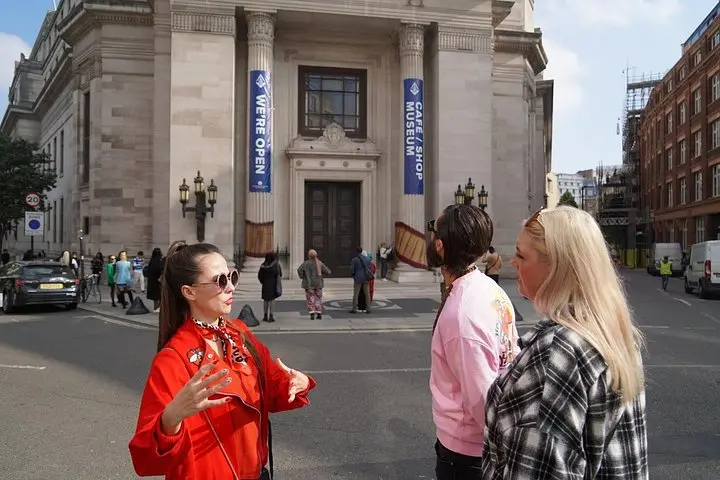
The tour approaches Freemasons’ quarter and may include exterior views; interior entry depends on access and specific tour inclusions—check with the guide before booking.
Expect around 2–3 miles over roughly three hours with frequent stops for discussion and photo opportunities.
Children can join but content covers historical occult topics; consider maturity and the tour’s walking demands when booking.
Pigeon Tours operates guided outdoor trips and adventures with an emphasis on safety, stewardship, and memorable experiences.

A late-afternoon drizzle glosses the stone facades around St James’s Palace as the guide gathers the small group, maps and ledger-like book covers in hand. The city’s public square becomes a theatre of coded symbols: an obelisk casting a long shadow, a lion statue that watched centuries of rumor, and narrow alleys that still keep their secrets.
A late-afternoon drizzle glosses the stone facades around St James’s Palace as the guide gathers the small group, maps and ledger-like book covers in hand. The city’s public square becomes a theatre of coded symbols: an obelisk casting a long shadow, a lion statue that watched centuries of rumor, and narrow alleys that still keep their secrets.
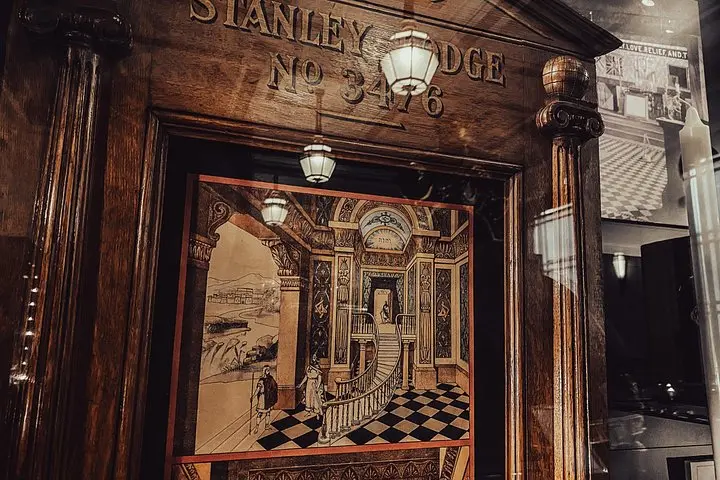
This three-hour walking tour threads sites tied to Victorian esoterica, Egyptian revivalism and the emergence of fraternal orders. Visitors pass the British Museum’s Egyptian collections and learn how 19th-century Londoners translated hieroglyphs into ritual language, then step through Pall Mall where lodges and reading rooms fostered groups like the Hermetic Order of the Golden Dawn and Freemasonry. The itinerary touches on figures such as Aleister Crowley and the French occultist Éliphas Lévi, and points out historic bookshops that sold grimoires and arcane pamphlets.
Practical guidance is direct: expect 2–3 miles of mostly paved walking, intermittent stairs and tight pavements—moderate fitness serves best. Wear sturdy shoes for cobbles, layer for wind off the Thames, and bring a portable umbrella; tours run rain or shine. Photography is generally permitted on exteriors but respect private entrances and signs; some interiors may remain off-limits.
This is an urban archaeology of belief—architecture, public art and hidden corners revealing how empire-era fascination with Egypt, ritual and secrecy shaped parts of central London. Travelers should plan for a focused, interpretive walk rather than theatrical conspiracy claims, and book mornings or late afternoons to avoid peak crowds.