THE ADVENTURE COLLECTIVE® · Independent discovery and booking for outdoor travel

Explore Zanzibar’s agricultural interior on a half-day quad tour that threads rice paddies, sugarcane fields and coastal groves. Expect flat, rutted tracks, close cultural encounters, and vivid, ever-changing landscapes.
Explore Zanzibar’s agricultural interior on a half-day quad tour that threads rice paddies, sugarcane fields and coastal groves. Expect flat, rutted tracks, close cultural encounters, and vivid, ever-changing landscapes.
You push off from a dusty lane just outside Stone Town, the quad’s engine answering the island’s low, historical hum. Coconut palms lean like watchful neighbors, while narrow tracks thread between rice paddies and cane, each turn opening a new wash of green and the salt-sweet breath of the ocean.
Verified experiences and guided adventures in the surrounding area.
Operated by Pongwe Tour & Safari · Zanzibar City (Stone Town), Unguja
You push off from a dusty lane just outside Stone Town, the quad’s engine answering the island’s low, historical hum. Coconut palms lean like watchful neighbors, while narrow tracks thread between rice paddies and cane, each turn opening a new wash of green and the salt-sweet breath of the ocean.
The route crosses Unguja’s agricultural heart, where centuries of Swahili trade and Omani influence shaped settlement patterns and irrigation. The geology is coral limestone over volcanic basement; soils along the coast support coconut, mango and banana groves while inland patches sustain rice and sugarcane. Local villages you pass speak a layered culture: Kiswahili rhythms, fishermen mending nets, and family compounds where roadside tea is offered.
On this half-day (about four hours) you’ll ride secondary roads and farm tracks—mostly flat with occasional soft sand and rutted sections. Nature here has a personality: the wind insists you slow, the mangroves keep watch along tidal edges, and the landscape pushes you toward slower observation. Guides pause at family homesteads so riders can see daily life and learn about traditional crops and local crafts.
Practical notes: wear closed-toe shoes and a snug helmet, carry water and sun protection, and expect some dusty sections after dry spells and mud after rains. Basic ATV handling is required but fitness demands are low—this is an accessible, motorized way to read the island’s topography and culture quickly. Respect private fields and ask before photographing residents; responsible touring keeps access open for local communities.
No formal experience is required, but basic familiarity with throttle/brake and balance helps; guides provide a short orientation before the ride.
Many operators offer pickup from Stone Town hotels—confirm pickup point when booking as times and locations vary.
Operators typically set minimum ages (often 16) and weight limits for safety—check the specific provider’s policy when booking.
Heavy rain can make tracks impassable; most providers will cancel or reschedule for safety and offer a full refund if canceled within policy windows.
Pongwe Tour & Safari operates guided outdoor trips and adventures with an emphasis on safety, stewardship, and memorable experiences.


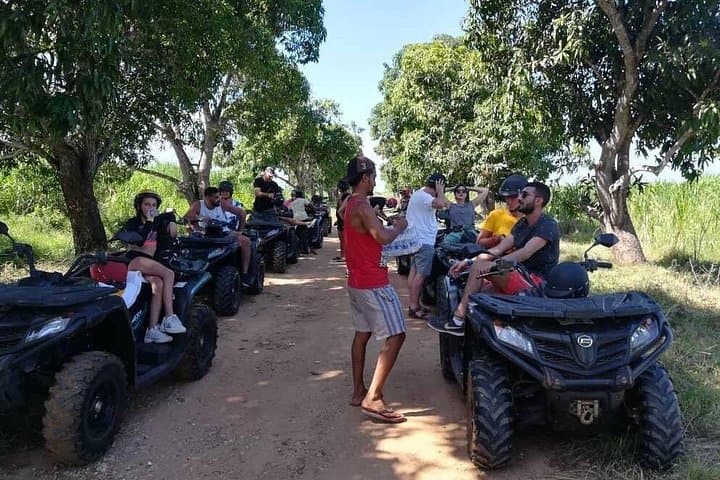

You push off from a dusty lane just outside Stone Town, the quad’s engine answering the island’s low, historical hum. Coconut palms lean like watchful neighbors, while narrow tracks thread between rice paddies and cane, each turn opening a new wash of green and the salt-sweet breath of the ocean.
You push off from a dusty lane just outside Stone Town, the quad’s engine answering the island’s low, historical hum. Coconut palms lean like watchful neighbors, while narrow tracks thread between rice paddies and cane, each turn opening a new wash of green and the salt-sweet breath of the ocean.
The route crosses Unguja’s agricultural heart, where centuries of Swahili trade and Omani influence shaped settlement patterns and irrigation. The geology is coral limestone over volcanic basement; soils along the coast support coconut, mango and banana groves while inland patches sustain rice and sugarcane. Local villages you pass speak a layered culture: Kiswahili rhythms, fishermen mending nets, and family compounds where roadside tea is offered.
On this half-day (about four hours) you’ll ride secondary roads and farm tracks—mostly flat with occasional soft sand and rutted sections. Nature here has a personality: the wind insists you slow, the mangroves keep watch along tidal edges, and the landscape pushes you toward slower observation. Guides pause at family homesteads so riders can see daily life and learn about traditional crops and local crafts.
Practical notes: wear closed-toe shoes and a snug helmet, carry water and sun protection, and expect some dusty sections after dry spells and mud after rains. Basic ATV handling is required but fitness demands are low—this is an accessible, motorized way to read the island’s topography and culture quickly. Respect private fields and ask before photographing residents; responsible touring keeps access open for local communities.