THE ADVENTURE COLLECTIVE® · Independent discovery and booking for outdoor travel

Three days of private guiding and a careful route through Angkor’s quieter temples, jungle-claimed ruins, and Tonle Sap’s floating villages. Early starts, a knowledgeable local guide, and flexible timing make this a compact, immersive way to see the region beyond the busiest sites.
Three days of private guiding and a careful route through Angkor’s quieter temples, jungle-claimed ruins, and Tonle Sap’s floating villages. Early starts, a knowledgeable local guide, and flexible timing make this a compact, immersive way to see the region beyond the busiest sites.
You rise before dawn and the road to Angkor hums with roosters and tuk-tuks. Your private driver threads through rice paddies still wet with overnight mist while the first light lifts the bas-reliefs of Angkor Wat into relief. Stones cool beneath your palms; roots in Ta Prohm grip towers like memory. Across three days the tour pulls you away from the busiest loops to quieter 12th-century sanctuaries, a dramatic jungle-temple at Beng Mealea, and the ebbing breath of Tonle Sap.
Verified experiences and guided adventures in the surrounding area.
Operated by ANGKOR CAB-OFF BEATEN TRUCK · Siem Reap, Siem Reap
You rise before dawn and the road to Angkor hums with roosters and tuk-tuks. Your private driver threads through rice paddies still wet with overnight mist while the first light lifts the bas-reliefs of Angkor Wat into relief. Stones cool beneath your palms; roots in Ta Prohm grip towers like memory. Across three days the tour pulls you away from the busiest loops to quieter 12th-century sanctuaries, a dramatic jungle-temple at Beng Mealea, and the ebbing breath of Tonle Sap.
These monuments were raised by the Khmer kings between the 9th and 12th centuries from sandstone and laterite, ambitious expressions of state, religion and hydraulic mastery. Angkor’s reservoirs and channels still shape local life—Srah Srang’s reflected terraces and the Tonle Sap’s seasonal reversal to the Mekong are living engineering. Culturally, you’ll see daily commerce: palm-sugar production, wooden boats on inland waterways and markets fuelled by the lake’s fisheries.
Practical notes: this private, customizable itinerary is best for travelers with moderate fitness—expect long, hot days, many steps, and uneven temple surfaces. Buy your Angkor Park pass in advance (1-, 3-, or 7-day options), wear respectful, shoulder-and-knee-covering clothing for temples, and bring comfortable walking shoes. Start days early to catch sunrise light and to avoid midday heat; bring insect repellent for Tonle Sap and jungle-cloaked ruins, and keep cash handy for small vendors and tips. Guides and drivers here are English-fluent and trained for safety; if you need infant seats or special pickup times, request them when you book.
You must buy an Angkor Archaeological Park pass (1-, 3-, or 7-day). This tour’s price typically excludes the park ticket, so purchase it beforehand or on arrival at the park entrance.
Boat trips and local site donations are often extra; confirm with the operator what’s included when you book and carry cash for boat fares and small fees.
Yes—this private tour is flexible. Operators commonly offer different pickup times and can adjust the itinerary if you notify them in advance.
Children can join but require supervision; infant seats are available on request. The operator notes it’s not recommended for travelers with serious spinal or cardiovascular conditions due to long days and uneven terrain.
ANGKOR CAB-OFF BEATEN TRUCK operates guided outdoor trips and adventures with an emphasis on safety, stewardship, and memorable experiences.

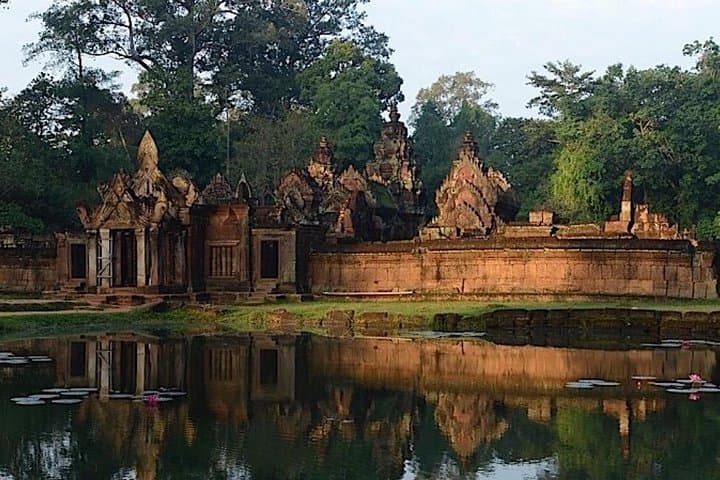


You rise before dawn and the road to Angkor hums with roosters and tuk-tuks. Your private driver threads through rice paddies still wet with overnight mist while the first light lifts the bas-reliefs of Angkor Wat into relief. Stones cool beneath your palms; roots in Ta Prohm grip towers like memory. Across three days the tour pulls you away from the busiest loops to quieter 12th-century sanctuaries, a dramatic jungle-temple at Beng Mealea, and the ebbing breath of Tonle Sap.
You rise before dawn and the road to Angkor hums with roosters and tuk-tuks. Your private driver threads through rice paddies still wet with overnight mist while the first light lifts the bas-reliefs of Angkor Wat into relief. Stones cool beneath your palms; roots in Ta Prohm grip towers like memory. Across three days the tour pulls you away from the busiest loops to quieter 12th-century sanctuaries, a dramatic jungle-temple at Beng Mealea, and the ebbing breath of Tonle Sap.
These monuments were raised by the Khmer kings between the 9th and 12th centuries from sandstone and laterite, ambitious expressions of state, religion and hydraulic mastery. Angkor’s reservoirs and channels still shape local life—Srah Srang’s reflected terraces and the Tonle Sap’s seasonal reversal to the Mekong are living engineering. Culturally, you’ll see daily commerce: palm-sugar production, wooden boats on inland waterways and markets fuelled by the lake’s fisheries.
Practical notes: this private, customizable itinerary is best for travelers with moderate fitness—expect long, hot days, many steps, and uneven temple surfaces. Buy your Angkor Park pass in advance (1-, 3-, or 7-day options), wear respectful, shoulder-and-knee-covering clothing for temples, and bring comfortable walking shoes. Start days early to catch sunrise light and to avoid midday heat; bring insect repellent for Tonle Sap and jungle-cloaked ruins, and keep cash handy for small vendors and tips. Guides and drivers here are English-fluent and trained for safety; if you need infant seats or special pickup times, request them when you book.