THE ADVENTURE COLLECTIVE® · Independent discovery and booking for outdoor travel

Seven days across Ha Giang, Dong Van and Ba Be take you from highland rice terraces to karst plateaux and a rare mountain lake. Expect long drives, multi-hour treks, homestays and boat excursions through Vietnam’s rugged northeast.
Seven days across Ha Giang, Dong Van and Ba Be take you from highland rice terraces to karst plateaux and a rare mountain lake. Expect long drives, multi-hour treks, homestays and boat excursions through Vietnam’s rugged northeast.
You step off the minibus into a morning that smells of wet earth and cooked rice—terraced fields step down the mountain like giant risers, and wind threads through bamboo groves. The trip unspools across Ha Giang’s high ridges, the Dong Van karst plateau’s weathered limestone cliffs, and the slow, green water of Ba Be Lake. Rivers dare you to follow them into caves; valleys push you uphill toward panoramic ridgelines.
Verified experiences and guided adventures in the surrounding area.
Operated by Authentic SAPA · Hanoi, Hanoi
You step off the minibus into a morning that smells of wet earth and cooked rice—terraced fields step down the mountain like giant risers, and wind threads through bamboo groves. The trip unspools across Ha Giang’s high ridges, the Dong Van karst plateau’s weathered limestone cliffs, and the slow, green water of Ba Be Lake. Rivers dare you to follow them into caves; valleys push you uphill toward panoramic ridgelines.
This route threads recent human history into deep geology: the Dong Van karst is a UNESCO Global Geopark carved in Carboniferous limestone, while Hoang Su Phi’s rice terraces reflect centuries of upland wet-rice agriculture by H’mong, Tay and Dao communities. Ba Be is one of the world’s rare karst-mountain lakes, fed by the Nang River and dotted with small islands and caves—Puong Cave runs roughly 300 meters and Dau Dang’s rapids stretch nearly a kilometer.
Expect mixed driving and walking days—several transfers of 4–7 hours between bases, and daily treks typically 3–6 hours over uneven, sometimes steep trails (elevation commonly 1,200–1,800m in Hoang Su Phi; occasional 400–600m gains). Boat excursions on Ba Be run 2–4 hours with short shore hikes; guided kayaking explores narrow streams and lagoons.
Practical edge: come with sturdy boots, layered clothing for 10–20°C swings, cash for homestays and markets, and a lightweight rain shell—monsoon months bring sudden downpours. The trip suits travelers with moderate fitness, a tolerance for long drives, and curiosity about ethnic cultures and karst landscapes.
Most treks are moderate: 3–6 hours over uneven trails with occasional steep sections; a reasonable level of cardiovascular fitness and ankle stability is recommended.
Yes—this is a private-tour format that suits solo travelers but expect mixed accommodation including homestays where facilities are basic.
Guides typically speak English; ethnic-minority host families may not—your guide will mediate cultural exchanges and translations.
Breakfasts and lunches are included per itinerary and the trip features hotels and homestays (2 nights in Ba Be homestay, others as listed); bring snacks for long drives.
Authentic SAPA operates guided outdoor trips and adventures with an emphasis on safety, stewardship, and memorable experiences.

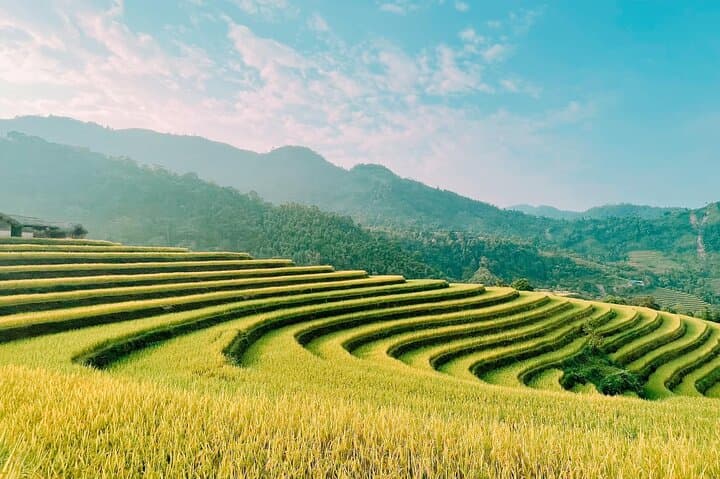
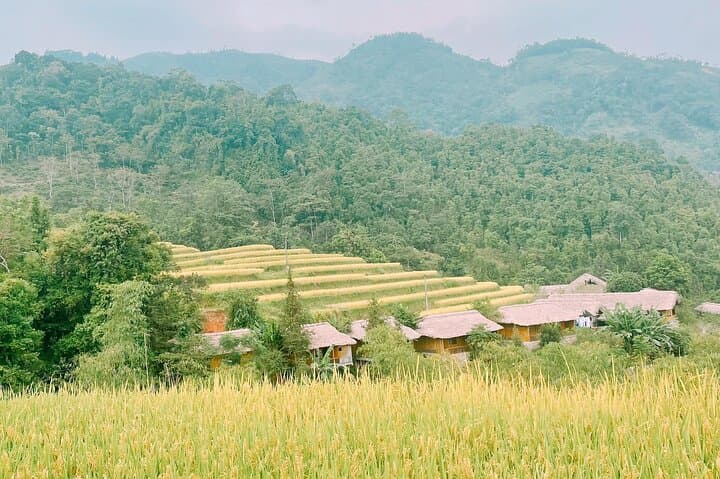

You step off the minibus into a morning that smells of wet earth and cooked rice—terraced fields step down the mountain like giant risers, and wind threads through bamboo groves. The trip unspools across Ha Giang’s high ridges, the Dong Van karst plateau’s weathered limestone cliffs, and the slow, green water of Ba Be Lake. Rivers dare you to follow them into caves; valleys push you uphill toward panoramic ridgelines.
You step off the minibus into a morning that smells of wet earth and cooked rice—terraced fields step down the mountain like giant risers, and wind threads through bamboo groves. The trip unspools across Ha Giang’s high ridges, the Dong Van karst plateau’s weathered limestone cliffs, and the slow, green water of Ba Be Lake. Rivers dare you to follow them into caves; valleys push you uphill toward panoramic ridgelines.
This route threads recent human history into deep geology: the Dong Van karst is a UNESCO Global Geopark carved in Carboniferous limestone, while Hoang Su Phi’s rice terraces reflect centuries of upland wet-rice agriculture by H’mong, Tay and Dao communities. Ba Be is one of the world’s rare karst-mountain lakes, fed by the Nang River and dotted with small islands and caves—Puong Cave runs roughly 300 meters and Dau Dang’s rapids stretch nearly a kilometer.
Expect mixed driving and walking days—several transfers of 4–7 hours between bases, and daily treks typically 3–6 hours over uneven, sometimes steep trails (elevation commonly 1,200–1,800m in Hoang Su Phi; occasional 400–600m gains). Boat excursions on Ba Be run 2–4 hours with short shore hikes; guided kayaking explores narrow streams and lagoons.
Practical edge: come with sturdy boots, layered clothing for 10–20°C swings, cash for homestays and markets, and a lightweight rain shell—monsoon months bring sudden downpours. The trip suits travelers with moderate fitness, a tolerance for long drives, and curiosity about ethnic cultures and karst landscapes.