THE ADVENTURE COLLECTIVE® · Independent discovery and booking for outdoor travel

Skip the crowds and spend a day exploring three of Angkor’s most evocative temples—Preah Khan, Ta Prohm, and the Bayon—on a private off-the-beaten-track tour. Expect root-wound corridors, enigmatic stone faces, and practical advice for navigating uneven ruins and seasonal heat.
Skip the crowds and spend a day exploring three of Angkor’s most evocative temples—Preah Khan, Ta Prohm, and the Bayon—on a private off-the-beaten-track tour. Expect root-wound corridors, enigmatic stone faces, and practical advice for navigating uneven ruins and seasonal heat.
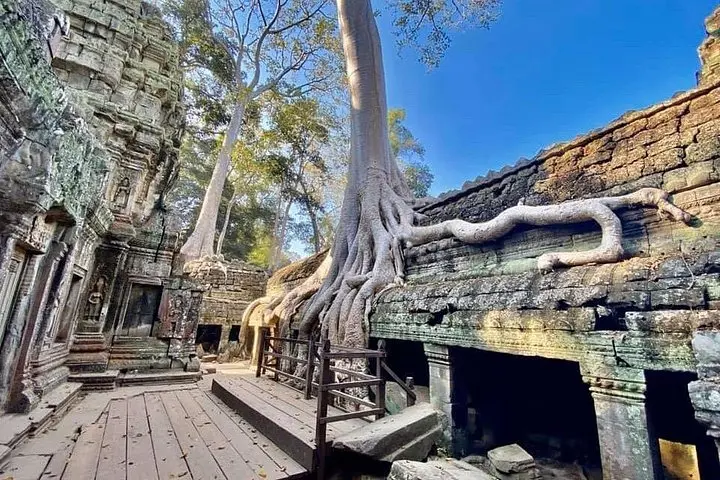
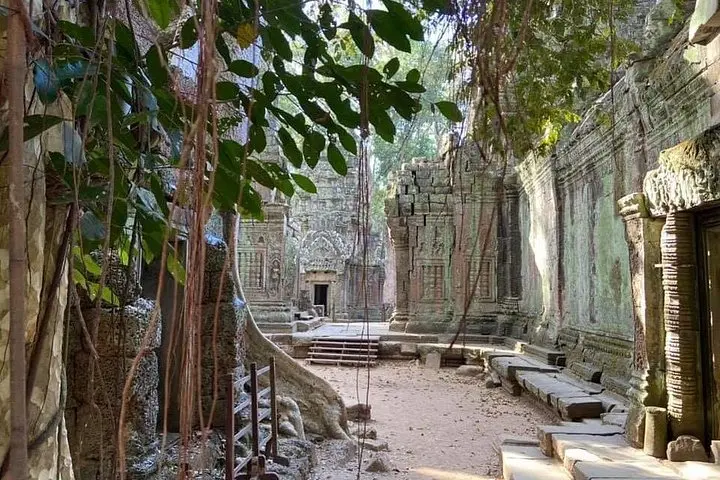
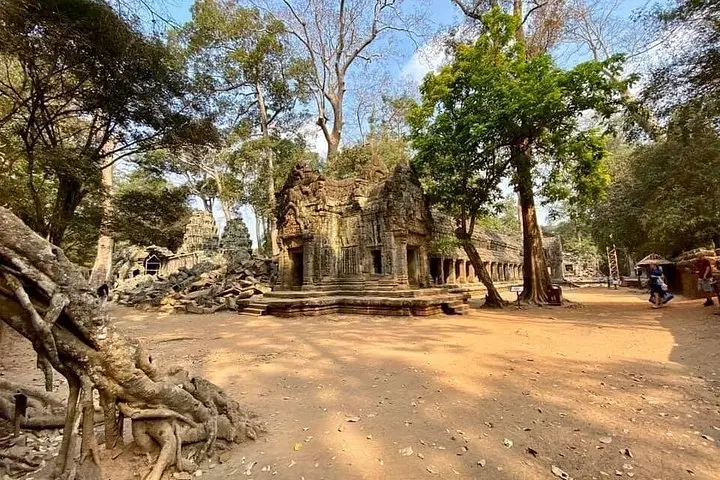
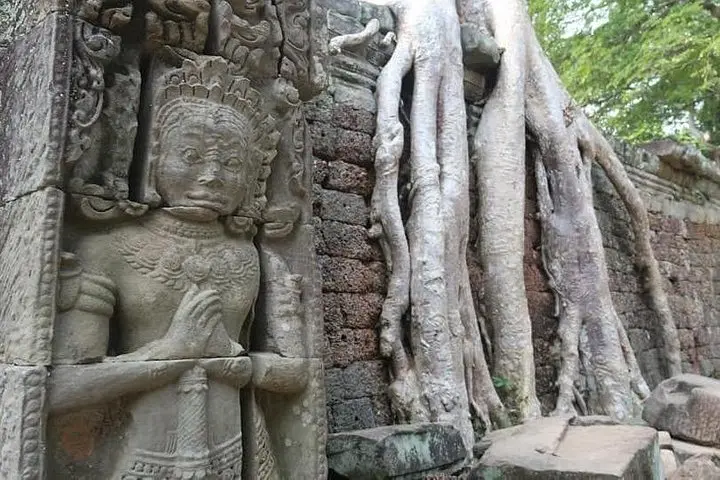
Dawn light slides across ancient laterite and sandstone as the tour vehicle threads past rice paddies toward Angkor’s quieter corners. Arriving at Preah Khan, roots braid through doorways and the air smells of warm stone and damp leaf litter; Ta Prohm lets fig and silk-cotton trees press their trunks against galleries, and the Bayon’s carved faces watch in near-silence, their smiles patient and inscrutable.
Verified experiences and guided adventures in the surrounding area.
Operated by ANGKOR CAB-OFF BEATEN TRUCK · Siem Reap, Siem Reap Province
Dawn light slides across ancient laterite and sandstone as the tour vehicle threads past rice paddies toward Angkor’s quieter corners. Arriving at Preah Khan, roots braid through doorways and the air smells of warm stone and damp leaf litter; Ta Prohm lets fig and silk-cotton trees press their trunks against galleries, and the Bayon’s carved faces watch in near-silence, their smiles patient and inscrutable.
These three monuments were shaped under King Jayavarman VII in the late 12th and early 13th centuries, a time when the Khmer capital remade the Angkorian landscape with reservoirs and monumental Buddhist architecture. Geologically the temples sit on a low sandstone plateau; erosion and seasonal moisture have given the masonry its honeyed texture. Culturally the sites reflect a shift from Hindu to Mahayana, then to Theravada practices, visible in bas-reliefs and later modifications.
Expect uneven stone steps, root-choked corridors, and narrow galleries that reward slow inspection more than speed. Guides typically point out subtle bas-reliefs at Bayon and the library chambers at Preah Khan; Ta Prohm’s cinematic tree-ruin interplay is best seen off the main axis, where light and shadow change rapidly.
Practical guidance: wear sturdy shoes with good grip, bring 1–1.5 liters of water, and plan for 6–8 hours including transit and ticket formalities. Morning visits avoid the peak heat; respect rope barriers and avoid climbing on fragile carvings. With a private guide and early start this circuit delivers history, drama, and the kind of quiet moments that make Angkor feel like discovery rather than spectacle.
Yes—entry to the Angkor Archaeological Park requires an Angkor Pass, which you can buy at the official ticket center or arrange through some guides; keep your pass visible.
Expect several hours on foot across uneven ground and steps; the tour covers multiple temple compounds with time to explore key galleries.
Many areas have steep steps and narrow corridors; while some zones are reachable by vehicle, full access is limited—discuss mobility needs with the operator before booking.
Early morning is best for cooler temperatures and softer light; late afternoon can be quieter but light is harsher and tour schedules may be constrained.
ANGKOR CAB-OFF BEATEN TRUCK operates guided outdoor trips and adventures with an emphasis on safety, stewardship, and memorable experiences.
Dawn light slides across ancient laterite and sandstone as the tour vehicle threads past rice paddies toward Angkor’s quieter corners. Arriving at Preah Khan, roots braid through doorways and the air smells of warm stone and damp leaf litter; Ta Prohm lets fig and silk-cotton trees press their trunks against galleries, and the Bayon’s carved faces watch in near-silence, their smiles patient and inscrutable.
Dawn light slides across ancient laterite and sandstone as the tour vehicle threads past rice paddies toward Angkor’s quieter corners. Arriving at Preah Khan, roots braid through doorways and the air smells of warm stone and damp leaf litter; Ta Prohm lets fig and silk-cotton trees press their trunks against galleries, and the Bayon’s carved faces watch in near-silence, their smiles patient and inscrutable.
These three monuments were shaped under King Jayavarman VII in the late 12th and early 13th centuries, a time when the Khmer capital remade the Angkorian landscape with reservoirs and monumental Buddhist architecture. Geologically the temples sit on a low sandstone plateau; erosion and seasonal moisture have given the masonry its honeyed texture. Culturally the sites reflect a shift from Hindu to Mahayana, then to Theravada practices, visible in bas-reliefs and later modifications.
Expect uneven stone steps, root-choked corridors, and narrow galleries that reward slow inspection more than speed. Guides typically point out subtle bas-reliefs at Bayon and the library chambers at Preah Khan; Ta Prohm’s cinematic tree-ruin interplay is best seen off the main axis, where light and shadow change rapidly.
Practical guidance: wear sturdy shoes with good grip, bring 1–1.5 liters of water, and plan for 6–8 hours including transit and ticket formalities. Morning visits avoid the peak heat; respect rope barriers and avoid climbing on fragile carvings. With a private guide and early start this circuit delivers history, drama, and the kind of quiet moments that make Angkor feel like discovery rather than spectacle.