THE ADVENTURE COLLECTIVE® · Independent discovery and booking for outdoor travel

Explore Ogliastra’s Domus de Janas on an 8 km, 5–6 hour moderate hike through Mediterranean scrub and granite outcrops. Visit three hypogeic tomb complexes, learn local plant lore, and enjoy wide coastal views with a certified multilingual guide.
Explore Ogliastra’s Domus de Janas on an 8 km, 5–6 hour moderate hike through Mediterranean scrub and granite outcrops. Visit three hypogeic tomb complexes, learn local plant lore, and enjoy wide coastal views with a certified multilingual guide.
The trail opens on a wind-scoured ridge where low gnarled oaks and myrtle lean into the sea breeze, and the granite underfoot tells a story older than towns. You start with scrub-scented air, step over curious lichens and heather, and move toward hollowed rock chambers carved in the Bronze Age — the Domus de Janas, or “Fairies' houses.”
Verified experiences and guided adventures in the surrounding area.
Operated by Go Comida - Experience Sardinia · Baunei, Sardinia
The trail opens on a wind-scoured ridge where low gnarled oaks and myrtle lean into the sea breeze, and the granite underfoot tells a story older than towns. You start with scrub-scented air, step over curious lichens and heather, and move toward hollowed rock chambers carved in the Bronze Age — the Domus de Janas, or “Fairies' houses.”
This stretch of Ogliastra preserves pre-Nuragic archaeology (III millennium BCE) cut into granite; the terrain alternates between compacted dirt tracks and exposed stone slabs shaped by millennia of wind and rain. Local shepherding and Mediterranean maquis plants (juniper, mastic, phyllirea) shape both the views and the scentscape, while the guide explains cultural uses of herbs and the funerary role of the hypogeic tombs.
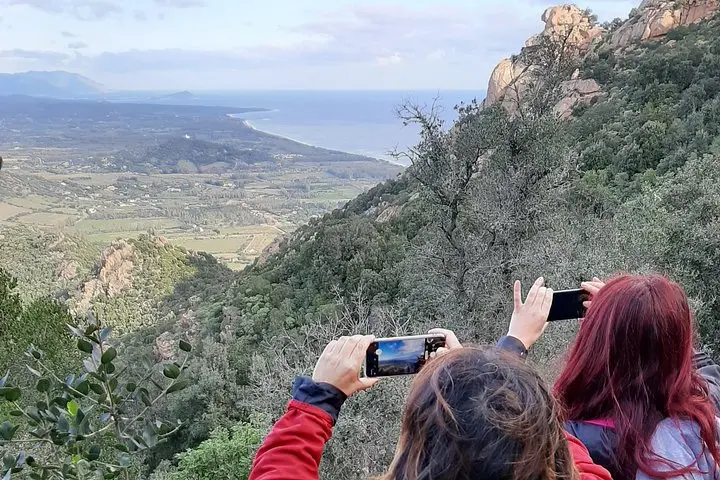
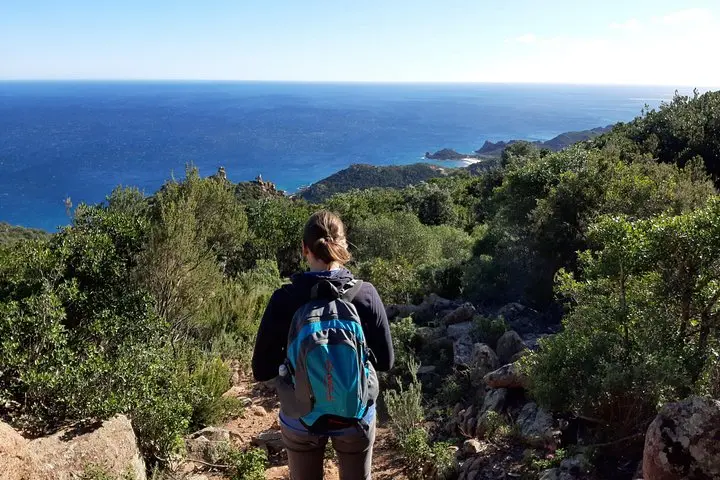
Expect photo-ready panoramas: rounded granite outcrops, pockets of wildflowers in spring, and long views toward the eastern coast. The hike is 8 km with roughly ±400 m elevation change (highest ~380 m, lowest ~10 m) over varied, non-exposed paths. A packed lunch break mid-route gives time to absorb the site before looping back.
Practical notes: itineraries run about 5–6 hours with an air-conditioned transfer and a multilingual certified guide (Italian, English, French). Trails are moderate — good footwear, sun protection, and at least 1.5–2 L water are essential. Leave no trace, stay on paths to protect fragile lichens and archaeological features, and plan for variable wind and sun on exposed granite.
The route is about 8 km with ±400 m elevation change; it’s rated moderate and follows non-exposed paths—suitable for anyone in reasonable physical condition.
Yes—certified regional guides speak Italian, English, and French; an air-conditioned vehicle transfer is included in the tour.
Yes—children aged 8 and older may participate if used to walking several kilometers and uneven terrain; guardians should assess stamina and footwear.
Bring a packed lunch (participants supply their own) and at least 1.5–2 L of water; choose low-waste food and pack out any trash.
Go Comida - Experience Sardinia operates guided outdoor trips and adventures with an emphasis on safety, stewardship, and memorable experiences.
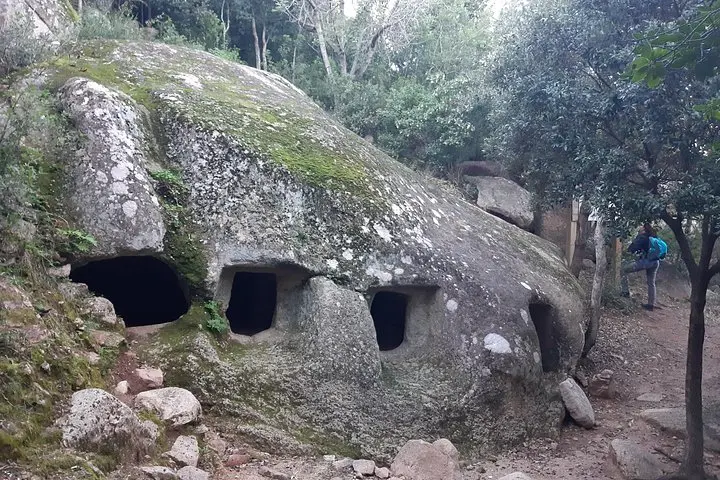
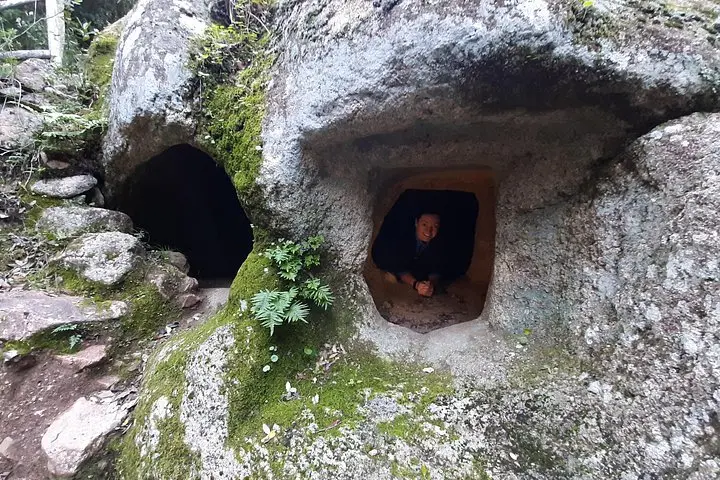
The trail opens on a wind-scoured ridge where low gnarled oaks and myrtle lean into the sea breeze, and the granite underfoot tells a story older than towns. You start with scrub-scented air, step over curious lichens and heather, and move toward hollowed rock chambers carved in the Bronze Age — the Domus de Janas, or “Fairies' houses.”
The trail opens on a wind-scoured ridge where low gnarled oaks and myrtle lean into the sea breeze, and the granite underfoot tells a story older than towns. You start with scrub-scented air, step over curious lichens and heather, and move toward hollowed rock chambers carved in the Bronze Age — the Domus de Janas, or “Fairies' houses.”
This stretch of Ogliastra preserves pre-Nuragic archaeology (III millennium BCE) cut into granite; the terrain alternates between compacted dirt tracks and exposed stone slabs shaped by millennia of wind and rain. Local shepherding and Mediterranean maquis plants (juniper, mastic, phyllirea) shape both the views and the scentscape, while the guide explains cultural uses of herbs and the funerary role of the hypogeic tombs.
Expect photo-ready panoramas: rounded granite outcrops, pockets of wildflowers in spring, and long views toward the eastern coast. The hike is 8 km with roughly ±400 m elevation change (highest ~380 m, lowest ~10 m) over varied, non-exposed paths. A packed lunch break mid-route gives time to absorb the site before looping back.
Practical notes: itineraries run about 5–6 hours with an air-conditioned transfer and a multilingual certified guide (Italian, English, French). Trails are moderate — good footwear, sun protection, and at least 1.5–2 L water are essential. Leave no trace, stay on paths to protect fragile lichens and archaeological features, and plan for variable wind and sun on exposed granite.