THE ADVENTURE COLLECTIVE® · Independent discovery and booking for outdoor travel

Walk the weathered ramparts of Ogrodzieniec, a 13th‑century ruin on the Kraków‑Częstochowa Upland and a filming location for Netflix's The Witcher. This five‑hour round trip from Kraków includes private transport, entry, and a short on‑site exploration of the castle and surrounding rockscape.
Walk the weathered ramparts of Ogrodzieniec, a 13th‑century ruin on the Kraków‑Częstochowa Upland and a filming location for Netflix's The Witcher. This five‑hour round trip from Kraków includes private transport, entry, and a short on‑site exploration of the castle and surrounding rockscape.
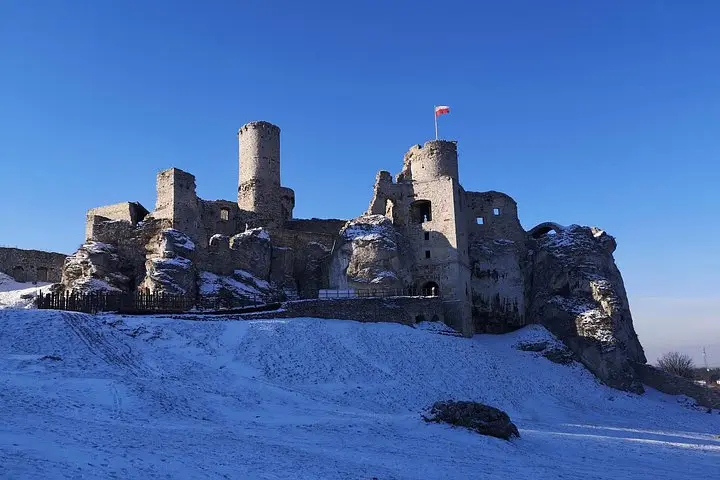
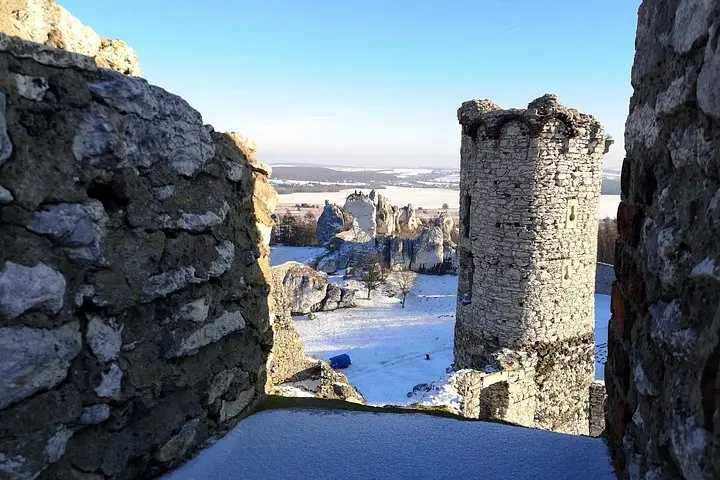
You arrive on a low ridge of weathered limestone, wind tugging at your jacket as the ruined walls of Ogrodzieniec loom above like a story unfinished. Broken towers cut the skyline; the rock beneath your boots bears the grooves of centuries of feet. From this vantage the Kraków‑Częstochowa Upland spreads, a patchwork of scrub, karst cliffs and scattered villages that push the horizon outward.
Verified experiences and guided adventures in the surrounding area.
Operated by CRACOWHOLIDAYS.COM WOJCIECH KULCZYKOWSKI · Ogrodzieniec (Podzamcze), Silesian Voivodeship
You arrive on a low ridge of weathered limestone, wind tugging at your jacket as the ruined walls of Ogrodzieniec loom above like a story unfinished. Broken towers cut the skyline; the rock beneath your boots bears the grooves of centuries of feet. From this vantage the Kraków‑Częstochowa Upland spreads, a patchwork of scrub, karst cliffs and scattered villages that push the horizon outward.
The castle began as a 13th‑century stronghold—later nicknamed the "Wolf's Jaw"—rebuilt and expanded through five centuries before the Swedish army devastated it in 1702. Its stones tell of feudal families, border raids and 19th‑century romantic interest in ruins. Geologically, the site sits on Jurassic limestone; wind and rain have sculpted boulders and cliffs that make the castle feel part-architectural, part-natural outcrop. Pop culture brought it renewed attention when Netflix used the ruins for The Witcher, and local guides now balance storytelling with conservation messaging.
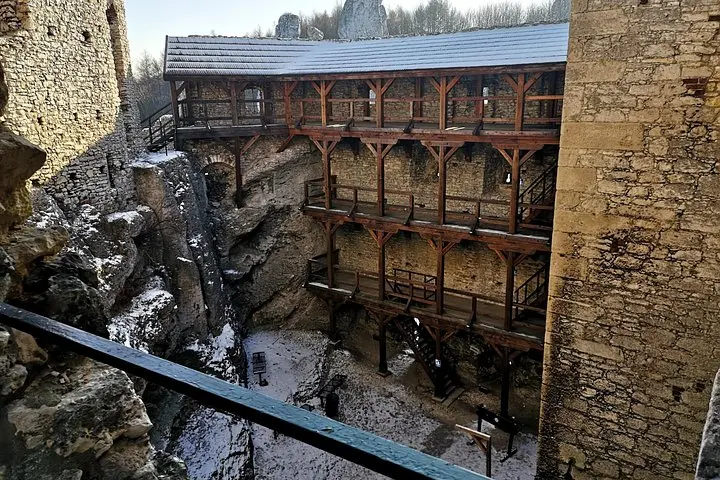
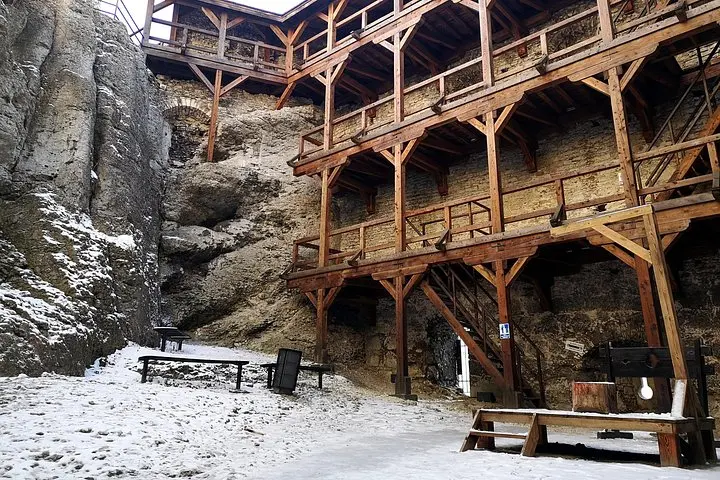
Practically, expect a 5‑hour round trip from Kraków with hotel pickup and an English‑speaking driver; admission is included and the guide hands tickets at arrival. Paths are uneven—stone steps, loose scree and narrow ledges—so moderate fitness and sturdy footwear are required. Plan for changing weather: the upland exposes you to sun and gusts; carry water, a rain layer and a camera with a secure strap. Arrive early to avoid tour buses, stay on marked routes to protect karst vegetation, and leave time to explore nearby rock formations and the small museum by the park entrance.
Yes — the day trip includes admission and the driver provides tickets at arrival.
Expect about 90–120 minutes to explore the ruins, museum exhibits and nearby viewpoints.
No — paths include stairs, narrow passages and uneven ground; the tour is not recommended for wheelchair users.
Yes — Ogrodzieniec sits on the Eagle Nests network of medieval sites; ask your operator about extended routes or independent visits to nearby ruins.
CRACOWHOLIDAYS.COM WOJCIECH KULCZYKOWSKI operates guided outdoor trips and adventures with an emphasis on safety, stewardship, and memorable experiences.
You arrive on a low ridge of weathered limestone, wind tugging at your jacket as the ruined walls of Ogrodzieniec loom above like a story unfinished. Broken towers cut the skyline; the rock beneath your boots bears the grooves of centuries of feet. From this vantage the Kraków‑Częstochowa Upland spreads, a patchwork of scrub, karst cliffs and scattered villages that push the horizon outward.
You arrive on a low ridge of weathered limestone, wind tugging at your jacket as the ruined walls of Ogrodzieniec loom above like a story unfinished. Broken towers cut the skyline; the rock beneath your boots bears the grooves of centuries of feet. From this vantage the Kraków‑Częstochowa Upland spreads, a patchwork of scrub, karst cliffs and scattered villages that push the horizon outward.
The castle began as a 13th‑century stronghold—later nicknamed the "Wolf's Jaw"—rebuilt and expanded through five centuries before the Swedish army devastated it in 1702. Its stones tell of feudal families, border raids and 19th‑century romantic interest in ruins. Geologically, the site sits on Jurassic limestone; wind and rain have sculpted boulders and cliffs that make the castle feel part-architectural, part-natural outcrop. Pop culture brought it renewed attention when Netflix used the ruins for The Witcher, and local guides now balance storytelling with conservation messaging.
Practically, expect a 5‑hour round trip from Kraków with hotel pickup and an English‑speaking driver; admission is included and the guide hands tickets at arrival. Paths are uneven—stone steps, loose scree and narrow ledges—so moderate fitness and sturdy footwear are required. Plan for changing weather: the upland exposes you to sun and gusts; carry water, a rain layer and a camera with a secure strap. Arrive early to avoid tour buses, stay on marked routes to protect karst vegetation, and leave time to explore nearby rock formations and the small museum by the park entrance.