THE ADVENTURE COLLECTIVE® · Independent discovery and booking for outdoor travel

A full-day crossing from Tirana to Lake Ohrid that pairs ancient ruins with Byzantine churches and dramatic lakeside viewpoints. Expect long drives, border checks, and a compact walking tour of Ohrid's top historic sites.
A full-day crossing from Tirana to Lake Ohrid that pairs ancient ruins with Byzantine churches and dramatic lakeside viewpoints. Expect long drives, border checks, and a compact walking tour of Ohrid's top historic sites.
You step out of the van on a wind-touched promontory and Lake Ohrid opens like a vast, cool eye—glass-smooth in the morning, rubbing its surface with currents that dare you to look closer. The city’s red-tiled roofs climb the hill toward Samuel’s Fortress, while church domes puncture the skyline above narrow lanes where stone steps guide your feet.
Verified experiences and guided adventures in the surrounding area.
Operated by ATHS · Ohrid, Ohrid Municipality
You step out of the van on a wind-touched promontory and Lake Ohrid opens like a vast, cool eye—glass-smooth in the morning, rubbing its surface with currents that dare you to look closer. The city’s red-tiled roofs climb the hill toward Samuel’s Fortress, while church domes puncture the skyline above narrow lanes where stone steps guide your feet.
This one-day route threads classical antiquity and medieval faith: an Hellenistic-era theatre carved into the slope, Byzantine churches with frescoed interiors, and Plaošnik’s layered ruins where early Christian and Slavic histories meet. Geologically, the lake is ancient—one of Europe’s deepest and oldest—its limestone shores and cliffs shaped by tectonics and millennia of erosion that give the water its striking clarity.
Culturally, Ohrid has long been a crossroads: Byzantine bishops, Ottoman traders and Orthodox scholars left buildings and manuscripts that still define the town’s human tempo. Local vendors sell smoked trout and honey from the surrounding hills, and a short boat run will surface a pocket-museum of pile-dwelling folklife.
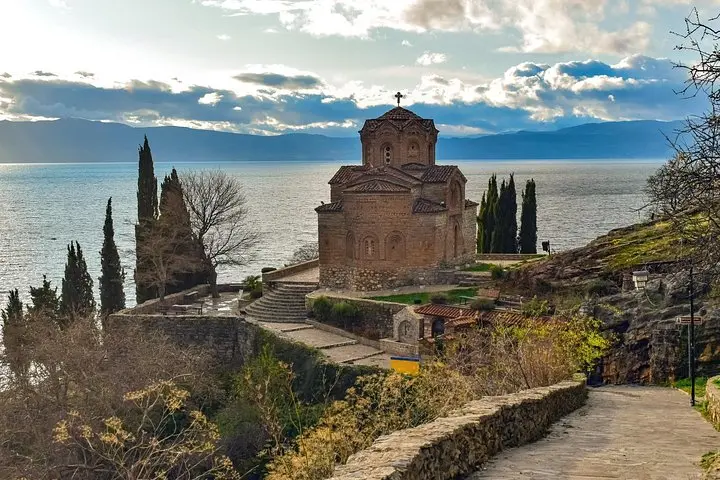
Practical guidance: the full-day excursion is long—expect roughly 9–10 hours including border checks and two 2.5-hour drives each way from Tirana. Carry your passport, small local currency (Macedonian denar), and comfortable walking shoes for cobbled streets and fortress stairways. Bring a refillable water bottle and layer up; coastal breezes off the lake can be cool even on sunny days. Time visits to churches to avoid midday crowds and allow at least 30–60 minutes at the major sites. If you want photos of St. Jovan at Kaneo, aim for late afternoon when the light tilts across the water.
Yes — this tour crosses the Albania–North Macedonia border, so all travelers must carry a valid passport; visa requirements depend on nationality and should be checked before travel.
Expect several short walking segments (30–60 minutes at key sites) over uneven cobbles and stairs; participants should be able to walk and climb for short periods.
Some church entries are noted as paid in the itinerary; confirm with the operator which specific admissions are included or excluded when you book.
The listing specifies an English-speaking guide; confirm availability of other languages ahead of time when booking.
ATHS operates guided outdoor trips and adventures with an emphasis on safety, stewardship, and memorable experiences.
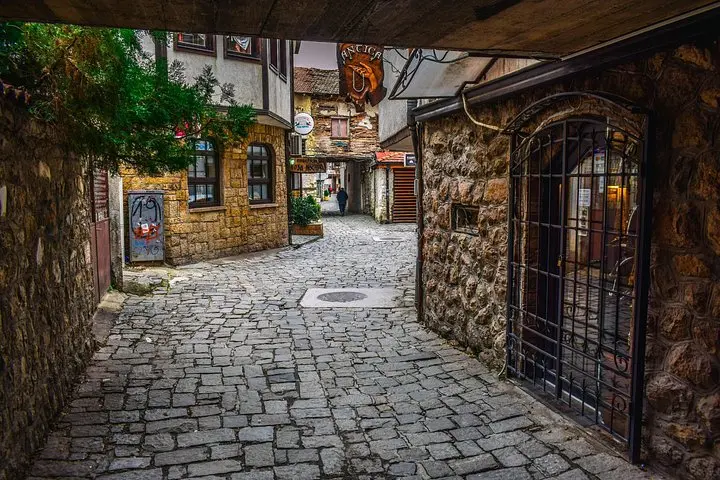
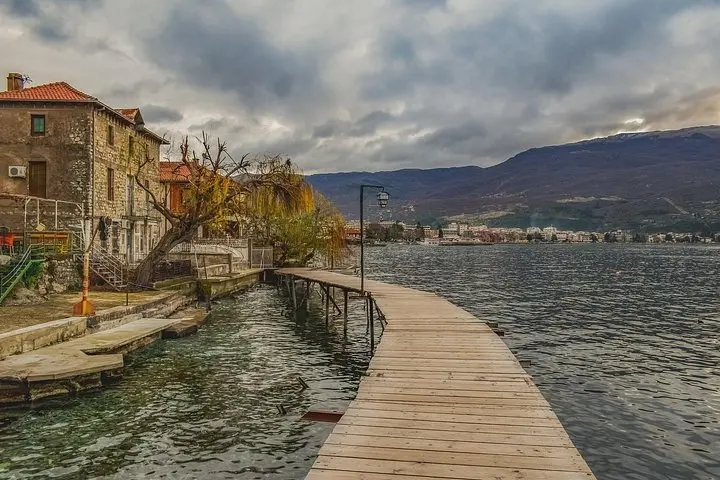
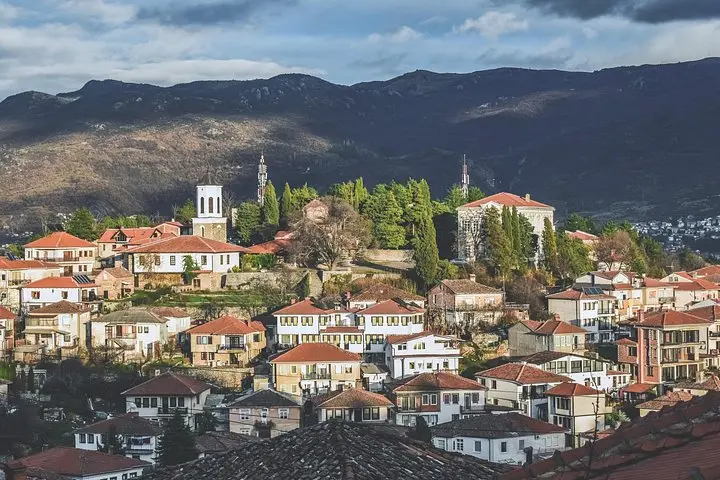
You step out of the van on a wind-touched promontory and Lake Ohrid opens like a vast, cool eye—glass-smooth in the morning, rubbing its surface with currents that dare you to look closer. The city’s red-tiled roofs climb the hill toward Samuel’s Fortress, while church domes puncture the skyline above narrow lanes where stone steps guide your feet.
You step out of the van on a wind-touched promontory and Lake Ohrid opens like a vast, cool eye—glass-smooth in the morning, rubbing its surface with currents that dare you to look closer. The city’s red-tiled roofs climb the hill toward Samuel’s Fortress, while church domes puncture the skyline above narrow lanes where stone steps guide your feet.
This one-day route threads classical antiquity and medieval faith: an Hellenistic-era theatre carved into the slope, Byzantine churches with frescoed interiors, and Plaošnik’s layered ruins where early Christian and Slavic histories meet. Geologically, the lake is ancient—one of Europe’s deepest and oldest—its limestone shores and cliffs shaped by tectonics and millennia of erosion that give the water its striking clarity.
Culturally, Ohrid has long been a crossroads: Byzantine bishops, Ottoman traders and Orthodox scholars left buildings and manuscripts that still define the town’s human tempo. Local vendors sell smoked trout and honey from the surrounding hills, and a short boat run will surface a pocket-museum of pile-dwelling folklife.
Practical guidance: the full-day excursion is long—expect roughly 9–10 hours including border checks and two 2.5-hour drives each way from Tirana. Carry your passport, small local currency (Macedonian denar), and comfortable walking shoes for cobbled streets and fortress stairways. Bring a refillable water bottle and layer up; coastal breezes off the lake can be cool even on sunny days. Time visits to churches to avoid midday crowds and allow at least 30–60 minutes at the major sites. If you want photos of St. Jovan at Kaneo, aim for late afternoon when the light tilts across the water.