THE ADVENTURE COLLECTIVE® · Independent discovery and booking for outdoor travel
Move through two faces of India’s capital in a private tour that pairs Jama Masjid and Chandni Chowk with Lutyens’ avenues, Humayun’s Tomb and Qutub Minar. Choose a focused half-day or a comprehensive full-day for a paced, local-led exploration.
Move through two faces of India’s capital in a private tour that pairs Jama Masjid and Chandni Chowk with Lutyens’ avenues, Humayun’s Tomb and Qutub Minar. Choose a focused half-day or a comprehensive full-day for a paced, local-led exploration.
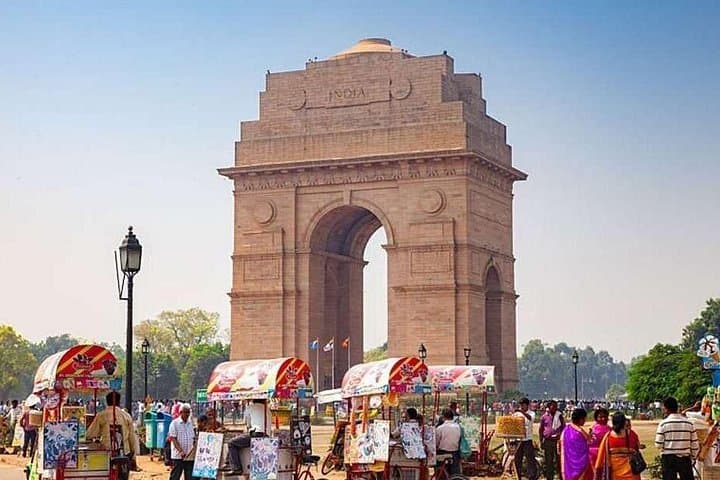
The day begins before the city fully wakes: a narrow lane in Old Delhi, the smell of frying ghee, and the mosque’s sandstone walls catching morning light. This private tour threads Old and New Delhi into a single narrative — Jama Masjid’s vast courtyard and Chandni Chowk’s rickshaw arteries give way to Lutyens-era avenues, India Gate and the quiet gardens around Humayun’s Tomb.
Verified experiences and guided adventures in the surrounding area.
Operated by Agra Trip · New Delhi, Delhi
The day begins before the city fully wakes: a narrow lane in Old Delhi, the smell of frying ghee, and the mosque’s sandstone walls catching morning light. This private tour threads Old and New Delhi into a single narrative — Jama Masjid’s vast courtyard and Chandni Chowk’s rickshaw arteries give way to Lutyens-era avenues, India Gate and the quiet gardens around Humayun’s Tomb.
Old Delhi is Mughal-era urban life made tangible: markets squeezed between monuments, street-food stalls, and a cadence set by vendors and worshippers. New Delhi, by contrast, is a British-colonial and post-independence landscape — broad boulevards, government institutions and modern temples like the Lotus. Geologically the city sits on the alluvial plain of the Yamuna, which shaped trade routes and settlement patterns that allowed Delhi to grow into a layered capital.
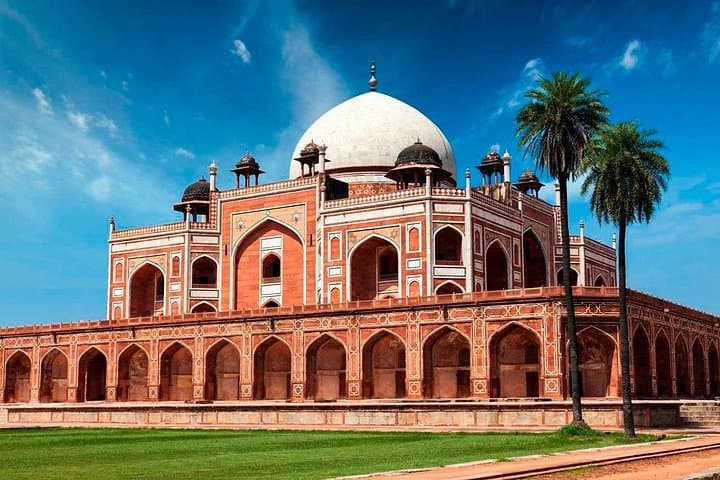
Cultural touchpoints matter here: a visit to Gurudwara Bangla Sahib introduces the langar (community kitchen) ethos; Humayun’s Tomb traces the evolution of Mughal mausoleum architecture leading to the Taj Mahal; Qutub Minar stands as an earlier medieval record of north Indian dynasties.
Practical guidance: choose a half-day for focused Old or New Delhi highlights, or a full-day to combine both. Wear comfortable shoes for uneven courtyards and busy markets, carry a refillable bottle, and be prepared for brief vehicle transfers between sites. Consider upgrading to include entrance fees to save time. Respect dress codes at religious sites and allow extra time for traffic — a private guide maximizes efficiency and local insight.
Yes — private air-conditioned vehicle pickup and drop-off across Delhi, Noida, Gurugram, Ghaziabad and Faridabad are provided; confirm your pickup point at booking.
Entrance fees may be included if you select the upgrade; otherwise your guide will advise and collect fees on site as needed.
Yes — the itinerary often includes a short rickshaw ride through narrow lanes of Chandni Chowk (optionally included); it's a practical way to experience the market’s rhythm.
Children are welcome (ages 2 and under often free); the tour is not recommended for pregnant travelers or those with serious cardiovascular or spinal conditions due to long day length and walking.
Agra Trip operates guided outdoor trips and adventures with an emphasis on safety, stewardship, and memorable experiences.

The day begins before the city fully wakes: a narrow lane in Old Delhi, the smell of frying ghee, and the mosque’s sandstone walls catching morning light. This private tour threads Old and New Delhi into a single narrative — Jama Masjid’s vast courtyard and Chandni Chowk’s rickshaw arteries give way to Lutyens-era avenues, India Gate and the quiet gardens around Humayun’s Tomb.
The day begins before the city fully wakes: a narrow lane in Old Delhi, the smell of frying ghee, and the mosque’s sandstone walls catching morning light. This private tour threads Old and New Delhi into a single narrative — Jama Masjid’s vast courtyard and Chandni Chowk’s rickshaw arteries give way to Lutyens-era avenues, India Gate and the quiet gardens around Humayun’s Tomb.
Old Delhi is Mughal-era urban life made tangible: markets squeezed between monuments, street-food stalls, and a cadence set by vendors and worshippers. New Delhi, by contrast, is a British-colonial and post-independence landscape — broad boulevards, government institutions and modern temples like the Lotus. Geologically the city sits on the alluvial plain of the Yamuna, which shaped trade routes and settlement patterns that allowed Delhi to grow into a layered capital.
Cultural touchpoints matter here: a visit to Gurudwara Bangla Sahib introduces the langar (community kitchen) ethos; Humayun’s Tomb traces the evolution of Mughal mausoleum architecture leading to the Taj Mahal; Qutub Minar stands as an earlier medieval record of north Indian dynasties.
Practical guidance: choose a half-day for focused Old or New Delhi highlights, or a full-day to combine both. Wear comfortable shoes for uneven courtyards and busy markets, carry a refillable bottle, and be prepared for brief vehicle transfers between sites. Consider upgrading to include entrance fees to save time. Respect dress codes at religious sites and allow extra time for traffic — a private guide maximizes efficiency and local insight.
