THE ADVENTURE COLLECTIVE® · Independent discovery and booking for outdoor travel

Walk the lanes of Old Dubai: barter in spice-scented souks, cross the Creek on a traditional abra and taste Karak and Gahwa while a local guide explains Emirati customs. This three-hour small-group tour is an efficient, sensory primer on the city’s heritage.
Walk the lanes of Old Dubai: barter in spice-scented souks, cross the Creek on a traditional abra and taste Karak and Gahwa while a local guide explains Emirati customs. This three-hour small-group tour is an efficient, sensory primer on the city’s heritage.
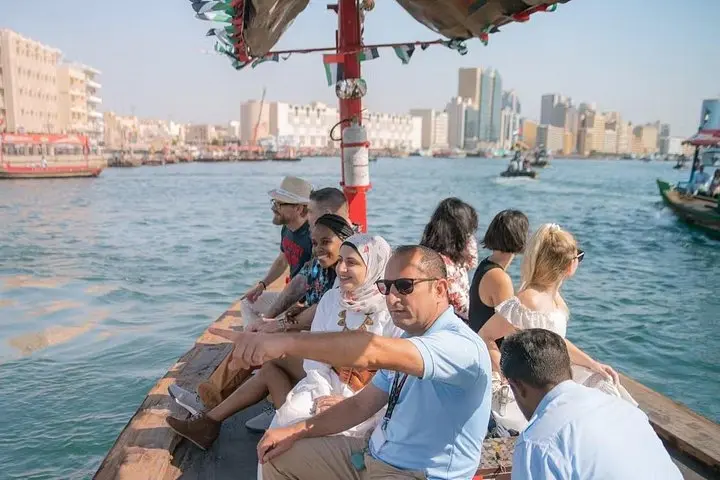
A narrow alley opens like a secret—sacks of saffron and frankincense lean into the path, and the air tastes of cardamom. You arrive at Dubai Creek where wooden abras skim across reed-brown water, ferrying you between the souks and the low-rise wind-towered quarter of Al Fahidi. The city’s modern glass skyline watches from a distance while the old district moves at the pace of people trading, bargaining and sipping hot Karak.
Verified experiences and guided adventures in the surrounding area.
Operated by TUI Musement · Dubai, Dubai
A narrow alley opens like a secret—sacks of saffron and frankincense lean into the path, and the air tastes of cardamom. You arrive at Dubai Creek where wooden abras skim across reed-brown water, ferrying you between the souks and the low-rise wind-towered quarter of Al Fahidi. The city’s modern glass skyline watches from a distance while the old district moves at the pace of people trading, bargaining and sipping hot Karak.
This three-hour small-group walk threads together Dubai’s mercantile past and living culture. The spice and gold souks recall the emirate’s role as a trading hub for the Arabian Gulf; Fahidi Fort, now the Dubai Museum, stands as a reminder of a port city that once depended on pearling and dhow traffic. Architectural features like wind towers speak to pragmatic desert cooling techniques rather than aesthetic whim—an example of local ingenuity.
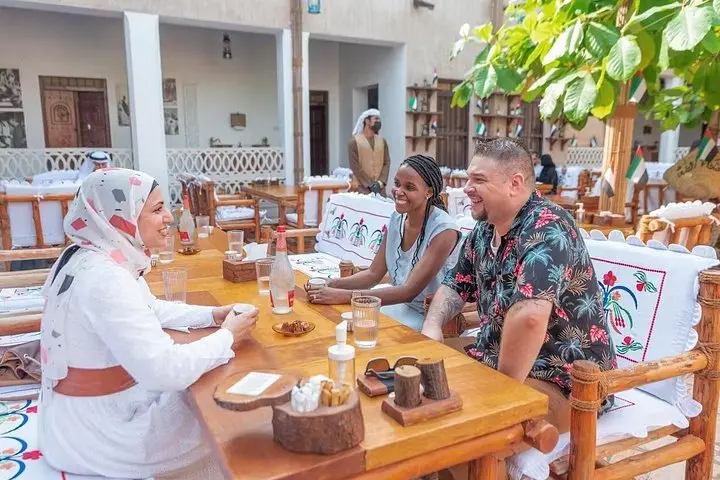
Expect close-up encounters with artisans, the chance to taste Karak tea and Gahwa coffee, and an abra crossing that punctuates the route. Guides explain calligraphy, Emirati customs, and polite behaviors—important context when entering religious or private spaces.
Practical notes: wear sturdy shoes for paved and occasionally uneven alleys, bring sun protection and water, and plan this tour in the morning or late afternoon to avoid peak heat. The group size (max 16) keeps the pace conversational and allows for photo stops outside Fahidi Fort and the Arabic Calligraphy House. It’s an accessible, sensory introduction to Dubai’s older neighborhoods for curious travelers.
The tour lasts about 3 hours and covers roughly 2–3 miles of mostly flat walking through souks, the Al Seef promenade and Al Fahidi.
Local snacks are included—Karak tea and Gahwa coffee with dates are served during the tour.
Yes. The tour is rated easy and appropriate for most ages, but participants should be able to walk for the duration and manage steps and uneven paving.
The tour operates in English, German, Spanish and Italian according to the listing; check availability when booking.
TUI Musement operates guided outdoor trips and adventures with an emphasis on safety, stewardship, and memorable experiences.


A narrow alley opens like a secret—sacks of saffron and frankincense lean into the path, and the air tastes of cardamom. You arrive at Dubai Creek where wooden abras skim across reed-brown water, ferrying you between the souks and the low-rise wind-towered quarter of Al Fahidi. The city’s modern glass skyline watches from a distance while the old district moves at the pace of people trading, bargaining and sipping hot Karak.
A narrow alley opens like a secret—sacks of saffron and frankincense lean into the path, and the air tastes of cardamom. You arrive at Dubai Creek where wooden abras skim across reed-brown water, ferrying you between the souks and the low-rise wind-towered quarter of Al Fahidi. The city’s modern glass skyline watches from a distance while the old district moves at the pace of people trading, bargaining and sipping hot Karak.
This three-hour small-group walk threads together Dubai’s mercantile past and living culture. The spice and gold souks recall the emirate’s role as a trading hub for the Arabian Gulf; Fahidi Fort, now the Dubai Museum, stands as a reminder of a port city that once depended on pearling and dhow traffic. Architectural features like wind towers speak to pragmatic desert cooling techniques rather than aesthetic whim—an example of local ingenuity.
Expect close-up encounters with artisans, the chance to taste Karak tea and Gahwa coffee, and an abra crossing that punctuates the route. Guides explain calligraphy, Emirati customs, and polite behaviors—important context when entering religious or private spaces.
Practical notes: wear sturdy shoes for paved and occasionally uneven alleys, bring sun protection and water, and plan this tour in the morning or late afternoon to avoid peak heat. The group size (max 16) keeps the pace conversational and allows for photo stops outside Fahidi Fort and the Arabic Calligraphy House. It’s an accessible, sensory introduction to Dubai’s older neighborhoods for curious travelers.