THE ADVENTURE COLLECTIVE® · Independent discovery and booking for outdoor travel

Walk the fortified streets of Old Québec with a private guide and follow 400 years of French and British North American history. This 2.5-hour tour connects Champlain’s founding, the Plains of Abraham, and cross-border events that shaped modern Canada.
Walk the fortified streets of Old Québec with a private guide and follow 400 years of French and British North American history. This 2.5-hour tour connects Champlain’s founding, the Plains of Abraham, and cross-border events that shaped modern Canada.
Early morning light pinches the limestone facades of Rue du Petit-Champlain; the St. Lawrence River pushes cold air up Cap Diamant and the city wakes with the smell of fresh bread and coffee.
Verified experiences and guided adventures in the surrounding area.
Operated by Quebec 1608 · Quebec City, Quebec
Early morning light pinches the limestone facades of Rue du Petit-Champlain; the St. Lawrence River pushes cold air up Cap Diamant and the city wakes with the smell of fresh bread and coffee.
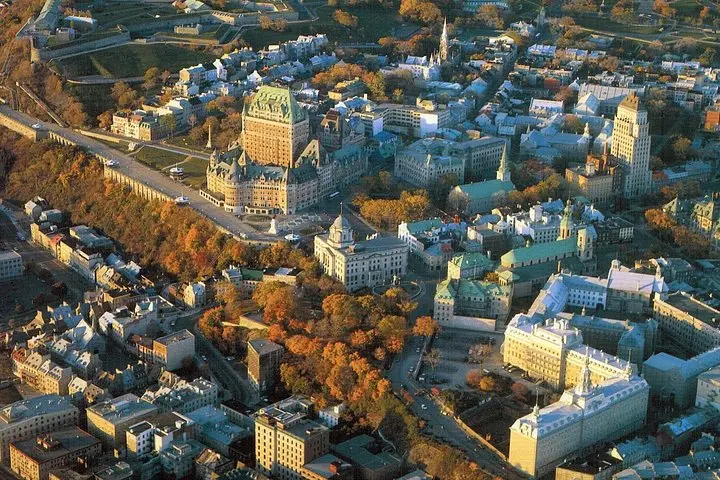
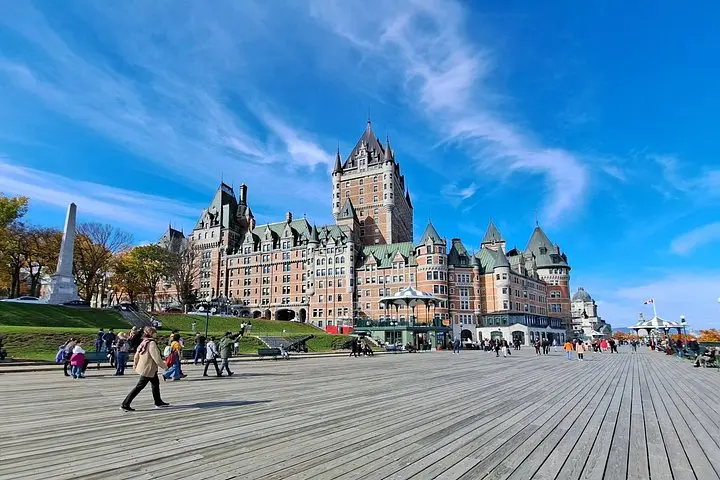
This 2.5-hour private walking tour threads Upper and Lower Town inside Quebec City's UNESCO-listed walls, moving from the Château Frontenac overlook to the narrow streets below. You’ll hear why Samuel de Champlain chose this promontory in 1608, how the cap of sedimentary limestone shaped fortifications, and why the Plains of Abraham decided empires. The route touches French colonial institutions, British ramparts, and sites tied to the 1775 American invasion, the French & Indian War, and later Confederation-era developments.
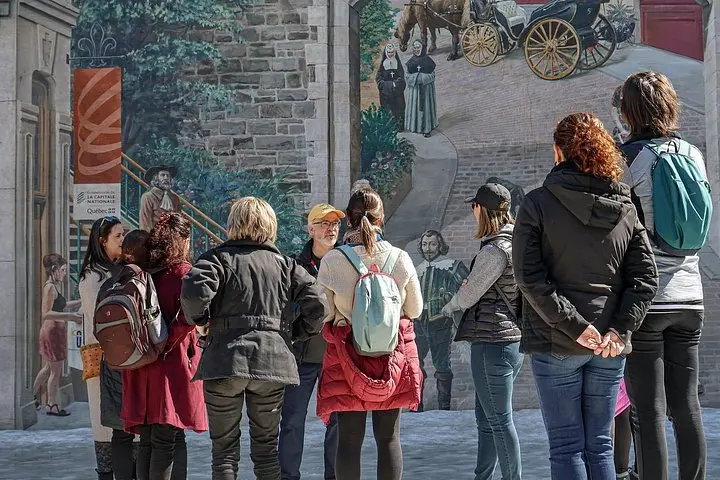
Quebec City still wears its francophone culture openly: bilingual plaques, Catholic heritage buildings, and artisan shops in cobbled lanes. Local guides link architecture to political shifts and to cross-border threads — from Boston to Montreal — that shaped 18th- and 19th-century North America.
Practical footing matters: expect cobblestones, short steep stairs between upper and lower quarters, and a steady walking pace. The tour is private and adaptable to hotel's meeting points; bring weather layers, a charged phone for photos and maps, and shoes with good grip. Morning or late-afternoon slots reduce crowds and catch softer light on the river. If you want quieter corners, ask your guide about lesser-known alleys and museum stops along the way.
The private tour is approximately 2.5 hours and covers both Upper and Lower Town, including Château Frontenac viewpoints, Dufferin Terrace, Place Royale, and sections of the ramparts.
Parts of Old Quebec are accessible and the tour can accommodate strollers, but there are short steep stairs (Escalier Casse-Cou) and cobblestone streets that may limit full wheelchair access—ask the guide in advance.
No attraction tickets are required for the walking portions; carry ID and any medical info. Some museum stops are optional and may require separate admission.
Guides typically speak English and French; the private format makes it family-friendly, though children should be comfortable walking up to 2.5 hours.
Quebec 1608 operates guided outdoor trips and adventures with an emphasis on safety, stewardship, and memorable experiences.
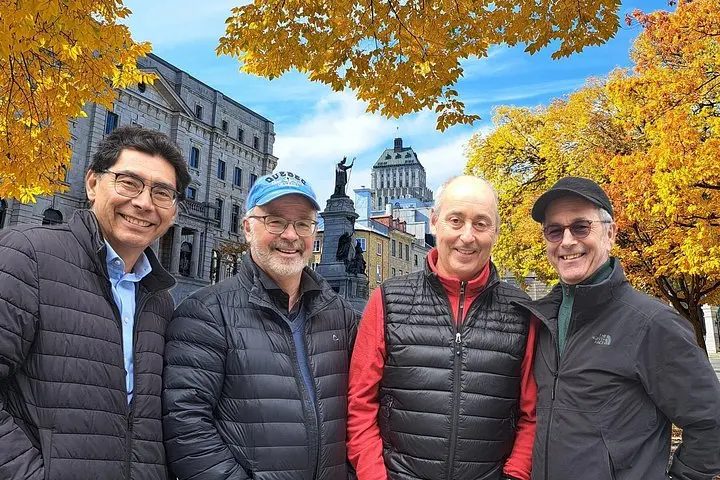
Early morning light pinches the limestone facades of Rue du Petit-Champlain; the St. Lawrence River pushes cold air up Cap Diamant and the city wakes with the smell of fresh bread and coffee.
Early morning light pinches the limestone facades of Rue du Petit-Champlain; the St. Lawrence River pushes cold air up Cap Diamant and the city wakes with the smell of fresh bread and coffee.
This 2.5-hour private walking tour threads Upper and Lower Town inside Quebec City's UNESCO-listed walls, moving from the Château Frontenac overlook to the narrow streets below. You’ll hear why Samuel de Champlain chose this promontory in 1608, how the cap of sedimentary limestone shaped fortifications, and why the Plains of Abraham decided empires. The route touches French colonial institutions, British ramparts, and sites tied to the 1775 American invasion, the French & Indian War, and later Confederation-era developments.
Quebec City still wears its francophone culture openly: bilingual plaques, Catholic heritage buildings, and artisan shops in cobbled lanes. Local guides link architecture to political shifts and to cross-border threads — from Boston to Montreal — that shaped 18th- and 19th-century North America.
Practical footing matters: expect cobblestones, short steep stairs between upper and lower quarters, and a steady walking pace. The tour is private and adaptable to hotel's meeting points; bring weather layers, a charged phone for photos and maps, and shoes with good grip. Morning or late-afternoon slots reduce crowds and catch softer light on the river. If you want quieter corners, ask your guide about lesser-known alleys and museum stops along the way.