THE ADVENTURE COLLECTIVE® · Independent discovery and booking for outdoor travel

Walk Old San Juan’s cobbled streets with a local guide and unpack five centuries of Taíno, Spanish and African heritage in two hours. This easy urban route visits the cathedral, defensive walls, La Casa Estrecha and Fortaleza with practical insights for first-time visitors.
Walk Old San Juan’s cobbled streets with a local guide and unpack five centuries of Taíno, Spanish and African heritage in two hours. This easy urban route visits the cathedral, defensive walls, La Casa Estrecha and Fortaleza with practical insights for first-time visitors.
The walk begins where ocean breeze and centuries of salt meet cobblestone: you step off a modern sidewalk into blocks that still remember 16th‑century footsteps. Streets narrow quickly; colorful facades lean in as if to whisper the city’s layered stories. Over two hours a local guide threads together plazas, stone walls and a cathedral whose stones have seen governors and pirates alike.
Verified experiences and guided adventures in the surrounding area.
Operated by Flavors Food Tours - San Juan · San Juan, Puerto Rico
The walk begins where ocean breeze and centuries of salt meet cobblestone: you step off a modern sidewalk into blocks that still remember 16th‑century footsteps. Streets narrow quickly; colorful facades lean in as if to whisper the city’s layered stories. Over two hours a local guide threads together plazas, stone walls and a cathedral whose stones have seen governors and pirates alike.
Old San Juan grew from the Spanish colonial project begun in the early 1500s and evolved with Taíno, Spanish and West African influences that shaped its language, religion and built environment. The district’s defensive system—walls, gates and forts—reflects its strategic role guarding the Caribbean approaches; Fortaleza, built in the 16th century and later expanded, remains the governor’s residence. La Casa Estrecha, the Cathedral of San Juan Bautista and sites like La Rogativa and La Capilla de Cristo offer tight, human-scale portals into politics, faith and daily life across five centuries.
Underfoot expect uneven, often slick cobbles and short flights of stone steps rather than long climbs—elevation changes are modest but require steady footing. The guide’s narration highlights architecture and civic history while pausing for photo views and thoughtful context about Puerto Rico’s ties to the United States and its cultural mix.
Practical notes: the two‑hour route suits people with moderate fitness; wear closed-toe shoes, sun protection and lightweight layered clothing. Churches enforce conservative dress—carry a scarf or avoid sleeveless tops. Bring water and a charged phone for your mobile ticket; groups are kept small for intimacy and questions. This is an urban cultural walk: low impact on nature but high on historical texture.
The tour is approximately two hours and covers mostly flat but cobblestoned streets with short stair sections; expect steady walking at an easy-to-moderate pace.
Mobile or paper tickets are accepted—mobile tickets are common and convenient, so have your phone charged and accessible.
Suitable for most ages, including children in strollers and older adults who can manage short walks on uneven surfaces; it's not recommended for those with significant mobility impairments.
No special ID is required for the tour itself, but bring a government ID if you plan to visit additional government sites; bring water, sun protection and a small bag for personal items.
Flavors Food Tours - San Juan operates guided outdoor trips and adventures with an emphasis on safety, stewardship, and memorable experiences.

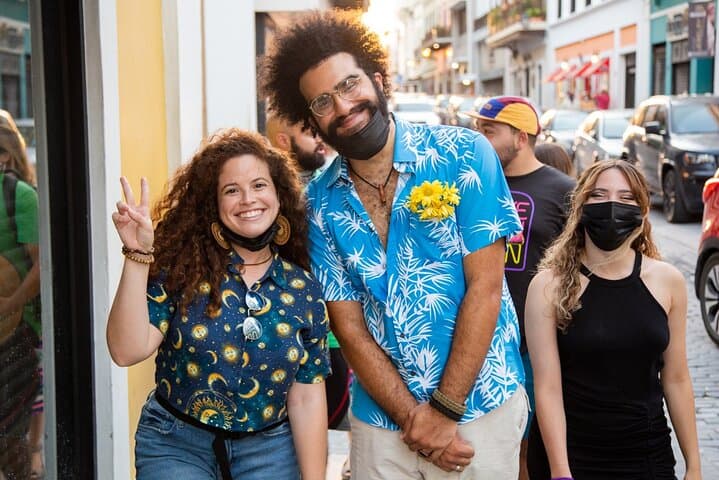


The walk begins where ocean breeze and centuries of salt meet cobblestone: you step off a modern sidewalk into blocks that still remember 16th‑century footsteps. Streets narrow quickly; colorful facades lean in as if to whisper the city’s layered stories. Over two hours a local guide threads together plazas, stone walls and a cathedral whose stones have seen governors and pirates alike.
The walk begins where ocean breeze and centuries of salt meet cobblestone: you step off a modern sidewalk into blocks that still remember 16th‑century footsteps. Streets narrow quickly; colorful facades lean in as if to whisper the city’s layered stories. Over two hours a local guide threads together plazas, stone walls and a cathedral whose stones have seen governors and pirates alike.
Old San Juan grew from the Spanish colonial project begun in the early 1500s and evolved with Taíno, Spanish and West African influences that shaped its language, religion and built environment. The district’s defensive system—walls, gates and forts—reflects its strategic role guarding the Caribbean approaches; Fortaleza, built in the 16th century and later expanded, remains the governor’s residence. La Casa Estrecha, the Cathedral of San Juan Bautista and sites like La Rogativa and La Capilla de Cristo offer tight, human-scale portals into politics, faith and daily life across five centuries.
Underfoot expect uneven, often slick cobbles and short flights of stone steps rather than long climbs—elevation changes are modest but require steady footing. The guide’s narration highlights architecture and civic history while pausing for photo views and thoughtful context about Puerto Rico’s ties to the United States and its cultural mix.
Practical notes: the two‑hour route suits people with moderate fitness; wear closed-toe shoes, sun protection and lightweight layered clothing. Churches enforce conservative dress—carry a scarf or avoid sleeveless tops. Bring water and a charged phone for your mobile ticket; groups are kept small for intimacy and questions. This is an urban cultural walk: low impact on nature but high on historical texture.