THE ADVENTURE COLLECTIVE® · Independent discovery and booking for outdoor travel

Walk the stone streets of Old San Juan on a concise, two‑hour guided tour that traces colonial forts, the Paseo de la Princesa waterfront and cathedral‑lined plazas. Ideal for history fans and first‑time visitors who can handle short uphill cobbled sections.
Walk the stone streets of Old San Juan on a concise, two‑hour guided tour that traces colonial forts, the Paseo de la Princesa waterfront and cathedral‑lined plazas. Ideal for history fans and first‑time visitors who can handle short uphill cobbled sections.
Morning light slants across blue bay water and bounces off century‑old blue shutters as the guide gathers the group at Plaza Colón. Cobbled lanes funnel you past musicians and street vendors; the Atlantic breeze nudges you toward the city wall where views of San Juan Bay open wide and history feels immediate.
Verified experiences and guided adventures in the surrounding area.
Operated by Castillo Watersports · San Juan, Puerto Rico
Morning light slants across blue bay water and bounces off century‑old blue shutters as the guide gathers the group at Plaza Colón. Cobbled lanes funnel you past musicians and street vendors; the Atlantic breeze nudges you toward the city wall where views of San Juan Bay open wide and history feels immediate.
Old San Juan began as a strategic Spanish colonial port in the early 1500s; its stone forts—El Morro and San Cristóbal—guarded trade routes and shaped the city’s grid. Geologically the islet sits on rugged limestone and coral outcrops, which the city’s cobblestones and thick masonry exploit for durability. Culturally, the neighborhood hums with a blend of Taíno, Spanish and Afro‑Caribbean influences visible in food, music and religious festivals.
The guided two‑hour walk typically covers Paseo de la Princesa, Raíces Fountain, the San Juan Gate, Plaza Colón and the old cathedral—each stop offering layered stories of conquest, commerce and daily life. Expect uphill stretches, short staircases and uneven stone underfoot; the pace is conversational and stops are frequent for photos and explanation.
Practicalities matter: wear sturdy shoes for cobbles, bring water and sunscreen, and plan morning or late‑afternoon departures to avoid peak heat. Bathrooms and cafés appear along the route but cash and small bills help for tips and small purchases. The tour is ideal for travelers who want a compact, history‑rich introduction to the oldest city in U.S. territory and who can manage short uphill walks on historic paving.
The tour notes wheelchair accessibility for some sections, but expect cobblestones and limited ramps; check with the operator ahead for specific accessibility needs.
Guides commonly speak English and Spanish; confirm language availability when booking if you need a specific language.
Meet at Plaza Colón; the tour lasts about two hours and accommodates small groups for a more personal experience.
This walking tour focuses on exterior viewpoints and history; admission to interior museum spaces at forts is typically not included but can be added separately.
Castillo Watersports operates guided outdoor trips and adventures with an emphasis on safety, stewardship, and memorable experiences.

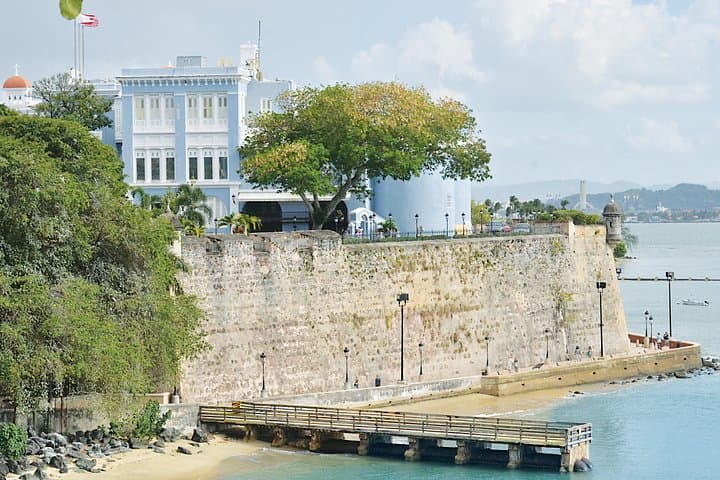


Morning light slants across blue bay water and bounces off century‑old blue shutters as the guide gathers the group at Plaza Colón. Cobbled lanes funnel you past musicians and street vendors; the Atlantic breeze nudges you toward the city wall where views of San Juan Bay open wide and history feels immediate.
Morning light slants across blue bay water and bounces off century‑old blue shutters as the guide gathers the group at Plaza Colón. Cobbled lanes funnel you past musicians and street vendors; the Atlantic breeze nudges you toward the city wall where views of San Juan Bay open wide and history feels immediate.
Old San Juan began as a strategic Spanish colonial port in the early 1500s; its stone forts—El Morro and San Cristóbal—guarded trade routes and shaped the city’s grid. Geologically the islet sits on rugged limestone and coral outcrops, which the city’s cobblestones and thick masonry exploit for durability. Culturally, the neighborhood hums with a blend of Taíno, Spanish and Afro‑Caribbean influences visible in food, music and religious festivals.
The guided two‑hour walk typically covers Paseo de la Princesa, Raíces Fountain, the San Juan Gate, Plaza Colón and the old cathedral—each stop offering layered stories of conquest, commerce and daily life. Expect uphill stretches, short staircases and uneven stone underfoot; the pace is conversational and stops are frequent for photos and explanation.
Practicalities matter: wear sturdy shoes for cobbles, bring water and sunscreen, and plan morning or late‑afternoon departures to avoid peak heat. Bathrooms and cafés appear along the route but cash and small bills help for tips and small purchases. The tour is ideal for travelers who want a compact, history‑rich introduction to the oldest city in U.S. territory and who can manage short uphill walks on historic paving.