THE ADVENTURE COLLECTIVE® · Independent discovery and booking for outdoor travel

Ride a morning ferry from Seattle and spend a long day moving between jade surf, tide pools, old-growth rainforest and a mile-high ridge with panoramic views. This private day tour covers Crescent Lake, Sol Duc Valley, Salt Creek and Hurricane Ridge with stops timed to tides and weather.
Ride a morning ferry from Seattle and spend a long day moving between jade surf, tide pools, old-growth rainforest and a mile-high ridge with panoramic views. This private day tour covers Crescent Lake, Sol Duc Valley, Salt Creek and Hurricane Ridge with stops timed to tides and weather.
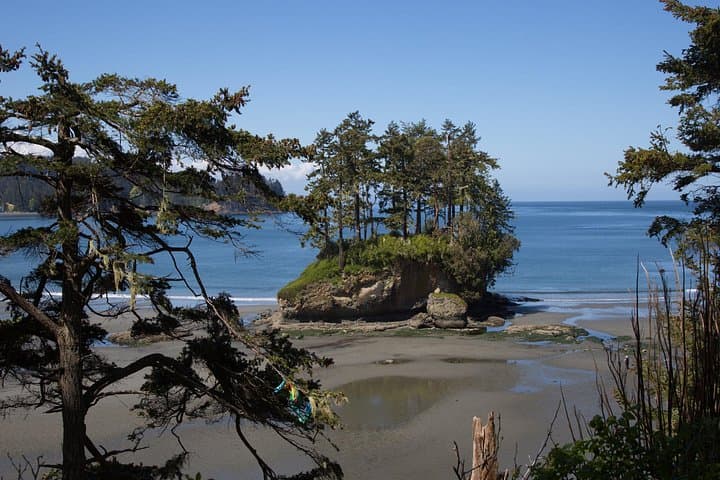
You step off the ferry with sea-spray on your face and a view of the Olympic Range rising like a dark wall across the sound. The morning is a patchwork of low clouds and shafts of light; a private van hums to life and you push inland, the ocean still tugging at the road's edge. Over the next 13–14 hours the peninsula reshapes itself beneath your boots: jade Pacific surf and wind-scoured sea stacks, moss-heavy old growth, glacier-fed lakes whose surfaces refuse to be moved by anything but a whisper of wind.
Verified experiences and guided adventures in the surrounding area.
Operated by Wild Goose Tours · Port Angeles, Washington
You step off the ferry with sea-spray on your face and a view of the Olympic Range rising like a dark wall across the sound. The morning is a patchwork of low clouds and shafts of light; a private van hums to life and you push inland, the ocean still tugging at the road's edge. Over the next 13–14 hours the peninsula reshapes itself beneath your boots: jade Pacific surf and wind-scoured sea stacks, moss-heavy old growth, glacier-fed lakes whose surfaces refuse to be moved by anything but a whisper of wind.
The landscape here was carved by ice and tide. The Olympics are a young, steep complex of basalt, sandstone and uplifted marine sediments; the glaciers that once polished these ridges left behind hanging valleys and the clear, deep basins of Lake Crescent. Indigenous tribes — notably the S'Klallam and Lower Elwha Klallam — have lived on these shores for millennia; their fishing and canoe traditions remain an undercurrent to any visit. In the 19th and early 20th centuries, logging and homesteading changed the coastline, and the creation of Olympic National Park in 1938 began a reversal toward protection.
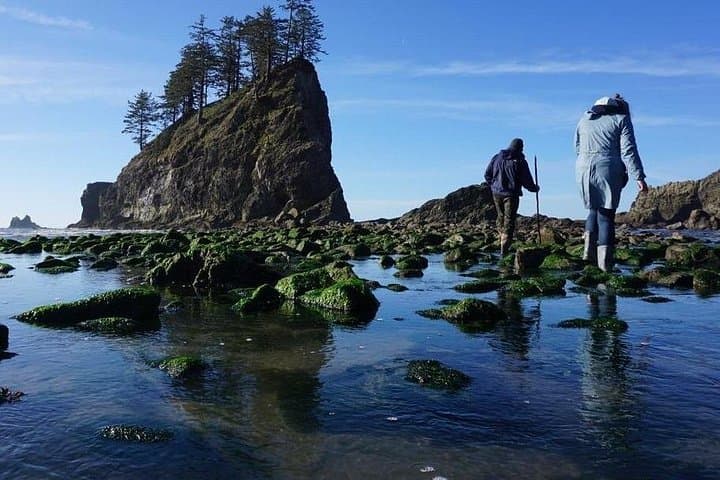
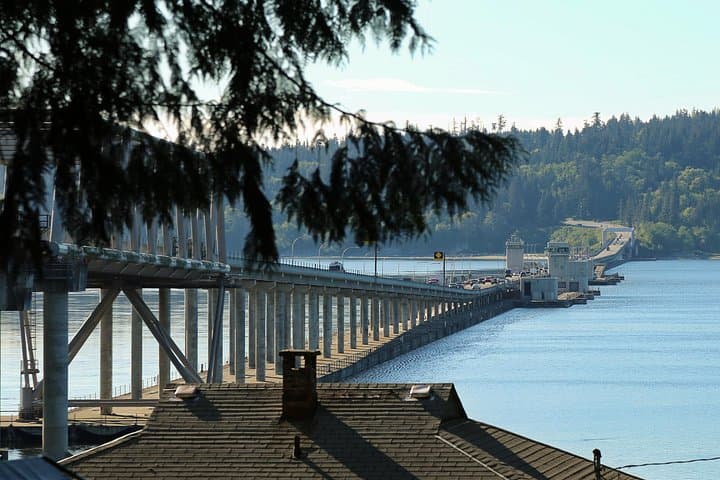
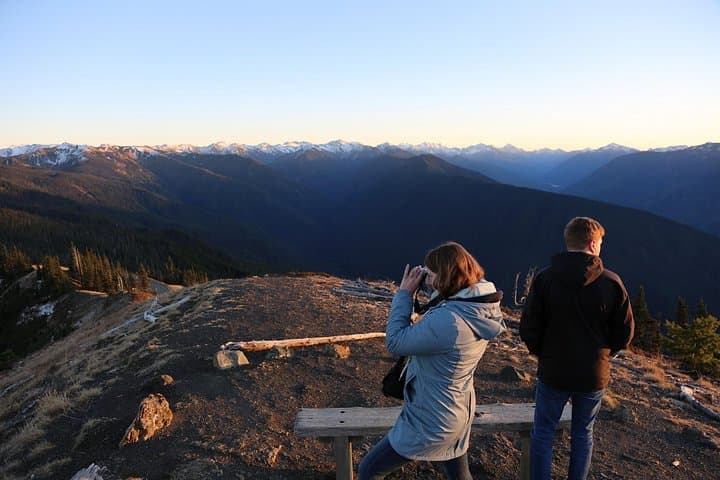
On this full-day tour you’ll ride the ferry across Puget Sound (about 35 minutes), then thread through Sequim’s lavender farms, pause at tidepools and sea stacks where the ocean dares you to look closer, and enter the dim, dripping hush of old-growth forest on short trails. Sol Duc Falls offers a wet, close-in thunder; Hurricane Ridge pulls the sky down to eye level from roughly a mile-high ridge (around 5,200 ft), where alpine meadows and views of the Strait of Juan de Fuca open wide.
Practical edge: this is a long day of varied terrain and microclimates. Tides and weather dictate stops—tidepool windows can be narrow and rainy afternoons can obliterate summit views—so pack for change. Wear sturdy footwear for slick driftwood and muddy forest tracks, and bring layers; even summer afternoons on the ridge feel alpine-cold. Carry binoculars for bald eagles and Roosevelt elk, and a refillable bottle; the tour includes bottled water but access to services is limited once you’re in the park.
Timing matters. Aim for low tide at coastal stops to get the best tidepool life, and push for an early start if you want clearer air on Hurricane Ridge. Be mindful of the fragile intertidal and forest ecosystems: keep to paths, step lightly on fragile plants, and photograph rather than collect. In return, the peninsula returns the favor—quiet lakes, bristling ridgelines, and a coastline that keeps giving surprises long after the day is over.
The full-day private tour runs approximately 13–14 hours (about 780–840 minutes), including ferry and driving time; expect an early pickup in the morning and return to Seattle in the evening.
Admission details vary by operator—confirm with the booking provider; this itinerary notes some park admission is included for specific stops.
The tour is private and can accommodate a range of ages, but it’s not recommended for people with serious heart or spinal conditions and requires moderate mobility for short hikes.
No—tidepool access is tide-dependent. The guide times coastal stops to match low tides when possible, but weather and tides can alter the schedule.
You may see Roosevelt elk near meadows, bald eagles along the coast, and seals or sea birds at tidepool sites; sightings aren’t guaranteed.
Expect several short walks of 0.5–2 miles on mixed terrain—boardwalks, beach sand, and forest trails—interspersed with vehicle travel.
Wild Goose Tours operates guided outdoor trips and adventures with an emphasis on safety, stewardship, and memorable experiences.
You step off the ferry with sea-spray on your face and a view of the Olympic Range rising like a dark wall across the sound. The morning is a patchwork of low clouds and shafts of light; a private van hums to life and you push inland, the ocean still tugging at the road's edge. Over the next 13–14 hours the peninsula reshapes itself beneath your boots: jade Pacific surf and wind-scoured sea stacks, moss-heavy old growth, glacier-fed lakes whose surfaces refuse to be moved by anything but a whisper of wind.
You step off the ferry with sea-spray on your face and a view of the Olympic Range rising like a dark wall across the sound. The morning is a patchwork of low clouds and shafts of light; a private van hums to life and you push inland, the ocean still tugging at the road's edge. Over the next 13–14 hours the peninsula reshapes itself beneath your boots: jade Pacific surf and wind-scoured sea stacks, moss-heavy old growth, glacier-fed lakes whose surfaces refuse to be moved by anything but a whisper of wind.
The landscape here was carved by ice and tide. The Olympics are a young, steep complex of basalt, sandstone and uplifted marine sediments; the glaciers that once polished these ridges left behind hanging valleys and the clear, deep basins of Lake Crescent. Indigenous tribes — notably the S'Klallam and Lower Elwha Klallam — have lived on these shores for millennia; their fishing and canoe traditions remain an undercurrent to any visit. In the 19th and early 20th centuries, logging and homesteading changed the coastline, and the creation of Olympic National Park in 1938 began a reversal toward protection.
On this full-day tour you’ll ride the ferry across Puget Sound (about 35 minutes), then thread through Sequim’s lavender farms, pause at tidepools and sea stacks where the ocean dares you to look closer, and enter the dim, dripping hush of old-growth forest on short trails. Sol Duc Falls offers a wet, close-in thunder; Hurricane Ridge pulls the sky down to eye level from roughly a mile-high ridge (around 5,200 ft), where alpine meadows and views of the Strait of Juan de Fuca open wide.
Practical edge: this is a long day of varied terrain and microclimates. Tides and weather dictate stops—tidepool windows can be narrow and rainy afternoons can obliterate summit views—so pack for change. Wear sturdy footwear for slick driftwood and muddy forest tracks, and bring layers; even summer afternoons on the ridge feel alpine-cold. Carry binoculars for bald eagles and Roosevelt elk, and a refillable bottle; the tour includes bottled water but access to services is limited once you’re in the park.
Timing matters. Aim for low tide at coastal stops to get the best tidepool life, and push for an early start if you want clearer air on Hurricane Ridge. Be mindful of the fragile intertidal and forest ecosystems: keep to paths, step lightly on fragile plants, and photograph rather than collect. In return, the peninsula returns the favor—quiet lakes, bristling ridgelines, and a coastline that keeps giving surprises long after the day is over.