THE ADVENTURE COLLECTIVE® · Independent discovery and booking for outdoor travel

A single day on Ometepe that moves from a jungle hike to a marshland paddle and closes with a lakeside sunset—San Ramón’s plunge, the Istián’s wildlife, and Punta Jesús María’s colors in one compact, adventurous loop.
A single day on Ometepe that moves from a jungle hike to a marshland paddle and closes with a lakeside sunset—San Ramón’s plunge, the Istián’s wildlife, and Punta Jesús María’s colors in one compact, adventurous loop.
You step off the ferry into Moyogalpa with lake air already damp and warm, palms leaning as though to watch you pass. An hour’s drive deposits you at the base of Maderas Volcano where the trail to San Ramón narrows and the jungle tightens its grip: roots like ropes, ferns brushing your calves, and the steady pulse of water ahead. The hike climbs through secondary cloud forest—moss clings to trees and orchids peek from bole cavities—until the cliff opens and the waterfall drops in a column, throwing cool mist that dares you to strip off your pack and jump in.
Verified experiences and guided adventures in the surrounding area.
Operated by Happy Tours Ometepe · Moyogalpa, Rivas Department
You step off the ferry into Moyogalpa with lake air already damp and warm, palms leaning as though to watch you pass. An hour’s drive deposits you at the base of Maderas Volcano where the trail to San Ramón narrows and the jungle tightens its grip: roots like ropes, ferns brushing your calves, and the steady pulse of water ahead. The hike climbs through secondary cloud forest—moss clings to trees and orchids peek from bole cavities—until the cliff opens and the waterfall drops in a column, throwing cool mist that dares you to strip off your pack and jump in.
San Ramón is a product of Ometepe’s volcanic bones. Maderas and Concepción rose from Lake Nicaragua’s volcanic activity, creating an island that has been a crossroads for indigenous peoples for centuries; look for petroglyphs and the remnants of pre-Columbian activity in local museums and roadside sites. Geologically, Maderas is the older, more eroded cone—its slopes hold a cloud forest ringed by ravines that funnel rainwater to waterfalls like San Ramón.
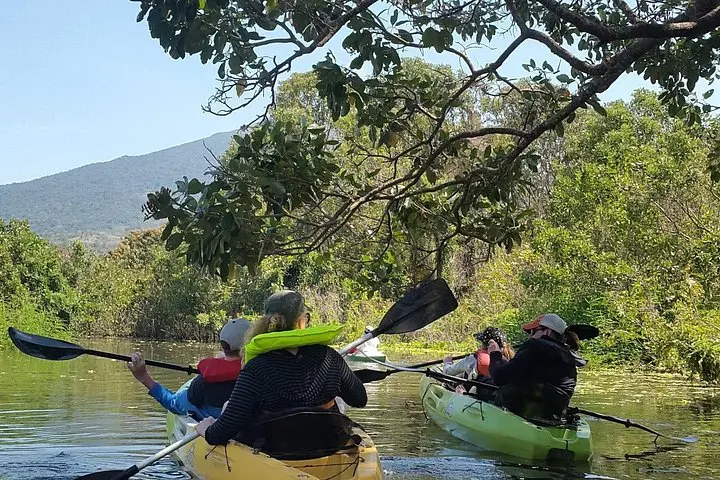
After the hike, the tour shifts gears: you paddle. Kayaking across Lake Nicaragua toward the Istián River, the water takes on a different personality—expansive, reflective, then narrowing into reed-lined channels where kingfishers flick and turtles pop like coins. The marshland that runs between the two volcanoes acts as a wildlife corridor; guides keep a steady, low cadence so the birds, monkeys and reptiles reveal themselves on their terms.
The last act is sunset at Punta Jesús María or Playa Mangos. The western rim of the isthmus frames the sun as it sinks, and colors deepen across the lake—sharp, fast, then gone. It’s a local ritual: families and fishermen gather, the air cools, and the island exhales.
Practical edge: expect a full day—about 8–9 hours total. The San Ramón hike is moderate: roughly 4–6 km round-trip with ~350 m of elevation change; trails can be slippery and steep in sections. Kayaking is mostly flatwater with short river channels; basic paddling skills and comfort in the water are required. Wear grippy hiking shoes you don’t mind getting wet, bring a dry bag for electronics, and pack sunscreen and insect repellent. Hydrate early; the jungle moves slowly but the sun can hit hard on exposed stretches.
Local guides are bilingual and include lunch, gear (kayaks, paddles, life jackets) and hotel pickup across Ometepe. Time your visit for the dry months (November–April) if you prefer firmer trails and clearer skies, but the green season intensifies wildlife activity and waterfall volume. Leave no trace: stick to trails and follow your guide’s instructions around wildlife and river channels. This one-day loop gives a compact, authentic sense of why Ometepe feels like an island that keeps evolving as you move through it.
It’s moderate: expect 4–6 km round-trip and roughly 350 m of elevation gain on uneven, sometimes slippery terrain; allow 2–3 hours for the hike and swim time.
No formal experience required, but you should be comfortable paddling in flatwater and be able to sit and brace for up to three hours total on the water.
Yes—guides are bilingual (Spanish/English) and the tour supplies kayaks, paddles, life jackets, bottled water and lunch.
Children can join but must be supervised; the operator notes infants must sit on laps and the route isn’t recommended for pregnant travelers or those with serious back or heart conditions.
Expect a mix of water and forest species: kingfishers, herons, turtles, and occasionally monkeys; sightings depend on season and noise level.
The tour runs about 480–540 minutes—roughly 8–9 hours including hotel pickup and return.
Happy Tours Ometepe operates guided outdoor trips and adventures with an emphasis on safety, stewardship, and memorable experiences.
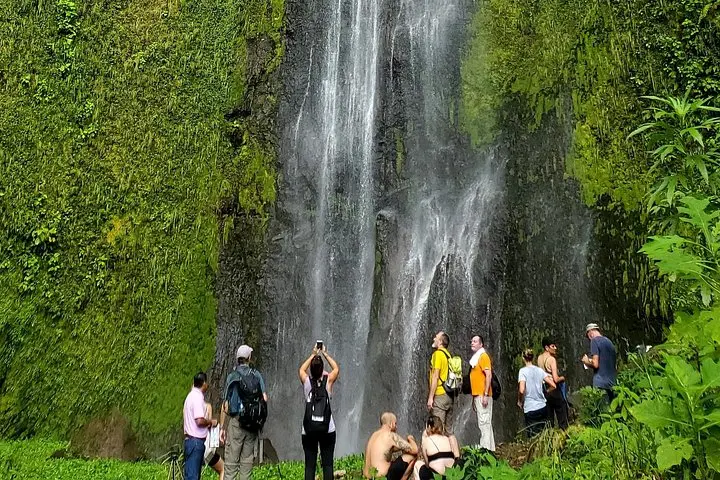
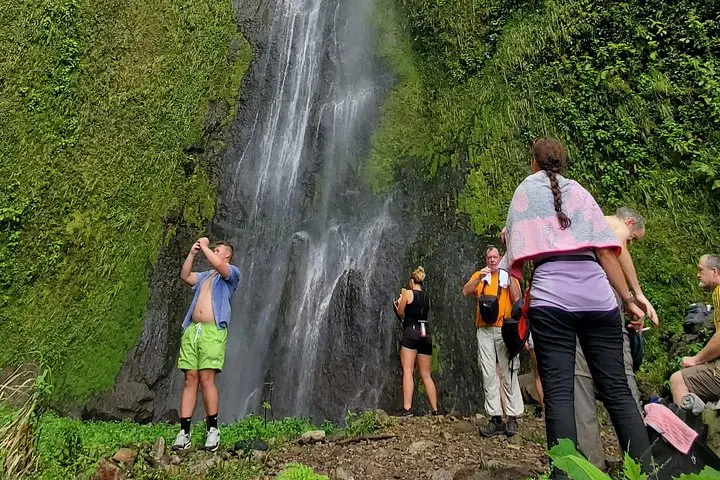
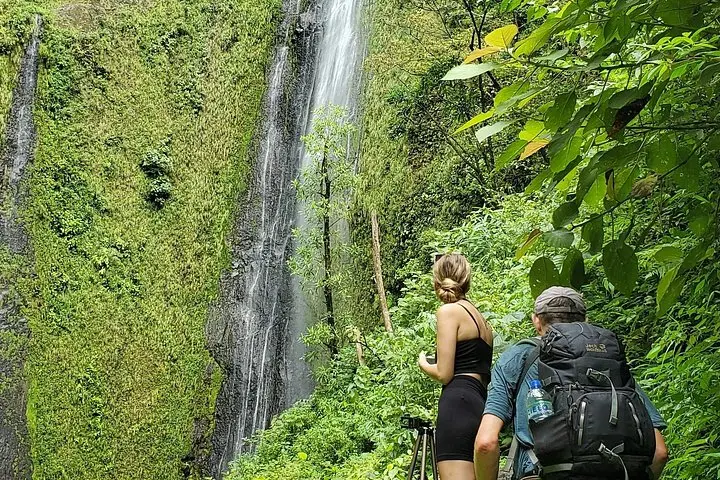
You step off the ferry into Moyogalpa with lake air already damp and warm, palms leaning as though to watch you pass. An hour’s drive deposits you at the base of Maderas Volcano where the trail to San Ramón narrows and the jungle tightens its grip: roots like ropes, ferns brushing your calves, and the steady pulse of water ahead. The hike climbs through secondary cloud forest—moss clings to trees and orchids peek from bole cavities—until the cliff opens and the waterfall drops in a column, throwing cool mist that dares you to strip off your pack and jump in.
You step off the ferry into Moyogalpa with lake air already damp and warm, palms leaning as though to watch you pass. An hour’s drive deposits you at the base of Maderas Volcano where the trail to San Ramón narrows and the jungle tightens its grip: roots like ropes, ferns brushing your calves, and the steady pulse of water ahead. The hike climbs through secondary cloud forest—moss clings to trees and orchids peek from bole cavities—until the cliff opens and the waterfall drops in a column, throwing cool mist that dares you to strip off your pack and jump in.
San Ramón is a product of Ometepe’s volcanic bones. Maderas and Concepción rose from Lake Nicaragua’s volcanic activity, creating an island that has been a crossroads for indigenous peoples for centuries; look for petroglyphs and the remnants of pre-Columbian activity in local museums and roadside sites. Geologically, Maderas is the older, more eroded cone—its slopes hold a cloud forest ringed by ravines that funnel rainwater to waterfalls like San Ramón.
After the hike, the tour shifts gears: you paddle. Kayaking across Lake Nicaragua toward the Istián River, the water takes on a different personality—expansive, reflective, then narrowing into reed-lined channels where kingfishers flick and turtles pop like coins. The marshland that runs between the two volcanoes acts as a wildlife corridor; guides keep a steady, low cadence so the birds, monkeys and reptiles reveal themselves on their terms.
The last act is sunset at Punta Jesús María or Playa Mangos. The western rim of the isthmus frames the sun as it sinks, and colors deepen across the lake—sharp, fast, then gone. It’s a local ritual: families and fishermen gather, the air cools, and the island exhales.
Practical edge: expect a full day—about 8–9 hours total. The San Ramón hike is moderate: roughly 4–6 km round-trip with ~350 m of elevation change; trails can be slippery and steep in sections. Kayaking is mostly flatwater with short river channels; basic paddling skills and comfort in the water are required. Wear grippy hiking shoes you don’t mind getting wet, bring a dry bag for electronics, and pack sunscreen and insect repellent. Hydrate early; the jungle moves slowly but the sun can hit hard on exposed stretches.
Local guides are bilingual and include lunch, gear (kayaks, paddles, life jackets) and hotel pickup across Ometepe. Time your visit for the dry months (November–April) if you prefer firmer trails and clearer skies, but the green season intensifies wildlife activity and waterfall volume. Leave no trace: stick to trails and follow your guide’s instructions around wildlife and river channels. This one-day loop gives a compact, authentic sense of why Ometepe feels like an island that keeps evolving as you move through it.