THE ADVENTURE COLLECTIVE® · Independent discovery and booking for outdoor travel

Six days through Ethiopia’s Omo Valley pairs market mornings, canoe crossings and ceremonial moments with wildlife at Lake Chamo. Expect long drives, profound cultural exchanges and practical logistics for remote travel.
Six days through Ethiopia’s Omo Valley pairs market mornings, canoe crossings and ceremonial moments with wildlife at Lake Chamo. Expect long drives, profound cultural exchanges and practical logistics for remote travel.
Dust and sun greet you as the plane eases over the Omo River basin: a patchwork of red soil, ribboned floodplains and villages where smoke rises from conical huts. On the ground, the valley opens into a sequence of living cultures — Hamar cattle enclosures, Karo riverbanks painted with ochre, and the Mursi’s bold lip plates — each community shaped by the river that dares the landscape to change around it.
Verified experiences and guided adventures in the surrounding area.
Operated by Great Ethiopian Tours · Jinka, Southern Nations, Nationalities, and Peoples' Region (SNNPR)
Dust and sun greet you as the plane eases over the Omo River basin: a patchwork of red soil, ribboned floodplains and villages where smoke rises from conical huts. On the ground, the valley opens into a sequence of living cultures — Hamar cattle enclosures, Karo riverbanks painted with ochre, and the Mursi’s bold lip plates — each community shaped by the river that dares the landscape to change around it.
Geology and history are visible here: the Omo Valley’s deep alluvial soils feed seasonal floodplains and, alongside nearby Mago National Park and Konso’s terraced slopes, preserve evidence of human occupation stretching back millennia. Cultural practice is immediate — the Hamar bull-jumping rite, the Karo’s body-painting rituals and the Dorze woven huts — all rooted in local subsistence, craft and ceremony.
Expect a rhythm of early drives and market visits: Turmi functions as the field base, with 1–3 hour drives linking villages and a dugout canoe crossing at Omorate. Wildlife sightings focus on floodplain species and Nile crocodiles at Lake Chamo, while Mago Park offers more remote game viewing.
Practical guidance: travel on dry-season roads where 4x4 comfort matters, carry cash for market purchases, respect photography boundaries and ask before shooting portraits. Hydrate for hot, dusty days, bring sun protection and modest clothing for village visits. Market days (notably Thursday in parts of the valley) and ceremonial timing are variable; flexibility is essential. This six-day private itinerary trades convenience for deep cultural access — arrive curious, travel patient, and leave with vivid images and new perspectives.
Routine vaccinations are recommended; yellow fever vaccination may be required and anti-malarial prophylaxis is advised — consult a travel clinic well before departure.
Lodges range from basic eco-lodges to mid-range hotels; some nights are in remote camps with simple facilities and limited connectivity.
Responsible operators arrange visits with local guides and respect community boundaries; always follow your guide’s instructions and avoid gifting items that disrupt local economies.
Yes — Lake Chamo has reliable hippo and Nile crocodile sightings; wildlife in Mago Park is more seasonal and less predictable.
Great Ethiopian Tours operates guided outdoor trips and adventures with an emphasis on safety, stewardship, and memorable experiences.
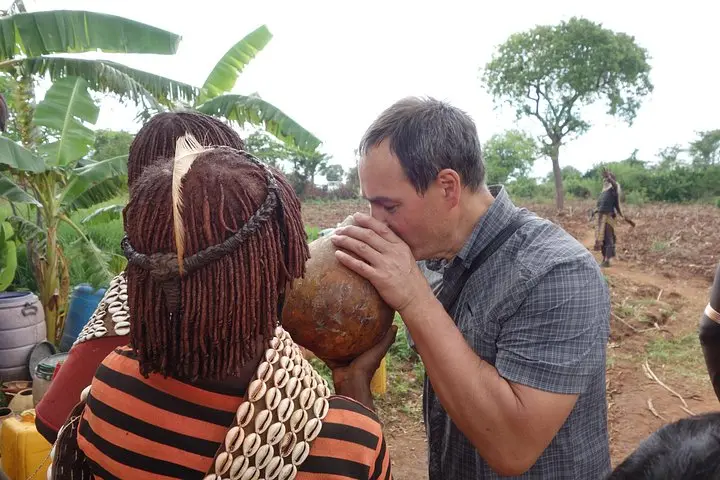

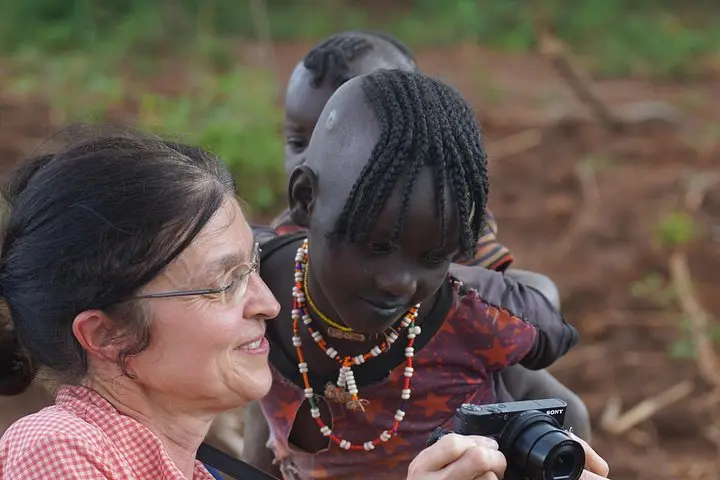

Dust and sun greet you as the plane eases over the Omo River basin: a patchwork of red soil, ribboned floodplains and villages where smoke rises from conical huts. On the ground, the valley opens into a sequence of living cultures — Hamar cattle enclosures, Karo riverbanks painted with ochre, and the Mursi’s bold lip plates — each community shaped by the river that dares the landscape to change around it.
Dust and sun greet you as the plane eases over the Omo River basin: a patchwork of red soil, ribboned floodplains and villages where smoke rises from conical huts. On the ground, the valley opens into a sequence of living cultures — Hamar cattle enclosures, Karo riverbanks painted with ochre, and the Mursi’s bold lip plates — each community shaped by the river that dares the landscape to change around it.
Geology and history are visible here: the Omo Valley’s deep alluvial soils feed seasonal floodplains and, alongside nearby Mago National Park and Konso’s terraced slopes, preserve evidence of human occupation stretching back millennia. Cultural practice is immediate — the Hamar bull-jumping rite, the Karo’s body-painting rituals and the Dorze woven huts — all rooted in local subsistence, craft and ceremony.
Expect a rhythm of early drives and market visits: Turmi functions as the field base, with 1–3 hour drives linking villages and a dugout canoe crossing at Omorate. Wildlife sightings focus on floodplain species and Nile crocodiles at Lake Chamo, while Mago Park offers more remote game viewing.
Practical guidance: travel on dry-season roads where 4x4 comfort matters, carry cash for market purchases, respect photography boundaries and ask before shooting portraits. Hydrate for hot, dusty days, bring sun protection and modest clothing for village visits. Market days (notably Thursday in parts of the valley) and ceremonial timing are variable; flexibility is essential. This six-day private itinerary trades convenience for deep cultural access — arrive curious, travel patient, and leave with vivid images and new perspectives.