THE ADVENTURE COLLECTIVE® · Independent discovery and booking for outdoor travel

Take a private, guided walking tour through Angkor’s major temples—Bayon, Ta Prohm and Angkor Wat—paired with a visit to a nearby village. This six‑hour tour blends close-up archaeology with local life and private tuk‑tuk transfers.
Take a private, guided walking tour through Angkor’s major temples—Bayon, Ta Prohm and Angkor Wat—paired with a visit to a nearby village. This six‑hour tour blends close-up archaeology with local life and private tuk‑tuk transfers.
You step off the tuk‑tuk into heat and shade, temple stones cool beneath your palm as the guide counts out centuries in simple gestures. The tour moves at a walking pace—through a nearby village, along a flat 3 km stretch of road, then into the stone corridors where faces and roots meet.
Verified experiences and guided adventures in the surrounding area.
Operated by Angkor Focus Travel · Siem Reap, Siem Reap Province
You step off the tuk‑tuk into heat and shade, temple stones cool beneath your palm as the guide counts out centuries in simple gestures. The tour moves at a walking pace—through a nearby village, along a flat 3 km stretch of road, then into the stone corridors where faces and roots meet.
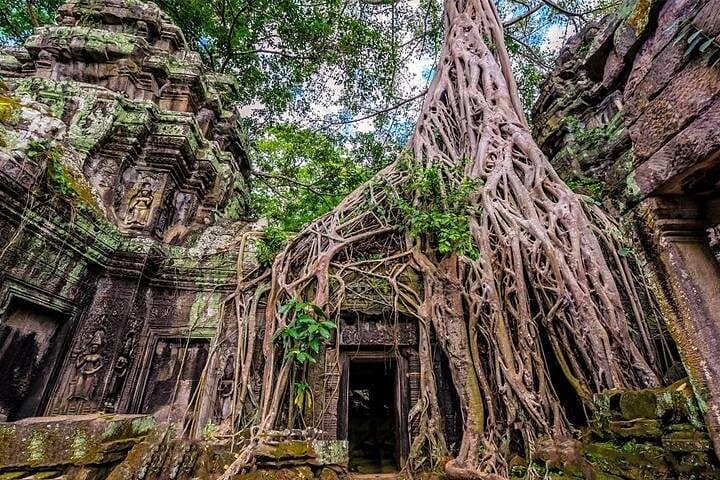
Angkor sits on a low, ancient plain carved by the Tonlé Sap’s seasonal rhythms; the Khmer Empire shaped the landscape with reservoirs and canals that still channel water today. Bayon’s 200+ stone faces watch over the old capital of Angkor Thom, Ta Prohm’s strangling fig trees push and pry at carved lintels, and Angkor Wat—built in the 12th century—rises from its moat with carefully proportioned galleries and bas-reliefs depicting myth and history.
The walking tour gives you a local rhythm: a village stop to observe daily life, bottled water and fresh coconut juice to cool off, a private tuk‑tuk between sites to save energy for exploration. Expect uneven flagstones, steep temple steps, and shaded alleys that suddenly open to sweeping views across the complex.
Practical guidance: carry sun protection, a lightweight rain layer in the wet season, and cash for the Angkor Pass (not included). Dress respectfully; shoulders and knees should be covered at religious sites. Aim for morning starts to avoid peak heat and the largest crowds, and walk deliberately—these ruins reward slow attention more than a frantic checklist.
No. The Angkor Pass is not included and must be purchased separately at the park entrance; prices vary by duration (single‑day, multi‑day).
Private tuk‑tuk transport between sites, hotel pickup/drop‑off, an English‑speaking guide, bottled water and fresh coconut juice are included; temple admissions are not.
Yes—tour information states infants must sit on an adult’s lap; the walk is gentle, but parents should plan for heat and uneven ground.
Photography is permitted at most sites, but be respectful of worship areas and follow any signage restricting flash or tripods.
Angkor Focus Travel operates guided outdoor trips and adventures with an emphasis on safety, stewardship, and memorable experiences.


You step off the tuk‑tuk into heat and shade, temple stones cool beneath your palm as the guide counts out centuries in simple gestures. The tour moves at a walking pace—through a nearby village, along a flat 3 km stretch of road, then into the stone corridors where faces and roots meet.
You step off the tuk‑tuk into heat and shade, temple stones cool beneath your palm as the guide counts out centuries in simple gestures. The tour moves at a walking pace—through a nearby village, along a flat 3 km stretch of road, then into the stone corridors where faces and roots meet.
Angkor sits on a low, ancient plain carved by the Tonlé Sap’s seasonal rhythms; the Khmer Empire shaped the landscape with reservoirs and canals that still channel water today. Bayon’s 200+ stone faces watch over the old capital of Angkor Thom, Ta Prohm’s strangling fig trees push and pry at carved lintels, and Angkor Wat—built in the 12th century—rises from its moat with carefully proportioned galleries and bas-reliefs depicting myth and history.
The walking tour gives you a local rhythm: a village stop to observe daily life, bottled water and fresh coconut juice to cool off, a private tuk‑tuk between sites to save energy for exploration. Expect uneven flagstones, steep temple steps, and shaded alleys that suddenly open to sweeping views across the complex.
Practical guidance: carry sun protection, a lightweight rain layer in the wet season, and cash for the Angkor Pass (not included). Dress respectfully; shoulders and knees should be covered at religious sites. Aim for morning starts to avoid peak heat and the largest crowds, and walk deliberately—these ruins reward slow attention more than a frantic checklist.