THE ADVENTURE COLLECTIVE® · Independent discovery and booking for outdoor travel

Fly from Cairo to Aswan and drive to Abu Simbel for a concentrated day among Ramses II’s colossal temples. This full-day excursion blends an early start, significant travel, and expert guiding to make a UNESCO landmark accessible in one long, memorable day.
Fly from Cairo to Aswan and drive to Abu Simbel for a concentrated day among Ramses II’s colossal temples. This full-day excursion blends an early start, significant travel, and expert guiding to make a UNESCO landmark accessible in one long, memorable day.
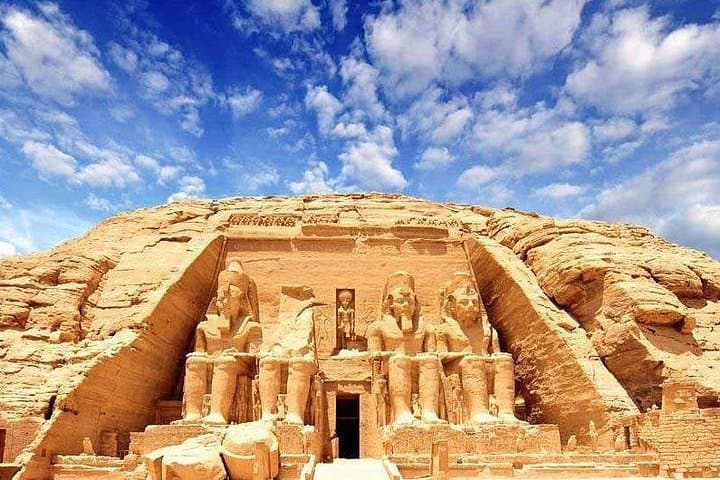
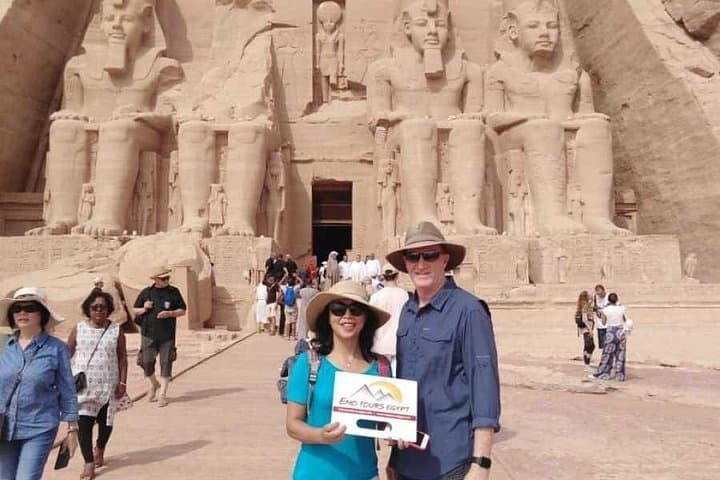
The busyness of Cairo yields to predawn calm as you board a short flight to Aswan and then roll south by road toward a desert horizon that seems to push you forward. By midmorning the sandstone cliffs give way to colossal stone faces: Abu Simbel’s four seated Ramses II statues stare out across a flat plain, the sun seeming to dare visitors to measure their scale.
Verified experiences and guided adventures in the surrounding area.
Operated by Emo Tours Egypt · Abu Simbel, Aswan Governorate
The busyness of Cairo yields to predawn calm as you board a short flight to Aswan and then roll south by road toward a desert horizon that seems to push you forward. By midmorning the sandstone cliffs give way to colossal stone faces: Abu Simbel’s four seated Ramses II statues stare out across a flat plain, the sun seeming to dare visitors to measure their scale.
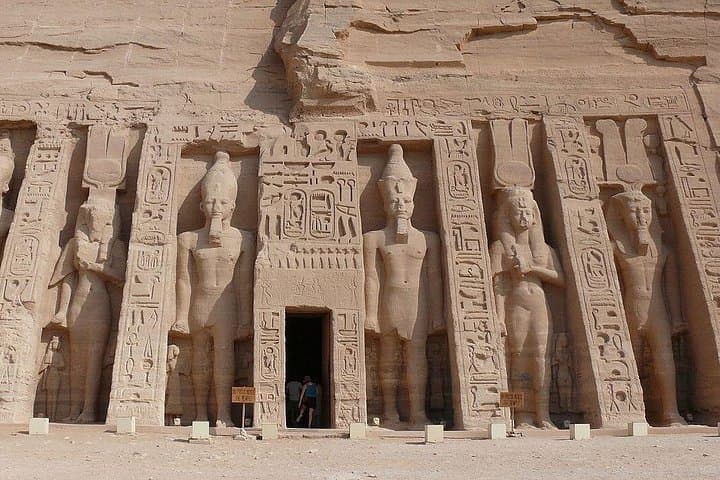
Carved in the 13th century BCE during Ramses II’s reign, the twin temples of Abu Simbel—Ramses’ Great Temple and the smaller temple of Nefertari—were cut into a cliff to monumentalize royal power and ritual. In the 1960s the entire complex was dismantled and moved block-by-block to higher ground to escape Lake Nasser’s rising waters, a modern engineering chapter layered atop pharaonic intent.
Geology here is raw: wind-polished sandstone and the immense body of the Nile downstream shaping human settlement for millennia. Local culture remains tied to river rhythms and Nubian heritage—expect frank hospitality and simple, well-prepared Egyptian lunches at local eateries.
Practically, the day is long but physically easy: a 3:00 am hotel pickup in Cairo, early flights, a roughly three-hour drive from Aswan to the site, and time for guided exploration before returning the same day. Bring sun protection, comfortable shoes for walking on uneven stone and sand, hydration, and copies of travel documents for security checks. Photography is plentiful but follow guide directions and respect restricted areas. With planning, the trip delivers an intense, compact immersion into ancient statecraft and modern conservation—an architectural encounter worth the early wake-up.
Expect a roughly 12-hour day including transfers: early morning flight to Aswan, a ~3-hour drive to Abu Simbel, guided visit time, return flight and transfer to Cairo.
This package states that entry fees and Cairo–Aswan–Cairo flights are included; confirm specifics at booking and bring passport for ticketing.
The visit involves short walks on uneven surfaces; it’s generally suitable for children and most adults, but not recommended for those with severe spinal or heart issues.
Photography is commonly allowed in exterior and many interior areas, but follow guide instructions and any posted restrictions—flash may be prohibited in sensitive chambers.
Emo Tours Egypt operates guided outdoor trips and adventures with an emphasis on safety, stewardship, and memorable experiences.
The busyness of Cairo yields to predawn calm as you board a short flight to Aswan and then roll south by road toward a desert horizon that seems to push you forward. By midmorning the sandstone cliffs give way to colossal stone faces: Abu Simbel’s four seated Ramses II statues stare out across a flat plain, the sun seeming to dare visitors to measure their scale.
The busyness of Cairo yields to predawn calm as you board a short flight to Aswan and then roll south by road toward a desert horizon that seems to push you forward. By midmorning the sandstone cliffs give way to colossal stone faces: Abu Simbel’s four seated Ramses II statues stare out across a flat plain, the sun seeming to dare visitors to measure their scale.
Carved in the 13th century BCE during Ramses II’s reign, the twin temples of Abu Simbel—Ramses’ Great Temple and the smaller temple of Nefertari—were cut into a cliff to monumentalize royal power and ritual. In the 1960s the entire complex was dismantled and moved block-by-block to higher ground to escape Lake Nasser’s rising waters, a modern engineering chapter layered atop pharaonic intent.
Geology here is raw: wind-polished sandstone and the immense body of the Nile downstream shaping human settlement for millennia. Local culture remains tied to river rhythms and Nubian heritage—expect frank hospitality and simple, well-prepared Egyptian lunches at local eateries.
Practically, the day is long but physically easy: a 3:00 am hotel pickup in Cairo, early flights, a roughly three-hour drive from Aswan to the site, and time for guided exploration before returning the same day. Bring sun protection, comfortable shoes for walking on uneven stone and sand, hydration, and copies of travel documents for security checks. Photography is plentiful but follow guide directions and respect restricted areas. With planning, the trip delivers an intense, compact immersion into ancient statecraft and modern conservation—an architectural encounter worth the early wake-up.