THE ADVENTURE COLLECTIVE® · Independent discovery and booking for outdoor travel

Spend a single, carefully paced day moving through the monumental Angkor complex with a private guide. Visit Angkor Wat, Bayon and Ta Prohm while learning the history, geology and local customs that shape the experience.
Spend a single, carefully paced day moving through the monumental Angkor complex with a private guide. Visit Angkor Wat, Bayon and Ta Prohm while learning the history, geology and local customs that shape the experience.
A low mist stills over the wide moat as the first shafts of sun cut across Angkor Wat’s central towers, the stone silhouettes resolving into carved faces and bas-reliefs. A private guide meets the group at the vehicle, and the day moves with the rhythm of the ruins—long causeways, sudden open courtyards, and shaded galleries where inscriptions whisper centuries-old politics and devotion.
Verified experiences and guided adventures in the surrounding area.
Operated by Icare Tours · Siem Reap, Siem Reap
A low mist stills over the wide moat as the first shafts of sun cut across Angkor Wat’s central towers, the stone silhouettes resolving into carved faces and bas-reliefs. A private guide meets the group at the vehicle, and the day moves with the rhythm of the ruins—long causeways, sudden open courtyards, and shaded galleries where inscriptions whisper centuries-old politics and devotion.
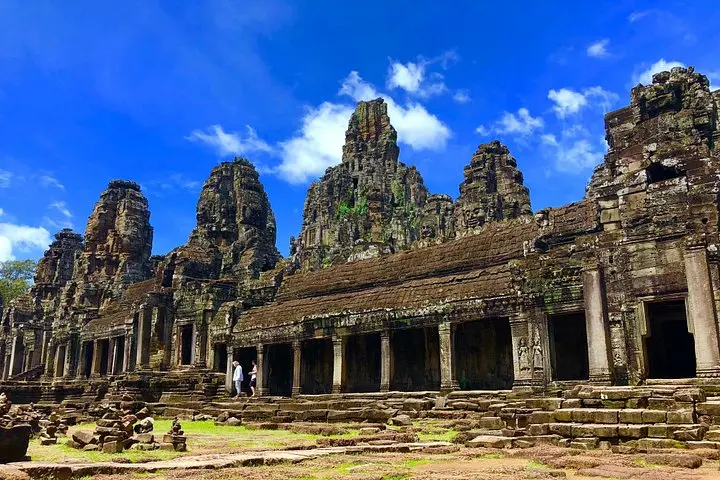
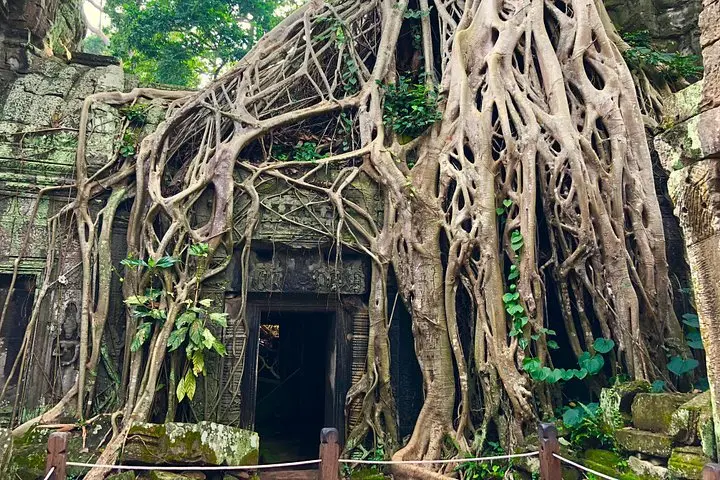
Built in the 12th century under King Suryavarman II, Angkor Wat began as a state-temple and mausoleum; nearby Bayon bears the later, enigmatic faces of Jayavarman VII, and Ta Prohm keeps the jungle’s claim with fig roots threaded through lintels. The complex sits on sandstone and laterite, carved and moved by an ancient water management system of barays and canals that still shapes the horizon.
Culturally, the site remains both sacred and lived-in: monks chant, vendors sell refreshments, and conservation teams balance tourism with fragile stone. Expect a mix of archaeology and daily Cambodian life as you move between temples.
Practical guidance: this private, full-day itinerary runs roughly 5–8 hours and includes AC transport and bottled water, but not Angkor Pass or meals. Footing is uneven—sandstone, steps and occasional mud—so wear sturdy shoes and modest clothing for temple entry. Start early to avoid heat and crowds, hydrate frequently, and be prepared for short photo stops and slow moments at key carvings. Guides typically handle admissions, timing and photo spots, letting you focus on the ruins and the stories written in stone.
No. The Angkor Pass (day, 3-day or weekly) is separate; most guides will direct you to the ticket center or handle purchase but budget for the fee.
Some areas and paths near main plazas are more accessible and transport is wheelchair-accessible per operator notes, but many temple interiors and steep steps are not suitable for wheelchairs.
This tour lists bottled water and AC transport as included; meals are typically not included—confirm with the operator and plan a stop in Siem Reap if needed.
Photography is generally allowed in open areas but restricted in certain sanctums; drones require permits from Cambodian authorities and are usually banned at major monuments.
Icare Tours operates guided outdoor trips and adventures with an emphasis on safety, stewardship, and memorable experiences.

A low mist stills over the wide moat as the first shafts of sun cut across Angkor Wat’s central towers, the stone silhouettes resolving into carved faces and bas-reliefs. A private guide meets the group at the vehicle, and the day moves with the rhythm of the ruins—long causeways, sudden open courtyards, and shaded galleries where inscriptions whisper centuries-old politics and devotion.
A low mist stills over the wide moat as the first shafts of sun cut across Angkor Wat’s central towers, the stone silhouettes resolving into carved faces and bas-reliefs. A private guide meets the group at the vehicle, and the day moves with the rhythm of the ruins—long causeways, sudden open courtyards, and shaded galleries where inscriptions whisper centuries-old politics and devotion.
Built in the 12th century under King Suryavarman II, Angkor Wat began as a state-temple and mausoleum; nearby Bayon bears the later, enigmatic faces of Jayavarman VII, and Ta Prohm keeps the jungle’s claim with fig roots threaded through lintels. The complex sits on sandstone and laterite, carved and moved by an ancient water management system of barays and canals that still shapes the horizon.
Culturally, the site remains both sacred and lived-in: monks chant, vendors sell refreshments, and conservation teams balance tourism with fragile stone. Expect a mix of archaeology and daily Cambodian life as you move between temples.
Practical guidance: this private, full-day itinerary runs roughly 5–8 hours and includes AC transport and bottled water, but not Angkor Pass or meals. Footing is uneven—sandstone, steps and occasional mud—so wear sturdy shoes and modest clothing for temple entry. Start early to avoid heat and crowds, hydrate frequently, and be prepared for short photo stops and slow moments at key carvings. Guides typically handle admissions, timing and photo spots, letting you focus on the ruins and the stories written in stone.