THE ADVENTURE COLLECTIVE® · Independent discovery and booking for outdoor travel

Spend a long day exploring Battambang from Siem Reap—ride the improvised bamboo train, trace French colonial streets, climb Phnom Sampeau and watch a million bats spiral from the cave at dusk. Practical tips on fees, timing and what to pack.
Spend a long day exploring Battambang from Siem Reap—ride the improvised bamboo train, trace French colonial streets, climb Phnom Sampeau and watch a million bats spiral from the cave at dusk. Practical tips on fees, timing and what to pack.
You leave Siem Reap before dawn and the road opens into a wide patchwork of rice paddies; the low morning light glances off canals and the rims of ox-cart tracks. The minivan moves steadily—air-conditioning hums, a local guide points out the first colonial facades of Battambang—then the countryside tightens around a narrow rail where the bamboo train waits, daring you to trade speed for simplicity.
Verified experiences and guided adventures in the surrounding area.
Operated by Angkor Partner Travel &Tours - APTT · Battambang, Battambang Province
You leave Siem Reap before dawn and the road opens into a wide patchwork of rice paddies; the low morning light glances off canals and the rims of ox-cart tracks. The minivan moves steadily—air-conditioning hums, a local guide points out the first colonial facades of Battambang—then the countryside tightens around a narrow rail where the bamboo train waits, daring you to trade speed for simplicity.
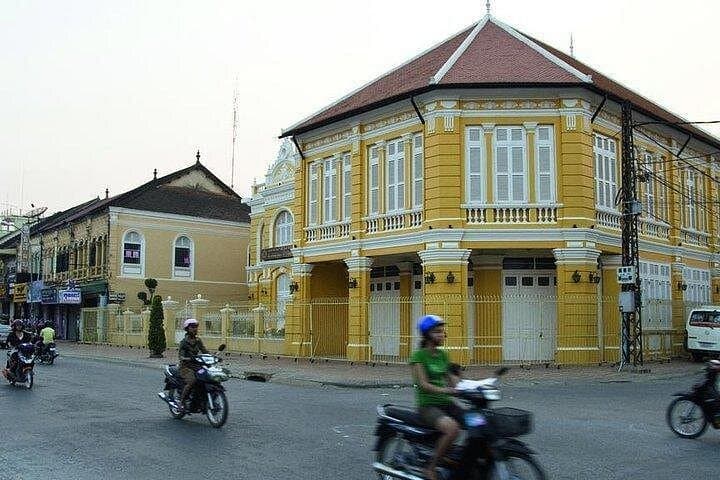
Battambang wears its history on the street: French colonial town halls, a market that still smells of fish sauce and citrus, and the limestone ridge of Phnom Sampeau where caves keep stories both sacred and grim from the Khmer Rouge era. Geologically, the karst of Phnom Sampeau was shaped by uplift and erosion; its caves now provide roosts for a famously massive bat colony that pours out at dusk like a living river.
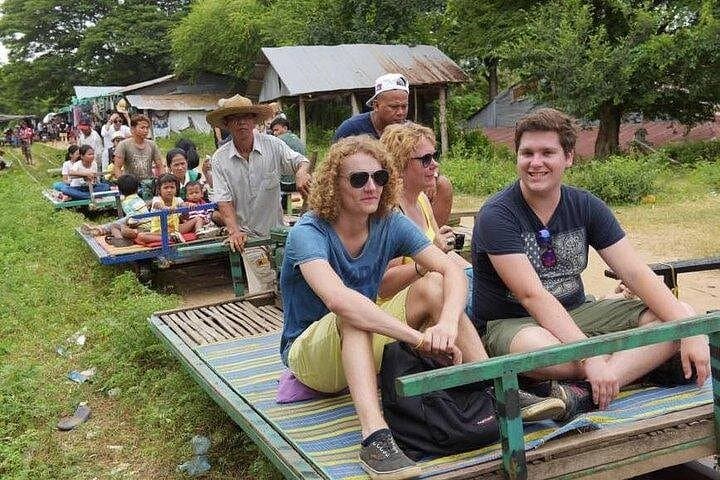
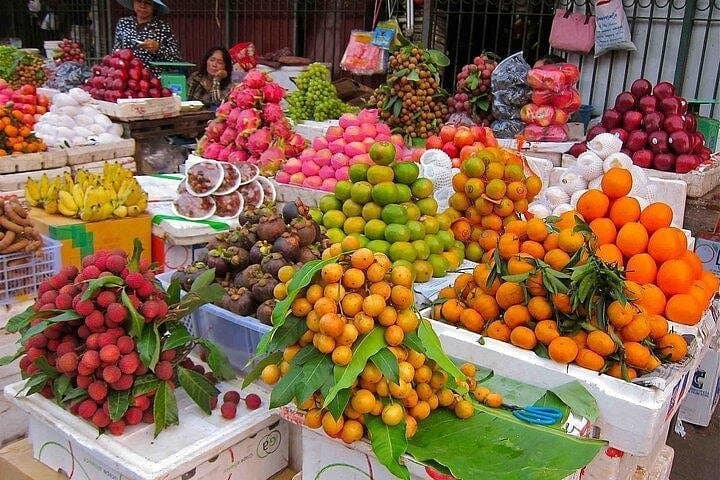
Culturally the day mixes practical commerce and rural life—Phsar Nat market, roadside fruit stands, and villages whose livelihoods turn on rice cycles. The bamboo train is cheekily modern and rustic at once: a simple platform on wheels powered by a small motor, a snapshot of resourceful transport.
Practical guidance: this is a full 10‑hour day with several short walks and stairs at the pagoda and cave. Bring cash for the bamboo train ($10) and Phnom Sampeau ($5), sun protection, insect repellent, and comfortable walking shoes. Time your visit so you’re at the bat cave by late afternoon; the spectacle is best at dusk. Respect local customs at temples, avoid flash photography in the bat cave, and carry water—rural stops are limited.
No; the bamboo train fee is typically paid on-site and is around $10 per person—bring cash.
The trip to Battambang is about 2.5–3 hours each way by car, depending on traffic and stops.
Yes; the day is rated easy, but supervise children on the bamboo train and near cliff edges at Phnom Sampeau.
Yes, but avoid flash photography and loud noises—keep bags close and respect restricted areas near memorial sites.
Angkor Partner Travel &Tours - APTT operates guided outdoor trips and adventures with an emphasis on safety, stewardship, and memorable experiences.
You leave Siem Reap before dawn and the road opens into a wide patchwork of rice paddies; the low morning light glances off canals and the rims of ox-cart tracks. The minivan moves steadily—air-conditioning hums, a local guide points out the first colonial facades of Battambang—then the countryside tightens around a narrow rail where the bamboo train waits, daring you to trade speed for simplicity.
You leave Siem Reap before dawn and the road opens into a wide patchwork of rice paddies; the low morning light glances off canals and the rims of ox-cart tracks. The minivan moves steadily—air-conditioning hums, a local guide points out the first colonial facades of Battambang—then the countryside tightens around a narrow rail where the bamboo train waits, daring you to trade speed for simplicity.
Battambang wears its history on the street: French colonial town halls, a market that still smells of fish sauce and citrus, and the limestone ridge of Phnom Sampeau where caves keep stories both sacred and grim from the Khmer Rouge era. Geologically, the karst of Phnom Sampeau was shaped by uplift and erosion; its caves now provide roosts for a famously massive bat colony that pours out at dusk like a living river.
Culturally the day mixes practical commerce and rural life—Phsar Nat market, roadside fruit stands, and villages whose livelihoods turn on rice cycles. The bamboo train is cheekily modern and rustic at once: a simple platform on wheels powered by a small motor, a snapshot of resourceful transport.
Practical guidance: this is a full 10‑hour day with several short walks and stairs at the pagoda and cave. Bring cash for the bamboo train ($10) and Phnom Sampeau ($5), sun protection, insect repellent, and comfortable walking shoes. Time your visit so you’re at the bat cave by late afternoon; the spectacle is best at dusk. Respect local customs at temples, avoid flash photography in the bat cave, and carry water—rural stops are limited.