THE ADVENTURE COLLECTIVE® · Independent discovery and booking for outdoor travel

Fly from Sharm el-Sheikh to Cairo for a single, full day with an Egyptologist: the Egyptian Museum, an optional Nile boat trip, then the Giza Plateau to see the Great Pyramid and Sphinx. Expect a long but logistically simple day—prepare for heat, crowds, and potential flight delays.
Fly from Sharm el-Sheikh to Cairo for a single, full day with an Egyptologist: the Egyptian Museum, an optional Nile boat trip, then the Giza Plateau to see the Great Pyramid and Sphinx. Expect a long but logistically simple day—prepare for heat, crowds, and potential flight delays.
You step off an early-morning shuttle into a small airport hum, the desert light already flattening the horizon. An hour later the Cairo skyline approaches; the air smells of dust and diesel and something older—stone warmed by millennia.
Verified experiences and guided adventures in the surrounding area.
Operated by Cleotours Egypt · Giza, Cairo Governorate
You step off an early-morning shuttle into a small airport hum, the desert light already flattening the horizon. An hour later the Cairo skyline approaches; the air smells of dust and diesel and something older—stone warmed by millennia.
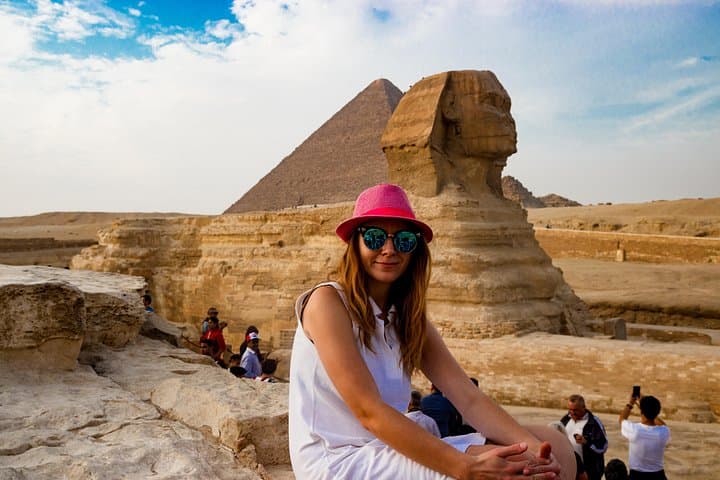
The day moves fast: a guided walk through the Egyptian Museum where Tutankhamen’s gold mask sits under glass, then a short boat option along the Nile before the Pyramids Plateau opens like a staged set. The Great Pyramid’s blocks read like geology in slow motion—limestone beds quarried and dressed into monumental steps—while the Sphinx stares across the sand, its profile eroded but defiant.
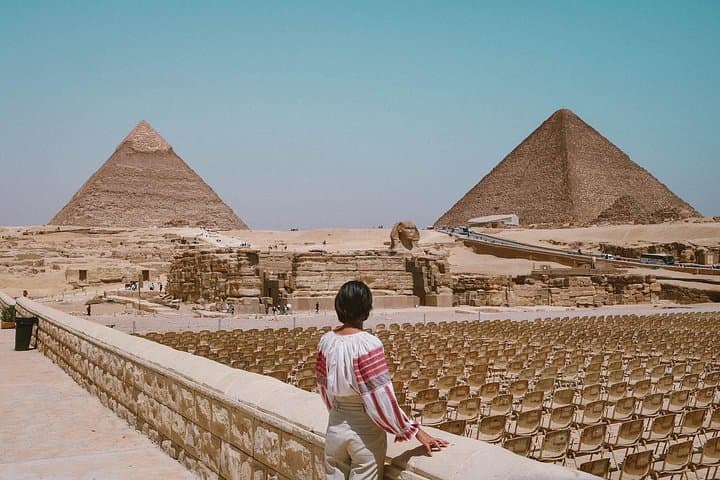
Giza is both archaeological archive and modern city edge; nearby markets still trade papyrus, oils and perfumes much as vendors have for decades. The solar boat museum, tucked beside the eastern pyramid, offers a quieter context to the funerary technologies on display, and the Mena House viewpoint gives a wide-angle view that helps place the plateau in the desert’s sweep.
Practical guidance: expect a long day—17 to 22 hours tops—with early hotel pickup and evening return. Bring a passport (required for flights), photocopies for museum tickets, and sun protection; shaded rest stops are limited. Flight delays happen, so build flexibility into onward plans. Wear sturdy shoes for uneven limestone and brief sandy traverses; keep water within reach and plan restroom breaks before heading onto the plateau. Respect ropes and signage—climbing pyramids is prohibited. This trip packs a condensed archaeology course into a single, intense day: sensory, historical, and logistically straightforward if you prepare for the length and heat.
The itinerary runs approximately 17–22 hours (pickup around 4:00–4:30 AM; return to Sharm-el-Sheikh late evening), though delays are possible.
This tour includes entrance fees to the Giza Plateau and the Egyptian Museum and a provided lunch; the optional 30-minute boat trip may be extra.
Access to pyramid interiors is restricted depending on ticketing and conservation rules; climbing on the exterior is prohibited—follow your guide’s instructions.
Wear modest clothing that covers shoulders and knees for museum and mosque-adjacent areas; breathable layers are best for the heat.
Cleotours Egypt operates guided outdoor trips and adventures with an emphasis on safety, stewardship, and memorable experiences.
You step off an early-morning shuttle into a small airport hum, the desert light already flattening the horizon. An hour later the Cairo skyline approaches; the air smells of dust and diesel and something older—stone warmed by millennia.
You step off an early-morning shuttle into a small airport hum, the desert light already flattening the horizon. An hour later the Cairo skyline approaches; the air smells of dust and diesel and something older—stone warmed by millennia.
The day moves fast: a guided walk through the Egyptian Museum where Tutankhamen’s gold mask sits under glass, then a short boat option along the Nile before the Pyramids Plateau opens like a staged set. The Great Pyramid’s blocks read like geology in slow motion—limestone beds quarried and dressed into monumental steps—while the Sphinx stares across the sand, its profile eroded but defiant.
Giza is both archaeological archive and modern city edge; nearby markets still trade papyrus, oils and perfumes much as vendors have for decades. The solar boat museum, tucked beside the eastern pyramid, offers a quieter context to the funerary technologies on display, and the Mena House viewpoint gives a wide-angle view that helps place the plateau in the desert’s sweep.
Practical guidance: expect a long day—17 to 22 hours tops—with early hotel pickup and evening return. Bring a passport (required for flights), photocopies for museum tickets, and sun protection; shaded rest stops are limited. Flight delays happen, so build flexibility into onward plans. Wear sturdy shoes for uneven limestone and brief sandy traverses; keep water within reach and plan restroom breaks before heading onto the plateau. Respect ropes and signage—climbing pyramids is prohibited. This trip packs a condensed archaeology course into a single, intense day: sensory, historical, and logistically straightforward if you prepare for the length and heat.