THE ADVENTURE COLLECTIVE® · Independent discovery and booking for outdoor travel

Walk between two ancient Georgian capitals in a single day: hilltop monasteries, cobbled lanes of old Tbilisi, a dramatic fortress view and sampling of the country’s wine traditions. This full‑day tour combines UNESCO history with practical access and local flavor.
Walk between two ancient Georgian capitals in a single day: hilltop monasteries, cobbled lanes of old Tbilisi, a dramatic fortress view and sampling of the country’s wine traditions. This full‑day tour combines UNESCO history with practical access and local flavor.
You step off an air‑conditioned minivan onto cobblestones that remember kings and caravans; the Mtkvari river glints below and seems to dare you to look deeper into Georgia’s layered past.
Verified experiences and guided adventures in the surrounding area.
Operated by Evatour · Tbilisi, Tbilisi
You step off an air‑conditioned minivan onto cobblestones that remember kings and caravans; the Mtkvari river glints below and seems to dare you to look deeper into Georgia’s layered past.
The day moves from Mtskheta’s hilltop Jvari Monastery—where early medieval stonework watches two rivers converge—into Tbilisi’s compact old town, where narrow lanes, wooden balconies and sulphur bath domes narrate centuries of trade, conquest and revival. Geologically the ridge above Mtskheta offers exposed bedrock and strategic viewpoints; culturally the region is defined by its early adoption of Christianity (4th century) and its role as a medieval capital. You’ll pass Freedom Square’s 19th‑century façades, the quirky Rezo Gabriadze clock tower, and the 11th‑century Svetitskhoveli cathedral, a UNESCO site tied to national legend and religious ritual.
Local life threads through the itinerary—street bakeries, riverside cafés, and small wine cellars where qvevri traditions still shape tables. Expect steady walking on uneven stones, short stair climbs to viewpoints, and multiple photo stops.
Practical notes: the tour runs about eight hours, includes bottled water and snacks, and operates in an air‑conditioned vehicle between sites. Dress modestly for churches, bring comfy shoes for cobbles, and plan for midday sun in summer. If you want quieter photos, ask to shift short stops earlier or later; the guide can help time the cable car ride to Narikala to catch light and avoid queues.
The tour runs about eight hours and includes a professional guide, bottled water, snacks and air‑conditioned vehicle transfers between sites.
Mobile or paper ticket accepted; have your booking details ready on arrival for check‑in.
Pickup options are usually available—bookings request a pickup point; confirm details with the operator after booking.
Historic sites feature uneven cobbles and stairs; while some public areas are accessible, many churches and viewpoints have steps—contact the operator to discuss specific accessibility needs.
Evatour operates guided outdoor trips and adventures with an emphasis on safety, stewardship, and memorable experiences.
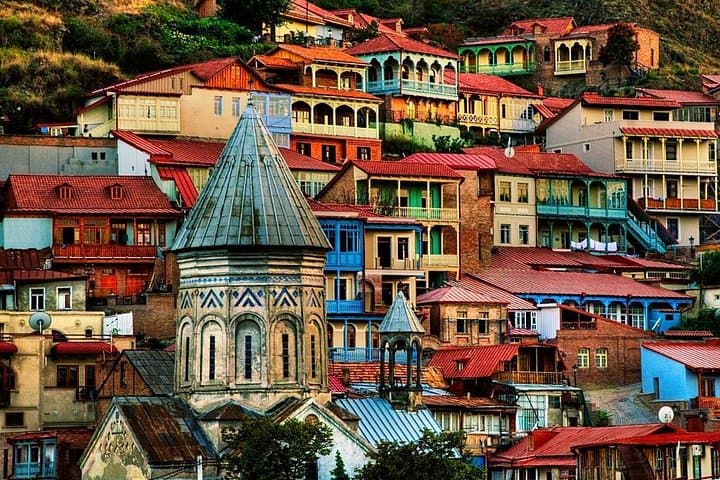


You step off an air‑conditioned minivan onto cobblestones that remember kings and caravans; the Mtkvari river glints below and seems to dare you to look deeper into Georgia’s layered past.
You step off an air‑conditioned minivan onto cobblestones that remember kings and caravans; the Mtkvari river glints below and seems to dare you to look deeper into Georgia’s layered past.
The day moves from Mtskheta’s hilltop Jvari Monastery—where early medieval stonework watches two rivers converge—into Tbilisi’s compact old town, where narrow lanes, wooden balconies and sulphur bath domes narrate centuries of trade, conquest and revival. Geologically the ridge above Mtskheta offers exposed bedrock and strategic viewpoints; culturally the region is defined by its early adoption of Christianity (4th century) and its role as a medieval capital. You’ll pass Freedom Square’s 19th‑century façades, the quirky Rezo Gabriadze clock tower, and the 11th‑century Svetitskhoveli cathedral, a UNESCO site tied to national legend and religious ritual.
Local life threads through the itinerary—street bakeries, riverside cafés, and small wine cellars where qvevri traditions still shape tables. Expect steady walking on uneven stones, short stair climbs to viewpoints, and multiple photo stops.
Practical notes: the tour runs about eight hours, includes bottled water and snacks, and operates in an air‑conditioned vehicle between sites. Dress modestly for churches, bring comfy shoes for cobbles, and plan for midday sun in summer. If you want quieter photos, ask to shift short stops earlier or later; the guide can help time the cable car ride to Narikala to catch light and avoid queues.