THE ADVENTURE COLLECTIVE® · Independent discovery and booking for outdoor travel

Spend a private day moving from the delicate pink carvings of Banteay Srei to the moss-covered ruins of Beng Mealea, finishing at the stilt village of Kompong Khleang on Tonle Sap. This balanced itinerary pairs close-up temple art with a living lake community.
Spend a private day moving from the delicate pink carvings of Banteay Srei to the moss-covered ruins of Beng Mealea, finishing at the stilt village of Kompong Khleang on Tonle Sap. This balanced itinerary pairs close-up temple art with a living lake community.
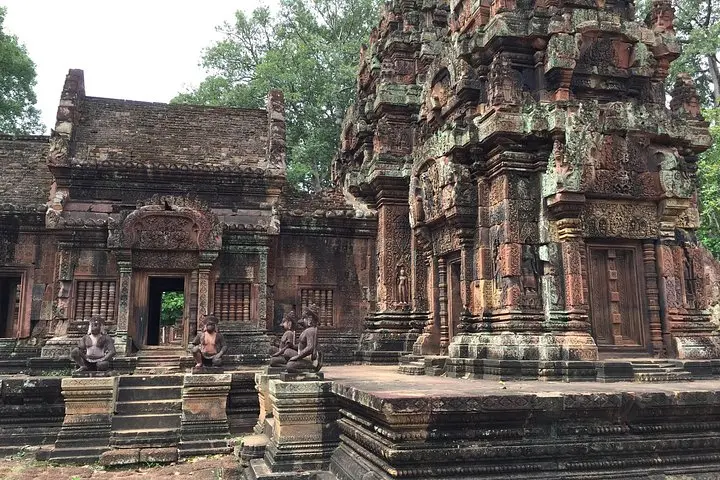
You arrive before midday light softens the pink sandstone of Banteay Srei, and the carvings seem to breathe under your fingertips. The temple’s low scale and fine detail make it feel like a private gallery carved from stone; birds patrol the rooflines and the heat presses gently against the courtyards.
Verified experiences and guided adventures in the surrounding area.
Operated by Private Tour Guide-Cambodia · Siem Reap, Siem Reap Province
You arrive before midday light softens the pink sandstone of Banteay Srei, and the carvings seem to breathe under your fingertips. The temple’s low scale and fine detail make it feel like a private gallery carved from stone; birds patrol the rooflines and the heat presses gently against the courtyards.
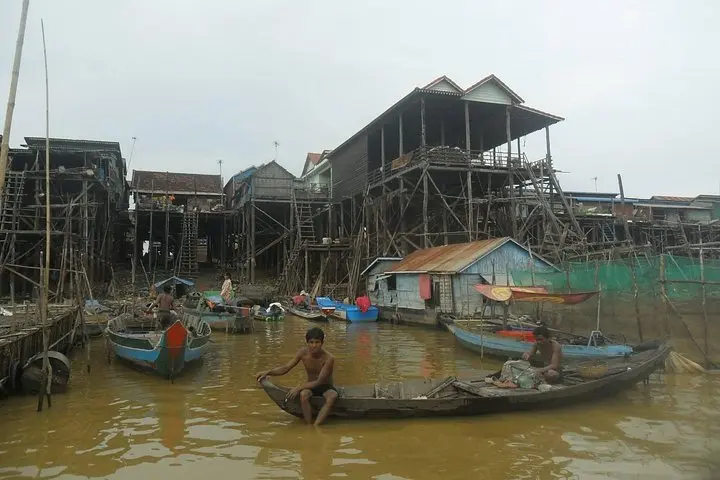
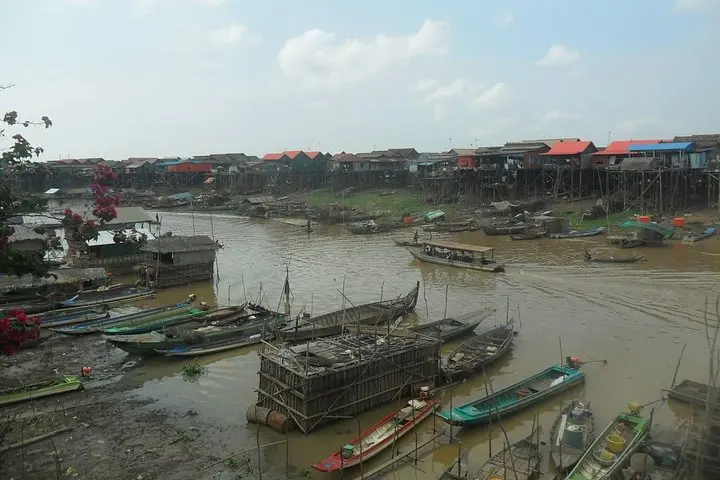
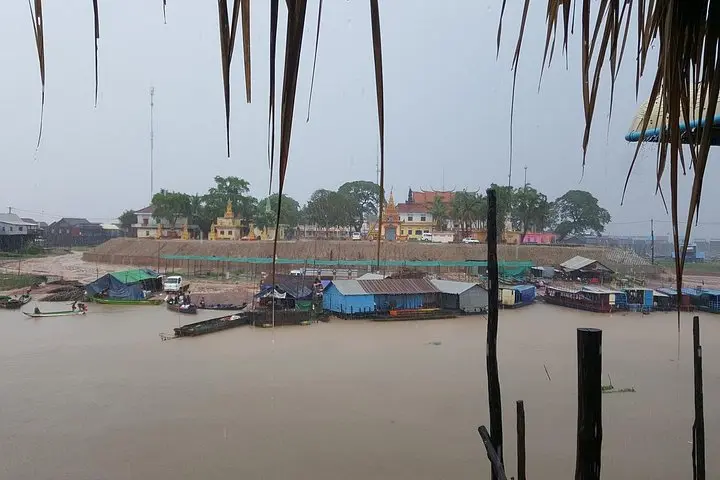
Banteay Srei dates to the late 10th century and is famed for unusually intricate bas-reliefs cut into warm, hard sandstone. Beng Mealea, by contrast, is mid-12th century and left largely unrestored: tree roots and toppled lintels create a mossy, jigsaw-like ruin where Buddhist and Hindu iconography sit side by side. The tour finishes at Kompong Khleang on the northern edge of Tonle Sap — a living community of stilt houses where seasonal water levels change the rhythm of daily life.
Geology here favors sandstone and laterite; the carving depth and color come from both material and climate. Culturally, these sites show a transition from Hindu royal patronage to the later prominence of Buddhism. At Kompong Khleang, subsistence fishing and raised architecture demonstrate human adaptation to the lake’s flood pulse.
Practical guidance: plan a 5–7 hour day, start early to avoid peak heat, bring sun protection and an empty bottle to refill; paths at Beng Mealea can be uneven and wet, so closed-toe shoes are recommended. Respect local dress codes at temple sites and carry small bills for village purchases. Expect private transport with A/C and an English-speaking guide; the pace is flexible for photography or quiet observation.
Entrance fees to national park sites are typically paid separately unless explicitly stated; confirm with the operator at booking.
Some parts of the itinerary are wheelchair accessible (hotel transfer and selected temple areas), but Beng Mealea's unrestored ruins are uneven and may be difficult for wheelchairs.
Expect several short walks at each site—up to 1–2 kilometers combined—mostly on dirt paths, steps, and wooden platforms.
Yes; the tour uses private air-conditioned transport and an English-speaking guide with hotel pickup and drop-off provided.
Private Tour Guide-Cambodia operates guided outdoor trips and adventures with an emphasis on safety, stewardship, and memorable experiences.
You arrive before midday light softens the pink sandstone of Banteay Srei, and the carvings seem to breathe under your fingertips. The temple’s low scale and fine detail make it feel like a private gallery carved from stone; birds patrol the rooflines and the heat presses gently against the courtyards.
You arrive before midday light softens the pink sandstone of Banteay Srei, and the carvings seem to breathe under your fingertips. The temple’s low scale and fine detail make it feel like a private gallery carved from stone; birds patrol the rooflines and the heat presses gently against the courtyards.
Banteay Srei dates to the late 10th century and is famed for unusually intricate bas-reliefs cut into warm, hard sandstone. Beng Mealea, by contrast, is mid-12th century and left largely unrestored: tree roots and toppled lintels create a mossy, jigsaw-like ruin where Buddhist and Hindu iconography sit side by side. The tour finishes at Kompong Khleang on the northern edge of Tonle Sap — a living community of stilt houses where seasonal water levels change the rhythm of daily life.
Geology here favors sandstone and laterite; the carving depth and color come from both material and climate. Culturally, these sites show a transition from Hindu royal patronage to the later prominence of Buddhism. At Kompong Khleang, subsistence fishing and raised architecture demonstrate human adaptation to the lake’s flood pulse.
Practical guidance: plan a 5–7 hour day, start early to avoid peak heat, bring sun protection and an empty bottle to refill; paths at Beng Mealea can be uneven and wet, so closed-toe shoes are recommended. Respect local dress codes at temple sites and carry small bills for village purchases. Expect private transport with A/C and an English-speaking guide; the pace is flexible for photography or quiet observation.