THE ADVENTURE COLLECTIVE® · Independent discovery and booking for outdoor travel

Spend a full day crossing Bolivia’s iconic salt flat: visit the Train Cemetery, Colchani salt village, the vast Salar de Uyuni and (season permitting) Incahuasi Island, finishing with a spectacular sunset. Learn practical tips for altitude, timing and what to bring.
Spend a full day crossing Bolivia’s iconic salt flat: visit the Train Cemetery, Colchani salt village, the vast Salar de Uyuni and (season permitting) Incahuasi Island, finishing with a spectacular sunset. Learn practical tips for altitude, timing and what to bring.
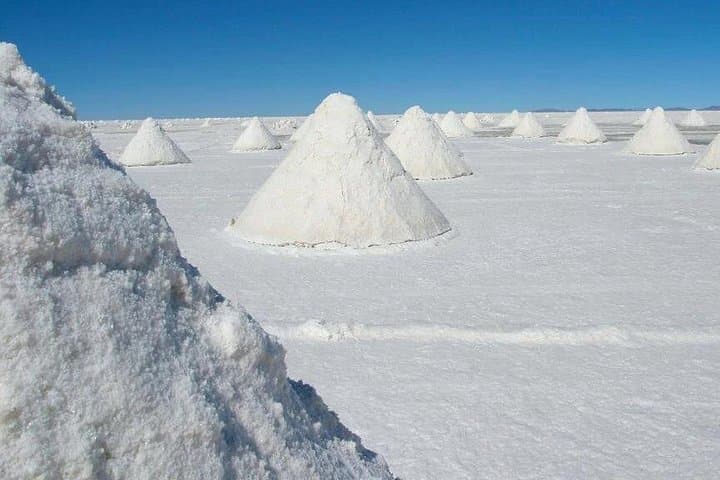
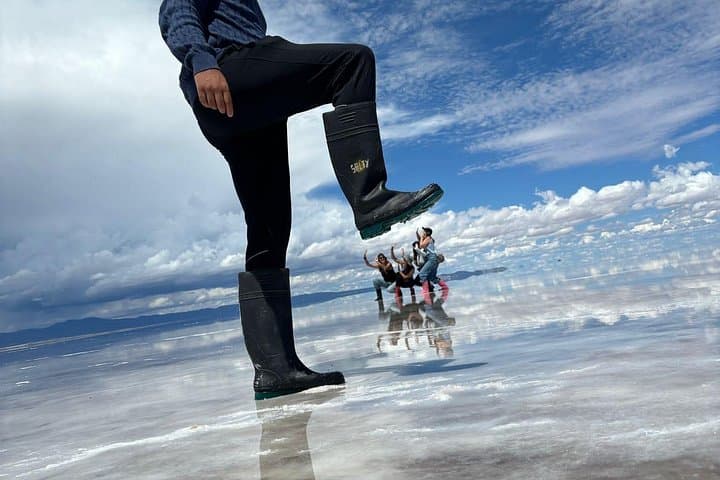
You arrive as the plain of white unspools to the horizon and the sun begins to tilt; the Salar either throws the sky back at you like a careful mirror or, in the dry season, reveals a honeycombed crust you can walk across. A single-day circuit from Uyuni threads through the Train Cemetery, the salt-working town of Colchani, the vast salt flat itself and, when conditions allow, Incahuasi Island, where giant cacti silhouette against cobalt sky.
Verified experiences and guided adventures in the surrounding area.
Operated by Sweet Travel Uyuni · Uyuni, Potosí
You arrive as the plain of white unspools to the horizon and the sun begins to tilt; the Salar either throws the sky back at you like a careful mirror or, in the dry season, reveals a honeycombed crust you can walk across. A single-day circuit from Uyuni threads through the Train Cemetery, the salt-working town of Colchani, the vast salt flat itself and, when conditions allow, Incahuasi Island, where giant cacti silhouette against cobalt sky.
Geologically the Salar is the remnant of prehistoric lakes; beneath the crust flows mineral-rich water and the plain’s “eyes” — bubbling springs — hint at life underfoot. Culturally the area is shaped by salt extraction and Aymara communities in Llica and Tahua, who sell carved salt souvenirs and maintain the islands. The Train Cemetery marks Uyuni’s 19th-century rail ambitions and the region’s role in Bolivia’s export history.
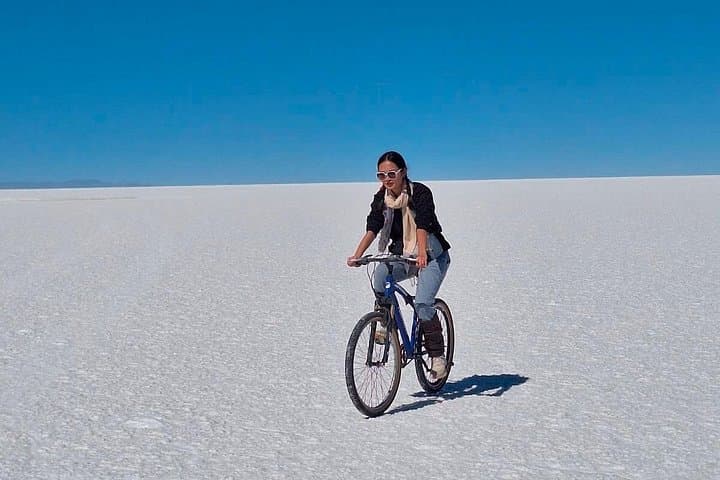
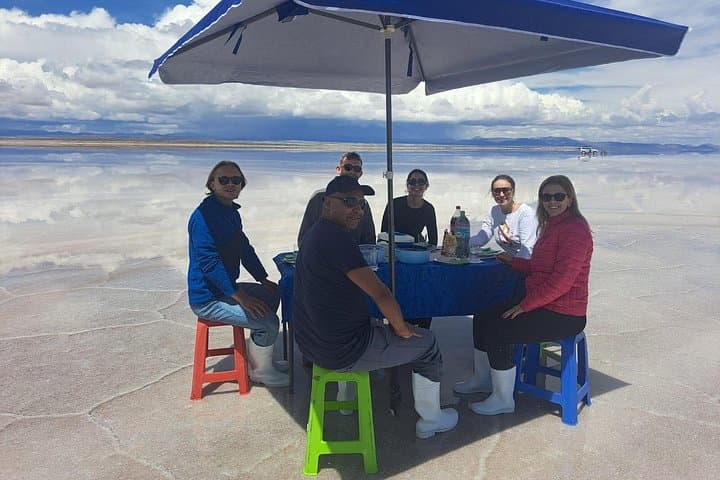
Practically: expect a 9-hour outing in a 4x4 with an English/Spanish guide, lunch, snacks and a short bicycle ride included. Incahuasi carries an optional local entrance fee (~30 Bs) and is closed when the Salar is inundated. Altitude hovers around 3,600–3,700 m — pace yourself, hydrate, and avoid strenuous activity on arrival day. Clothing should protect you from fierce sun and a sudden cold wind; sunglasses, sunblock and layered insulation are non-negotiable. For photographers the sunset and mirror reflections are world-class; for everyone else the scale, silence and the salt’s tactile strangeness make the day unmistakable.
The mirror is most pronounced in the rainy season (roughly December–February) after rains saturate the salt crust; early morning and late afternoon offer the most dramatic reflections.
Incahuasi is included when accessible; in the rainy season it may be closed and substituted with more time on the open salar or nearby viewpoints — an optional local entrance fee (~30 Bs) may apply.
The tour operates around 3,600–3,700 m; common symptoms include breathlessness and headaches — drink water, eat slowly, and avoid heavy exertion before or during the first day.
Yes: 4x4 transport, an English/Spanish guide, lunch, snacks and a short bicycle ride are included in the standard package.
Sweet Travel Uyuni operates guided outdoor trips and adventures with an emphasis on safety, stewardship, and memorable experiences.
You arrive as the plain of white unspools to the horizon and the sun begins to tilt; the Salar either throws the sky back at you like a careful mirror or, in the dry season, reveals a honeycombed crust you can walk across. A single-day circuit from Uyuni threads through the Train Cemetery, the salt-working town of Colchani, the vast salt flat itself and, when conditions allow, Incahuasi Island, where giant cacti silhouette against cobalt sky.
You arrive as the plain of white unspools to the horizon and the sun begins to tilt; the Salar either throws the sky back at you like a careful mirror or, in the dry season, reveals a honeycombed crust you can walk across. A single-day circuit from Uyuni threads through the Train Cemetery, the salt-working town of Colchani, the vast salt flat itself and, when conditions allow, Incahuasi Island, where giant cacti silhouette against cobalt sky.
Geologically the Salar is the remnant of prehistoric lakes; beneath the crust flows mineral-rich water and the plain’s “eyes” — bubbling springs — hint at life underfoot. Culturally the area is shaped by salt extraction and Aymara communities in Llica and Tahua, who sell carved salt souvenirs and maintain the islands. The Train Cemetery marks Uyuni’s 19th-century rail ambitions and the region’s role in Bolivia’s export history.
Practically: expect a 9-hour outing in a 4x4 with an English/Spanish guide, lunch, snacks and a short bicycle ride included. Incahuasi carries an optional local entrance fee (~30 Bs) and is closed when the Salar is inundated. Altitude hovers around 3,600–3,700 m — pace yourself, hydrate, and avoid strenuous activity on arrival day. Clothing should protect you from fierce sun and a sudden cold wind; sunglasses, sunblock and layered insulation are non-negotiable. For photographers the sunset and mirror reflections are world-class; for everyone else the scale, silence and the salt’s tactile strangeness make the day unmistakable.