THE ADVENTURE COLLECTIVE® · Independent discovery and booking for outdoor travel

Spend one long, rewarding day tracking Tarangire’s famed elephant herds among baobabs and riverwood. This vehicle-based safari delivers high-probability wildlife viewing, practical logistics and local context for a compact taste of Tanzania’s savannah.
Spend one long, rewarding day tracking Tarangire’s famed elephant herds among baobabs and riverwood. This vehicle-based safari delivers high-probability wildlife viewing, practical logistics and local context for a compact taste of Tanzania’s savannah.
Morning light slices through baobab silhouettes as your vehicle eases onto the dusty track — the riverplain ahead already patterned with elephant tracks. Engines lower to a whisper; guides point, and the herd answers with slow, deliberate motion, trunks swinging like metronomes across the savannah.
Verified experiences and guided adventures in the surrounding area.
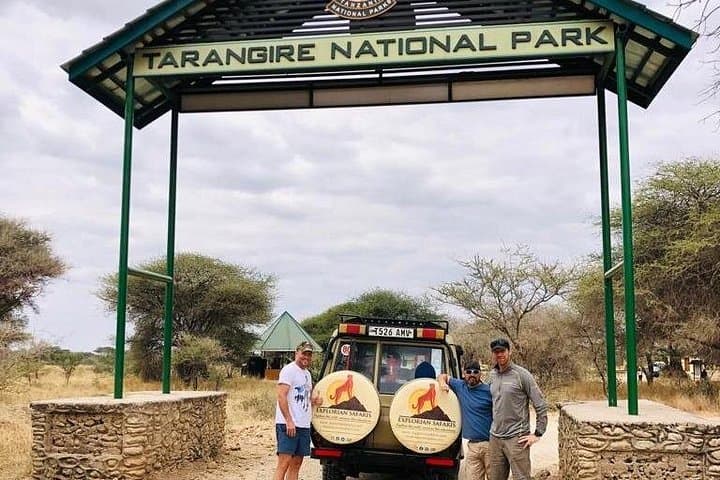
Operated by Explorian Safaris · Tarangire National Park, Manyara Region
Morning light slices through baobab silhouettes as your vehicle eases onto the dusty track — the riverplain ahead already patterned with elephant tracks. Engines lower to a whisper; guides point, and the herd answers with slow, deliberate motion, trunks swinging like metronomes across the savannah.
Tarangire’s landscape is defined by ancient baobabs, weathered granite outcrops and the seasonal Tarangire River that dares herds to gather when rains recede. Established in 1970, the park protects a dry-season refuge long used by Maasai pastoralists and the migratory wildlife that shape local culture and economy. Geologically, the park rests on old volcanic soils and scattered kopjes that produce the rocky ridges you’ll scan for stalking carnivores.
On a one-day drive you’ll move through riverine woodlands, open savannah and rocky hills, with high odds of seeing big elephant herds, resident lions, giraffes and an array of waterbirds. Guides read tracks and behavior, turning pauses into discoveries — a mother calling calves, a pride rearranging in the shade.
Practically, expect an early pickup from Arusha, long dusty roads and a full day (8–12 hours) of vehicle-based viewing with short walks at designated stops. Park fees, lunch, drinking water and an English-speaking guide are typically included. Bring binoculars, sun protection, layered clothing for cool mornings, and a camera with a telephoto lens. The dry season concentrates game and offers the clearest roads; the wet season delivers lush landscapes and superb birding but can slow access.
Plan for long days, respect park rules, and arrive ready to trade cell signal for uninterrupted, close-up wildlife moments.
Yes — typical day-trip packages list park entry fees and a packed or lodge lunch as included in the tour price.
Tarangire gates are roughly 1.5–3 hours’ drive from Arusha depending on route and traffic; expect an early departure for a full-day tour.
Children can join, but infants are often required to sit on laps and operators may have age restrictions; confirm with the provider when booking.
Tanzania is in a malaria area; check current health advice, bring insect repellent, and consult a travel clinic for recommended vaccinations and antimalarial medication.
Explorian Safaris operates guided outdoor trips and adventures with an emphasis on safety, stewardship, and memorable experiences.
Morning light slices through baobab silhouettes as your vehicle eases onto the dusty track — the riverplain ahead already patterned with elephant tracks. Engines lower to a whisper; guides point, and the herd answers with slow, deliberate motion, trunks swinging like metronomes across the savannah.
Morning light slices through baobab silhouettes as your vehicle eases onto the dusty track — the riverplain ahead already patterned with elephant tracks. Engines lower to a whisper; guides point, and the herd answers with slow, deliberate motion, trunks swinging like metronomes across the savannah.
Tarangire’s landscape is defined by ancient baobabs, weathered granite outcrops and the seasonal Tarangire River that dares herds to gather when rains recede. Established in 1970, the park protects a dry-season refuge long used by Maasai pastoralists and the migratory wildlife that shape local culture and economy. Geologically, the park rests on old volcanic soils and scattered kopjes that produce the rocky ridges you’ll scan for stalking carnivores.
On a one-day drive you’ll move through riverine woodlands, open savannah and rocky hills, with high odds of seeing big elephant herds, resident lions, giraffes and an array of waterbirds. Guides read tracks and behavior, turning pauses into discoveries — a mother calling calves, a pride rearranging in the shade.
Practically, expect an early pickup from Arusha, long dusty roads and a full day (8–12 hours) of vehicle-based viewing with short walks at designated stops. Park fees, lunch, drinking water and an English-speaking guide are typically included. Bring binoculars, sun protection, layered clothing for cool mornings, and a camera with a telephoto lens. The dry season concentrates game and offers the clearest roads; the wet season delivers lush landscapes and superb birding but can slow access.
Plan for long days, respect park rules, and arrive ready to trade cell signal for uninterrupted, close-up wildlife moments.