THE ADVENTURE COLLECTIVE® · Independent discovery and booking for outdoor travel

A single day that stitches together northern Armenia’s wild forests and 10th-century monasteries. Travel by private vehicle from Yerevan to Sosnyaki Dendropark, Sanahin, and Haghpat for a mix of botany, history, and sweeping gorges.
A single day that stitches together northern Armenia’s wild forests and 10th-century monasteries. Travel by private vehicle from Yerevan to Sosnyaki Dendropark, Sanahin, and Haghpat for a mix of botany, history, and sweeping gorges.
You roll out of Yerevan before the city heats up, the Mercedes-Benz purring as the highway gives way to sculpted gorges and a patchwork of walnut and oak. Pine-scented air sharpens with altitude; roadside villages blink into view, and the Debed River dares you to look over the stone edge.
Verified experiences and guided adventures in the surrounding area.
Operated by Amazing Armenia · Stepanavan, Lori
You roll out of Yerevan before the city heats up, the Mercedes-Benz purring as the highway gives way to sculpted gorges and a patchwork of walnut and oak. Pine-scented air sharpens with altitude; roadside villages blink into view, and the Debed River dares you to look over the stone edge.
This full-day loop links three distinct threads of northern Armenia: Sosnyaki Dendropark’s curated forests, Sanahin’s quiet monastic courtyards, and Haghpat’s hilltop complex that watches over steep ravines. The Dendropark, founded in 1933 by Polish biologist Edmond Leonovich, showcases non-native and native trees across rolling terraces—an accessible place to stretch legs and learn botanical variety.
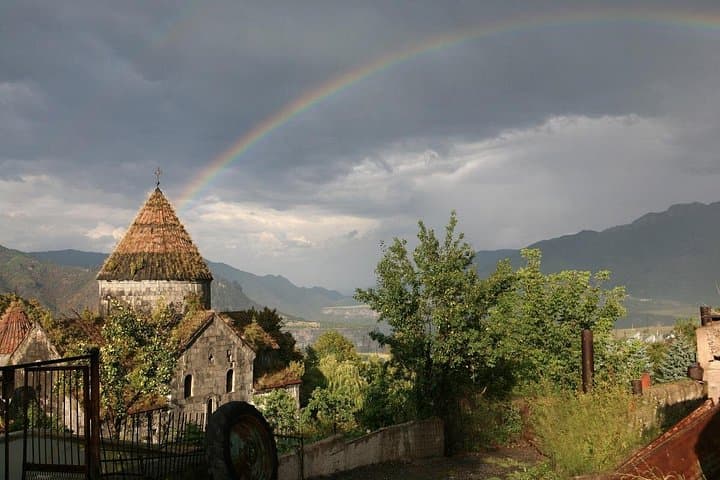
Sanahin and Haghpat date to the 10th century and together were inscribed as UNESCO World Heritage sites in 1996. Both complexes served as cultural hubs—scriptoria, schools, and royal tombs are tucked into their stonework; the Mugni Gospel once connected these sites to broader manuscript traditions. Geology shapes the experience: folded limestone ridges and deep river-cut gorges create sudden outlooks and dramatic light on carved façades.
Practical endnotes: expect 9–10 hours with multiple short walks on uneven stone, some low steps, and open-air viewpoints. Bring layers for variable mountain sun and wind; bottled water may be provided, but carry a refillable bottle. Photography is excellent—use a wide-angle for courtyards and a telephoto for raptors riding thermals. Allow time for enjoyably slow visits at each monastery and respect liturgical spaces; tipping the guide and driver for a private tour is customary.
This is a full-day private tour of roughly 9–10 hours with multiple short visits (30–45 minutes) at each site and driving between locations.
Policies vary by operator; many tours include guide time but not official admission—check your booking confirmation for specifics.
Yes—minimal hiking is required, but participants should be able to climb uneven steps and manage several short walks.
Yes; itineraries typically allow time at viewpoints and courtyards for photos and short refreshment breaks.
Amazing Armenia operates guided outdoor trips and adventures with an emphasis on safety, stewardship, and memorable experiences.


You roll out of Yerevan before the city heats up, the Mercedes-Benz purring as the highway gives way to sculpted gorges and a patchwork of walnut and oak. Pine-scented air sharpens with altitude; roadside villages blink into view, and the Debed River dares you to look over the stone edge.
You roll out of Yerevan before the city heats up, the Mercedes-Benz purring as the highway gives way to sculpted gorges and a patchwork of walnut and oak. Pine-scented air sharpens with altitude; roadside villages blink into view, and the Debed River dares you to look over the stone edge.
This full-day loop links three distinct threads of northern Armenia: Sosnyaki Dendropark’s curated forests, Sanahin’s quiet monastic courtyards, and Haghpat’s hilltop complex that watches over steep ravines. The Dendropark, founded in 1933 by Polish biologist Edmond Leonovich, showcases non-native and native trees across rolling terraces—an accessible place to stretch legs and learn botanical variety.
Sanahin and Haghpat date to the 10th century and together were inscribed as UNESCO World Heritage sites in 1996. Both complexes served as cultural hubs—scriptoria, schools, and royal tombs are tucked into their stonework; the Mugni Gospel once connected these sites to broader manuscript traditions. Geology shapes the experience: folded limestone ridges and deep river-cut gorges create sudden outlooks and dramatic light on carved façades.
Practical endnotes: expect 9–10 hours with multiple short walks on uneven stone, some low steps, and open-air viewpoints. Bring layers for variable mountain sun and wind; bottled water may be provided, but carry a refillable bottle. Photography is excellent—use a wide-angle for courtyards and a telephoto for raptors riding thermals. Allow time for enjoyably slow visits at each monastery and respect liturgical spaces; tipping the guide and driver for a private tour is customary.