THE ADVENTURE COLLECTIVE® · Independent discovery and booking for outdoor travel

Spend a half-day with a local guide visiting Azadpura tribal homes and the Taragram paper NGO near Orchha. See clay pot making, basketry and textile-to-paper recycling while learning local customs and practical conservation in action.
Spend a half-day with a local guide visiting Azadpura tribal homes and the Taragram paper NGO near Orchha. See clay pot making, basketry and textile-to-paper recycling while learning local customs and practical conservation in action.
Morning light hits the low-slung mud houses of Azadpura as your car eases off the Orchha road; thin dust columns lift and women crouch at courtyard kilns to turn clay. The walk through the tribal village is unvarnished—households plaster floors with cow dung, spin a simple potter’s wheel, and hang drying fabrics along the walls. Your personal guide explains how Betwa river clay becomes water jars and small slit “money pots” that must be smashed to retrieve savings.
Verified experiences and guided adventures in the surrounding area.
Operated by City Tours India · Orchha, Madhya Pradesh
Morning light hits the low-slung mud houses of Azadpura as your car eases off the Orchha road; thin dust columns lift and women crouch at courtyard kilns to turn clay. The walk through the tribal village is unvarnished—households plaster floors with cow dung, spin a simple potter’s wheel, and hang drying fabrics along the walls. Your personal guide explains how Betwa river clay becomes water jars and small slit “money pots” that must be smashed to retrieve savings.
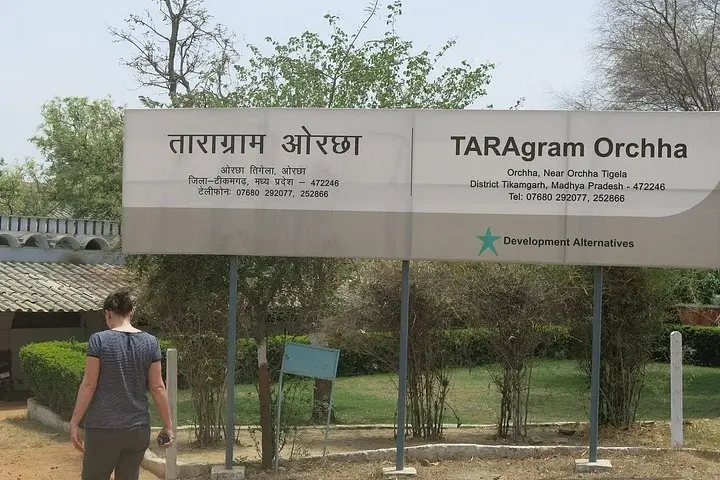
History sits nearby: a short drive brings you to the Chandra Shekhar Azad memorial, a bronze figure overlooking fields that still grow wheat and mustard as they have for generations. Geology matters here—the Betwa’s silt supplies the clay; palms and bamboo feed traditional basketry. At Taragram, a community-run NGO converts textile waste into cotton pulp, pressing and sun-drying sheets to make watermarked paper, lampshades and frames. The workshop is a working demonstration of low-tech recycling and local employment.
Practicalities are direct. The half-day tour covers about 4 km by car with short, flat walks between homesteads and the paper unit; physical demands are low but surfaces are uneven. Modest dress is required for family visits and closed shoes help on earthen floors. Carry water, small currency for purchases, and ask permission before photographing people. Best during cool hours—early morning or late afternoon—when craftwork and school mealtimes are visible. This visit pairs close cultural contact with social enterprise; you leave with clearer context for Orchha’s monuments and the rural lives that support them.
The experience is about 2–3 hours total with minimal walking—most travel is by car between the hotel, village, and Taragram; on-foot sections are short and on flat terrain.
Yes; the tour is family-friendly. Infants must sit on an adult’s lap during the transfer and a gentle pace is maintained, but supervise children around open courtyards and pottery demonstrations.
Yes—baskets, pottery and Taragram paper goods are often available for purchase. Carry small bills as card acceptance is limited.
No; the tour includes a private chauffeur and comfortable car for transfers from Orchha as noted in the inclusions.
City Tours India operates guided outdoor trips and adventures with an emphasis on safety, stewardship, and memorable experiences.
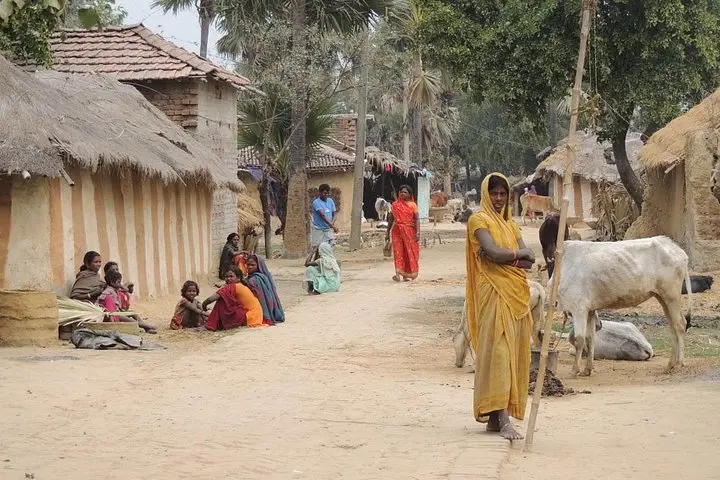
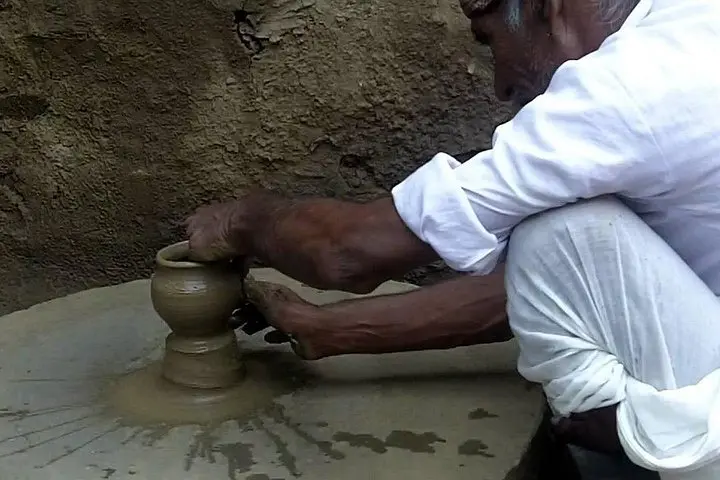
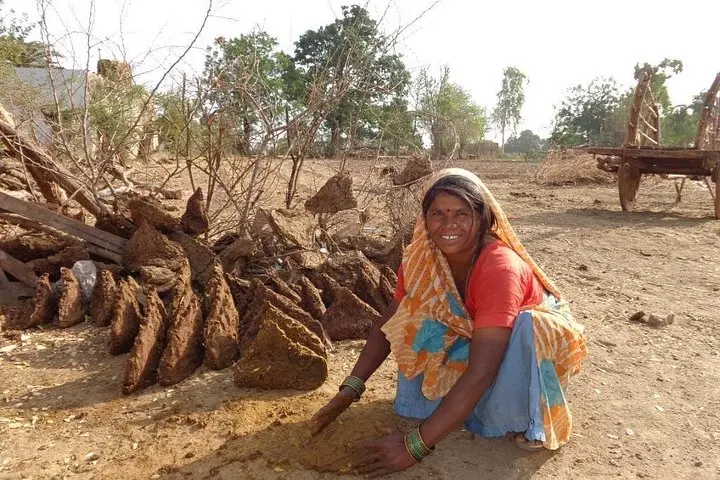
Morning light hits the low-slung mud houses of Azadpura as your car eases off the Orchha road; thin dust columns lift and women crouch at courtyard kilns to turn clay. The walk through the tribal village is unvarnished—households plaster floors with cow dung, spin a simple potter’s wheel, and hang drying fabrics along the walls. Your personal guide explains how Betwa river clay becomes water jars and small slit “money pots” that must be smashed to retrieve savings.
Morning light hits the low-slung mud houses of Azadpura as your car eases off the Orchha road; thin dust columns lift and women crouch at courtyard kilns to turn clay. The walk through the tribal village is unvarnished—households plaster floors with cow dung, spin a simple potter’s wheel, and hang drying fabrics along the walls. Your personal guide explains how Betwa river clay becomes water jars and small slit “money pots” that must be smashed to retrieve savings.
History sits nearby: a short drive brings you to the Chandra Shekhar Azad memorial, a bronze figure overlooking fields that still grow wheat and mustard as they have for generations. Geology matters here—the Betwa’s silt supplies the clay; palms and bamboo feed traditional basketry. At Taragram, a community-run NGO converts textile waste into cotton pulp, pressing and sun-drying sheets to make watermarked paper, lampshades and frames. The workshop is a working demonstration of low-tech recycling and local employment.
Practicalities are direct. The half-day tour covers about 4 km by car with short, flat walks between homesteads and the paper unit; physical demands are low but surfaces are uneven. Modest dress is required for family visits and closed shoes help on earthen floors. Carry water, small currency for purchases, and ask permission before photographing people. Best during cool hours—early morning or late afternoon—when craftwork and school mealtimes are visible. This visit pairs close cultural contact with social enterprise; you leave with clearer context for Orchha’s monuments and the rural lives that support them.