THE ADVENTURE COLLECTIVE® · Independent discovery and booking for outdoor travel

Cycle eleven days through Mongolia’s Orkhon Valley—follow ancient rivers, ride past nomadic gers, and reach Kharkhorin and the Orkhon waterfall. Expect long dirt-road days, high passes up to ~2,030 m, and nights in gers and tents with van support.
Cycle eleven days through Mongolia’s Orkhon Valley—follow ancient rivers, ride past nomadic gers, and reach Kharkhorin and the Orkhon waterfall. Expect long dirt-road days, high passes up to ~2,030 m, and nights in gers and tents with van support.
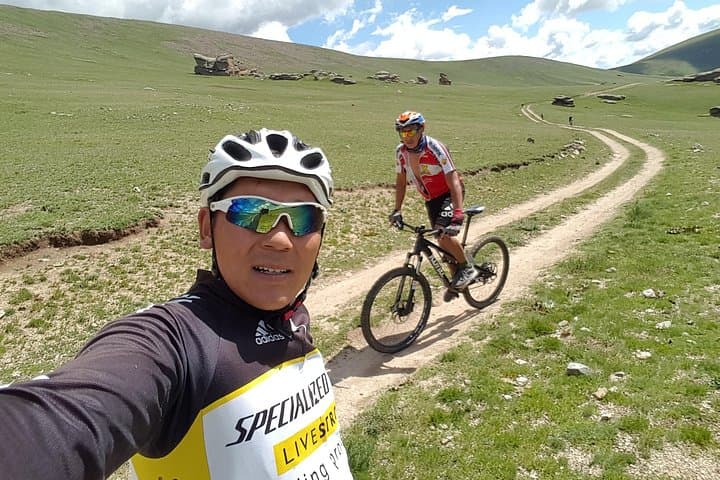
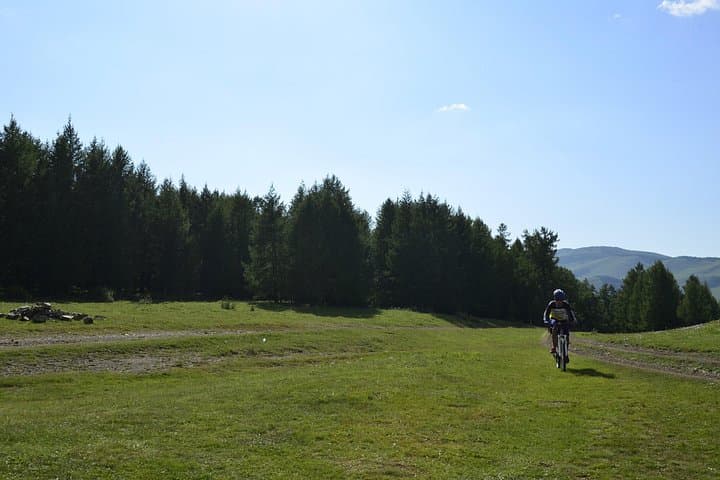
The air tastes of fresh grass and river spray as riders climb away from a lakeside dawn, tires whispering over hard-packed steppe and the Khangai range growing taller on the horizon. This is Mongolia by pedal: long, open plains, sudden passes and the occasional cluster of felt gers where herders watch you pass.
Verified experiences and guided adventures in the surrounding area.
Operated by Mongolia Biking Experts · Kharkhorin, Övörkhangai
The air tastes of fresh grass and river spray as riders climb away from a lakeside dawn, tires whispering over hard-packed steppe and the Khangai range growing taller on the horizon. This is Mongolia by pedal: long, open plains, sudden passes and the occasional cluster of felt gers where herders watch you pass.
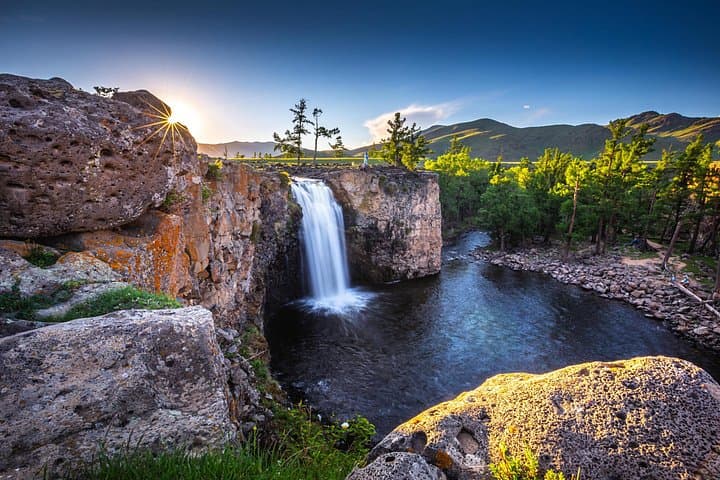
Orkhon Valley holds the archaeological footprints of the Gokturks and the Mongol Empire; Kharkhorum (near modern Kharkhorin) was a Silk Road capital. Geologically the route shifts from flat sedimentary steppe to forested foothills of the Khangai mountains, with passes at roughly 1,872 m, 1,848 m and a high saddle around 2,030 m. The Orkhon River carves a green corridor through volcanic and alluvial soils, feeding the 20 m Ulaan Tsutgalan waterfall and the fertile grazing ground that sustains nomadic families.
Expect varied terrain: smooth hard-packed dirt roads (days of 40–71 km), hillier, rocky sections near mountain passes and brief singletrack near riverbanks. A support van follows; daily rides include a 61 km leg along the Tamir River and a long 71 km descent on the Orkhon. Camps alternate between tented nights and tourist ger stays, plus two hotel nights in Ulaanbaatar.
Practical edge: hydrate early, layer for large temperature swings, and bring a reliable mountain bike with at least a 2.0" tire and low gearing for sustained climbs. Time rides for morning coolness; late afternoons bring wind. Respect private pastures, ask before photographing families, and pack out all non-biodegradable waste. This route rewards steady pacing more than sprint power—Mongolia’s steppe will keep you honest and, eventually, astonished.
Most routes follow hard-packed dirt roads with occasional rocky or rutted sections; no advanced technical singletrack is required but confident bike handling is helpful.
English-speaking cycling guides, a Russian 4WD support van with bike racks, kitchen and camping crew, and pre-arranged accommodations are included.
Nights alternate between tents at prepared camps (with shower and toilet tents) and tourist ger camps; expect simple but functional facilities.
Travel insurance covering medical evacuation and outdoor cycling is recommended; check standard travel health advice for Mongolia well before departure.
Mongolia Biking Experts operates guided outdoor trips and adventures with an emphasis on safety, stewardship, and memorable experiences.

The air tastes of fresh grass and river spray as riders climb away from a lakeside dawn, tires whispering over hard-packed steppe and the Khangai range growing taller on the horizon. This is Mongolia by pedal: long, open plains, sudden passes and the occasional cluster of felt gers where herders watch you pass.
The air tastes of fresh grass and river spray as riders climb away from a lakeside dawn, tires whispering over hard-packed steppe and the Khangai range growing taller on the horizon. This is Mongolia by pedal: long, open plains, sudden passes and the occasional cluster of felt gers where herders watch you pass.
Orkhon Valley holds the archaeological footprints of the Gokturks and the Mongol Empire; Kharkhorum (near modern Kharkhorin) was a Silk Road capital. Geologically the route shifts from flat sedimentary steppe to forested foothills of the Khangai mountains, with passes at roughly 1,872 m, 1,848 m and a high saddle around 2,030 m. The Orkhon River carves a green corridor through volcanic and alluvial soils, feeding the 20 m Ulaan Tsutgalan waterfall and the fertile grazing ground that sustains nomadic families.
Expect varied terrain: smooth hard-packed dirt roads (days of 40–71 km), hillier, rocky sections near mountain passes and brief singletrack near riverbanks. A support van follows; daily rides include a 61 km leg along the Tamir River and a long 71 km descent on the Orkhon. Camps alternate between tented nights and tourist ger stays, plus two hotel nights in Ulaanbaatar.
Practical edge: hydrate early, layer for large temperature swings, and bring a reliable mountain bike with at least a 2.0" tire and low gearing for sustained climbs. Time rides for morning coolness; late afternoons bring wind. Respect private pastures, ask before photographing families, and pack out all non-biodegradable waste. This route rewards steady pacing more than sprint power—Mongolia’s steppe will keep you honest and, eventually, astonished.