THE ADVENTURE COLLECTIVE® · Independent discovery and booking for outdoor travel

Spend three hours moving between Dotonbori’s neon spectacle and Shinsekai’s retro lanes on a family-friendly private walk. Taste street food, learn local history, and see two very different sides of Osaka in one compact tour.
Spend three hours moving between Dotonbori’s neon spectacle and Shinsekai’s retro lanes on a family-friendly private walk. Taste street food, learn local history, and see two very different sides of Osaka in one compact tour.
A low hum of neon and the smell of frying batter greet you as the tour steps off into Dotonbori’s canal-side glare. Streetlights sketch the Glico Running Man in motion, voices rise over sizzling takoyaki, and the guide threads stories between restaurants and billboards. Walk a few blocks and the city shifts: Shinsekai’s vintage signs and the Tsutenkaku Tower loom like an older Osaka, where arcade chimes and kushikatsu oil create a distinctly local soundtrack.
Verified experiences and guided adventures in the surrounding area.
Operated by The Washoku Club Culture and Food Tours · Osaka, Osaka Prefecture
A low hum of neon and the smell of frying batter greet you as the tour steps off into Dotonbori’s canal-side glare. Streetlights sketch the Glico Running Man in motion, voices rise over sizzling takoyaki, and the guide threads stories between restaurants and billboards. Walk a few blocks and the city shifts: Shinsekai’s vintage signs and the Tsutenkaku Tower loom like an older Osaka, where arcade chimes and kushikatsu oil create a distinctly local soundtrack.
The contrast between Dotonbori and Shinsekai is more than visual—Dotonbori grew from a 17th-century entertainment canal into a modern nightlife corridor, while Shinsekai was laid out before World War II with influences from Paris and Coney Island and rebuilt after the war around Tsutenkaku. The geology beneath is flat Osaka plain—human-shaped land, reclaimed and layered with commerce. Culturally, the route highlights Osaka’s reputation as Japan’s kitchen: unpretentious, food-forward, and social.
Expect mostly flat, paved walking on this three-hour private tour; it’s designed for families and all fitness levels. Your guide will point out food stands, photo spots, and quieter alleys like Hozenji Yokocho for a momentary pause from the neon. Practical tips: carry small change for street food, bring a lightweight rain layer in the rainy season, and set a clear meeting spot if children are exploring.
This is an urban stroll that moves fast enough to show two distinct faces of Osaka yet slow enough for kids to taste, see, and ask questions—an efficient, sensory primer on the city’s food culture and historic neighborhoods.
Yes—this private, three-hour walk is designed for families with kids and includes frequent stops and kid-friendly food options.
Meeting and end points are typically in central Namba/Dotonbori; exact locations are provided at booking and often accessible by public transit.
Expect about 2–4 km of walking on mostly flat, paved surfaces with plenty of stops; stroller-friendly on most streets but some alleys can be narrow.
Food is not included; the guide will point out recommended stalls and restaurants and explain local specialties—bring cash for purchases.
The Washoku Club Culture and Food Tours operates guided outdoor trips and adventures with an emphasis on safety, stewardship, and memorable experiences.
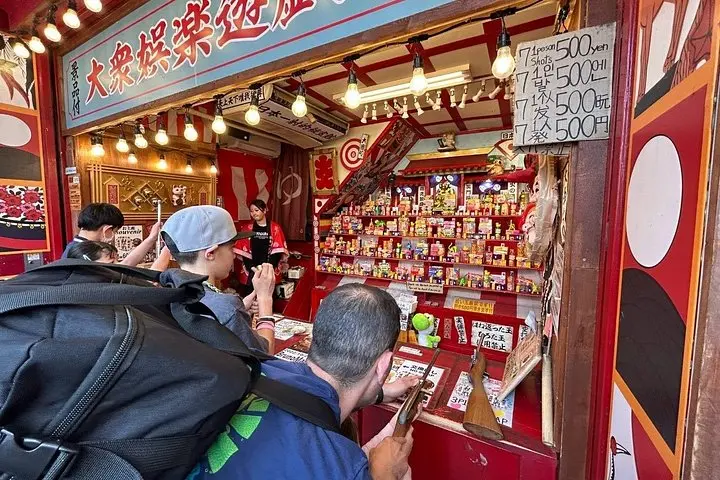
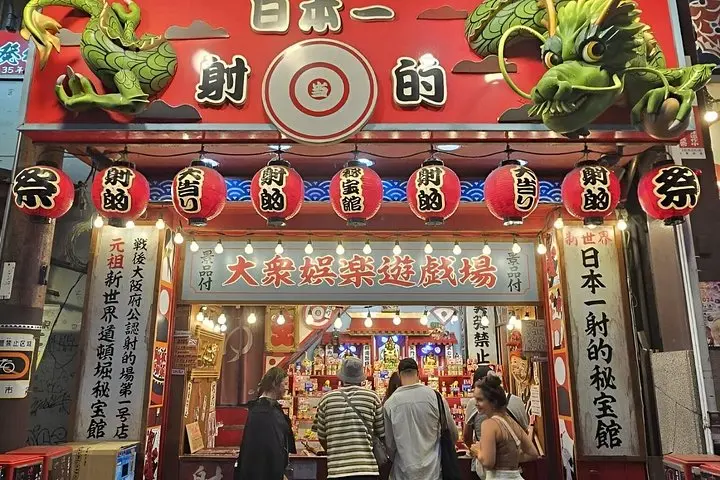
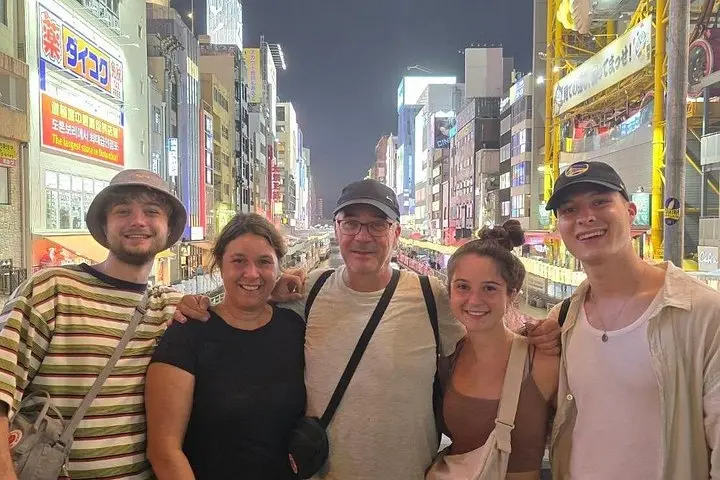
A low hum of neon and the smell of frying batter greet you as the tour steps off into Dotonbori’s canal-side glare. Streetlights sketch the Glico Running Man in motion, voices rise over sizzling takoyaki, and the guide threads stories between restaurants and billboards. Walk a few blocks and the city shifts: Shinsekai’s vintage signs and the Tsutenkaku Tower loom like an older Osaka, where arcade chimes and kushikatsu oil create a distinctly local soundtrack.
A low hum of neon and the smell of frying batter greet you as the tour steps off into Dotonbori’s canal-side glare. Streetlights sketch the Glico Running Man in motion, voices rise over sizzling takoyaki, and the guide threads stories between restaurants and billboards. Walk a few blocks and the city shifts: Shinsekai’s vintage signs and the Tsutenkaku Tower loom like an older Osaka, where arcade chimes and kushikatsu oil create a distinctly local soundtrack.
The contrast between Dotonbori and Shinsekai is more than visual—Dotonbori grew from a 17th-century entertainment canal into a modern nightlife corridor, while Shinsekai was laid out before World War II with influences from Paris and Coney Island and rebuilt after the war around Tsutenkaku. The geology beneath is flat Osaka plain—human-shaped land, reclaimed and layered with commerce. Culturally, the route highlights Osaka’s reputation as Japan’s kitchen: unpretentious, food-forward, and social.
Expect mostly flat, paved walking on this three-hour private tour; it’s designed for families and all fitness levels. Your guide will point out food stands, photo spots, and quieter alleys like Hozenji Yokocho for a momentary pause from the neon. Practical tips: carry small change for street food, bring a lightweight rain layer in the rainy season, and set a clear meeting spot if children are exploring.
This is an urban stroll that moves fast enough to show two distinct faces of Osaka yet slow enough for kids to taste, see, and ask questions—an efficient, sensory primer on the city’s food culture and historic neighborhoods.