THE ADVENTURE COLLECTIVE® · Independent discovery and booking for outdoor travel

This full‑day guided loop through Oslo pairs panoramic views from Holmenkollen with Vigeland Sculpture Park and the polar ship Fram. Expect a mix of coach segments and brisk on‑foot explorations ideal for first‑time visitors.
This full‑day guided loop through Oslo pairs panoramic views from Holmenkollen with Vigeland Sculpture Park and the polar ship Fram. Expect a mix of coach segments and brisk on‑foot explorations ideal for first‑time visitors.
A winter wind off the Oslofjord lifts your collar as the coach pulls away from Haakon VII’s gate. The city unfolds in a measured rhythm—grand civic buildings slide by, then the skyline opens to the jutting steel of the Opera House and the high arc of Holmenkollen’s ski jump, where the city and fjord meet across a broad, bracing view.
Verified experiences and guided adventures in the surrounding area.
Operated by H. M. K. · Oslo, Oslo
A winter wind off the Oslofjord lifts your collar as the coach pulls away from Haakon VII’s gate. The city unfolds in a measured rhythm—grand civic buildings slide by, then the skyline opens to the jutting steel of the Opera House and the high arc of Holmenkollen’s ski jump, where the city and fjord meet across a broad, bracing view.
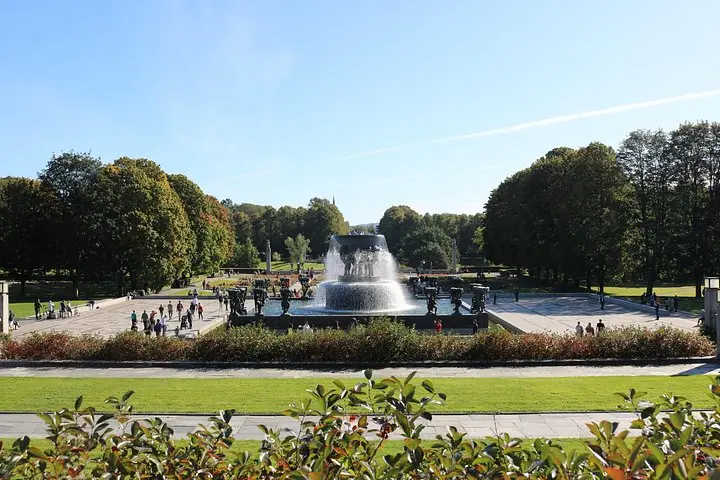
This full‑day guided loop stitches together Oslo’s cultural highlights: Vigeland’s sculpted figures that trace human poses and moods, the Fram—built for polar extremes and a marker of Norway’s seafaring age—and the open‑air Norwegian Folk Museum, anchored by the Gol Stave Church and longhouses that map centuries of rural life. The route also passes political landmarks—Parliament and the Nobel scene—and neighborhoods shaped by 19th‑ and 20th‑century urban growth.
Geologically, Oslo sits at the edge of the Oslo Graben; rocky outcrops and glacially polished bedrock punctuate parks and viewpoints. Culturally, the tour is a primer in Norway’s maritime identity and sculptural modernism.
Practical notes: expect roughly 5–6 hours with periodic on‑foot segments and short museum visits; wear supportive shoes and dress in layers—weather can shift from bright fjord sun to sharp wind at Holmenkollen. Bring a refillable bottle and a packed lunch if you prefer to skip cafeteria queues. The tour operates in most weather; audio or guide commentary keeps the pace informative rather than rushed. For photography, plan for wide angles at the jump and close frames in Vigeland’s alleys of bronze.
This is an efficient first‑day orientation for travelers who want a compact, well‑guided introduction to Oslo’s public art, polar history, and waterfront panoramas.
Entrance to the Fram Museum and the Norwegian Folk Museum (or the Kon‑Tiki Museum on certain dates) is included; other museums are viewed from outside.
Yes—children are welcome but must be accompanied by an adult; spaces and exhibits vary in child interest level.
The tour involves walking, steps, and uneven terrain at outdoor sites; it's not recommended for visitors with significant mobility challenges.
The tour operates in most weather; dress appropriately—museums provide indoor stops to break from conditions.
H. M. K. operates guided outdoor trips and adventures with an emphasis on safety, stewardship, and memorable experiences.
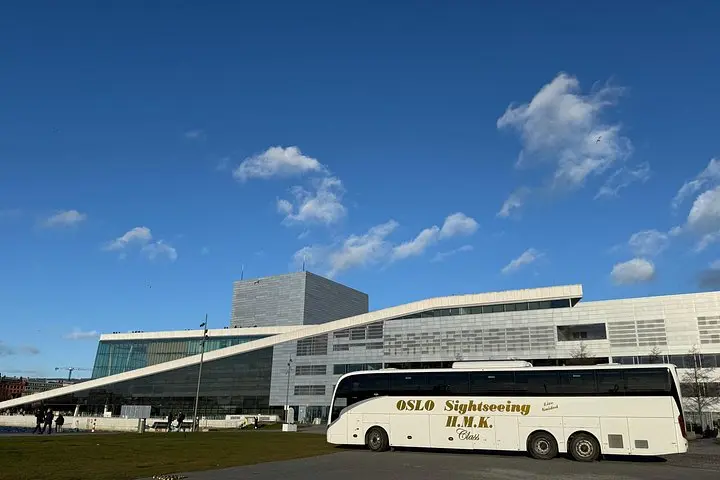
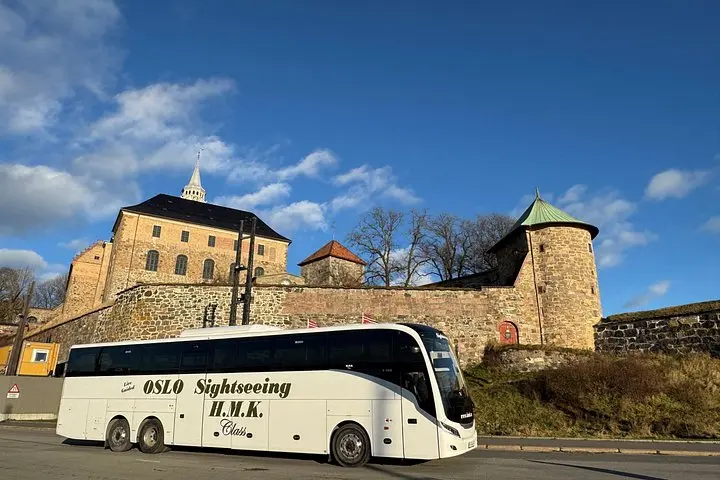
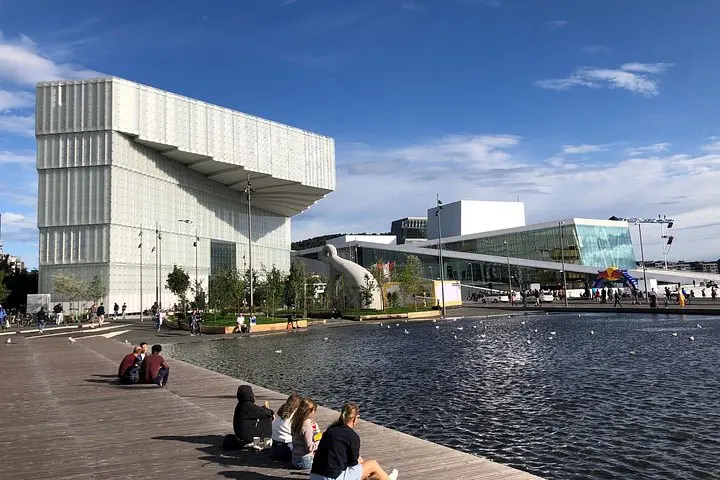
A winter wind off the Oslofjord lifts your collar as the coach pulls away from Haakon VII’s gate. The city unfolds in a measured rhythm—grand civic buildings slide by, then the skyline opens to the jutting steel of the Opera House and the high arc of Holmenkollen’s ski jump, where the city and fjord meet across a broad, bracing view.
A winter wind off the Oslofjord lifts your collar as the coach pulls away from Haakon VII’s gate. The city unfolds in a measured rhythm—grand civic buildings slide by, then the skyline opens to the jutting steel of the Opera House and the high arc of Holmenkollen’s ski jump, where the city and fjord meet across a broad, bracing view.
This full‑day guided loop stitches together Oslo’s cultural highlights: Vigeland’s sculpted figures that trace human poses and moods, the Fram—built for polar extremes and a marker of Norway’s seafaring age—and the open‑air Norwegian Folk Museum, anchored by the Gol Stave Church and longhouses that map centuries of rural life. The route also passes political landmarks—Parliament and the Nobel scene—and neighborhoods shaped by 19th‑ and 20th‑century urban growth.
Geologically, Oslo sits at the edge of the Oslo Graben; rocky outcrops and glacially polished bedrock punctuate parks and viewpoints. Culturally, the tour is a primer in Norway’s maritime identity and sculptural modernism.
Practical notes: expect roughly 5–6 hours with periodic on‑foot segments and short museum visits; wear supportive shoes and dress in layers—weather can shift from bright fjord sun to sharp wind at Holmenkollen. Bring a refillable bottle and a packed lunch if you prefer to skip cafeteria queues. The tour operates in most weather; audio or guide commentary keeps the pace informative rather than rushed. For photography, plan for wide angles at the jump and close frames in Vigeland’s alleys of bronze.
This is an efficient first‑day orientation for travelers who want a compact, well‑guided introduction to Oslo’s public art, polar history, and waterfront panoramas.