THE ADVENTURE COLLECTIVE® · Independent discovery and booking for outdoor travel

Step off the metro into a snow-bright forest and follow torchlight to a campfire on Øvresetertjern. This accessible winter walk from Frognerseteren combines short, snowy trails, hot drinks, and a guided, safety-first torchlit stroll.
Step off the metro into a snow-bright forest and follow torchlight to a campfire on Øvresetertjern. This accessible winter walk from Frognerseteren combines short, snowy trails, hot drinks, and a guided, safety-first torchlit stroll.
A low winter sun slants through Scots pines as a small group steps off the metro at Frognerseteren, sitting roughly 500 m above the fjord. Snow compresses underfoot; the forest breathes cold and white. Guests receive a handheld torch, a safety briefing, and set a deliberate pace into Oslomarka toward the frozen mirror of Øvresetertjern, where a low campfire waits.
Verified experiences and guided adventures in the surrounding area.
Operated by When in Norway · Oslo, Oslo
A low winter sun slants through Scots pines as a small group steps off the metro at Frognerseteren, sitting roughly 500 m above the fjord. Snow compresses underfoot; the forest breathes cold and white. Guests receive a handheld torch, a safety briefing, and set a deliberate pace into Oslomarka toward the frozen mirror of Øvresetertjern, where a low campfire waits.
Oslomarka is the recreational upland that has fed Oslo’s outdoor culture since the 19th century—cross-country skiers and day-trippers climbing from the city for fresh air. Geologically, you’re on the ancient Scandinavian Shield: rounded bedrock, shallow soils, and pockets of bog that freeze into bright, glassy ice in winter. The area’s culture prizes simple comforts—hot chocolate, shared stories, and quiet. Guides balance hygge with strict fire and safety rules; if wind or conditions threaten guests, torches are set aside and the group stays close around the fire pit.
Practical guidance: plan on about 45 minutes of walking through snow-packed trails (roughly 2–3 km one way, small elevation changes under 100 m), total outing time 3–4 hours including metro transfers. Temperatures in winter commonly range from –5°C to –15°C; dress in insulated layers, waterproof boots, and bring gaiters or microspikes if surfaces are icy. Public transit (Line 1) runs from central Oslo to Frognerseteren—bring a valid Ruter ticket. The campfire provides warmth and marshmallows; follow guide instructions around flame use and respect the forest by packing out any waste. This is an easy, atmospheric way to experience Norway’s winter woods without technical skills, offering crisp air, quiet trails, and the simple ritual of fire under pine boughs.
No; guides assess wind, weather, and group safety—if conditions are unsafe the group will still walk to the fire but torches will not be distributed.
Take Oslo Metro Line 1 toward Frognerseteren from central stations; confirm Ruter ticket validity for zones you travel through.
The tour is described as suitable for all fitness levels, but anyone with significant cardiovascular or mobility concerns should consult the provider first.
Several warm layers, a windproof outer shell, insulated waterproof boots, hat and gloves; bring microspikes if you tend to slip on ice.
When in Norway operates guided outdoor trips and adventures with an emphasis on safety, stewardship, and memorable experiences.
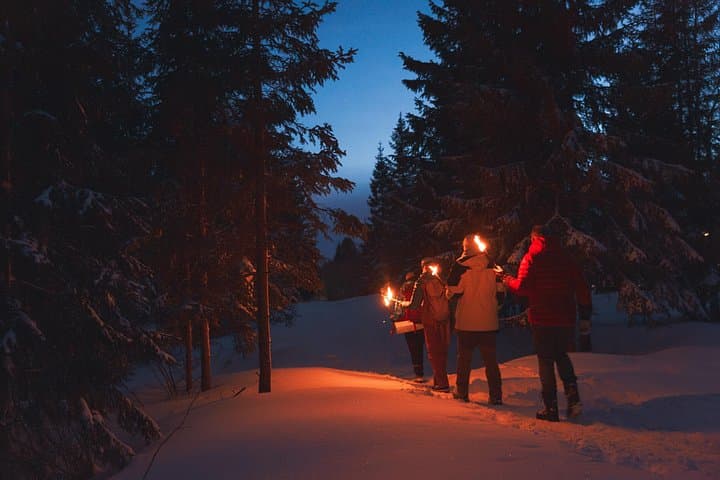
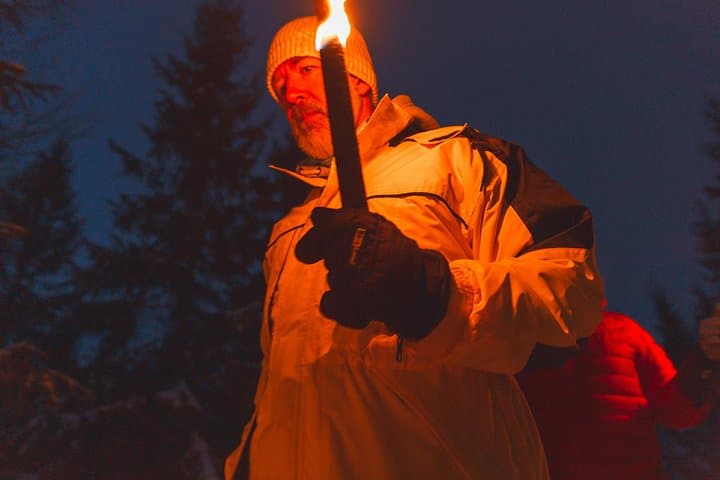
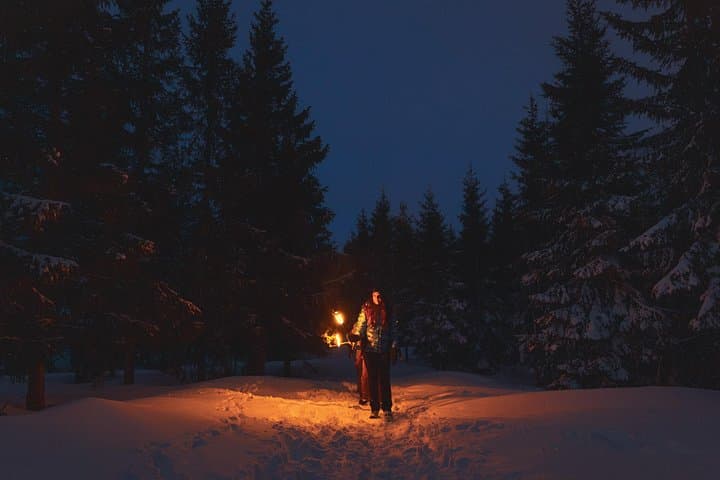
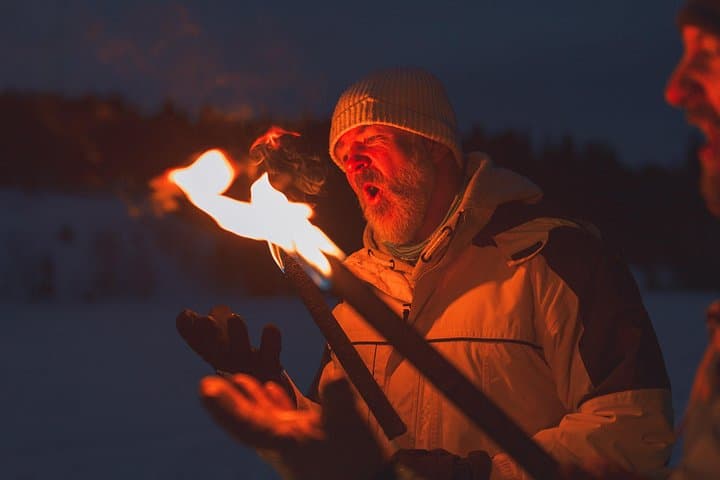
A low winter sun slants through Scots pines as a small group steps off the metro at Frognerseteren, sitting roughly 500 m above the fjord. Snow compresses underfoot; the forest breathes cold and white. Guests receive a handheld torch, a safety briefing, and set a deliberate pace into Oslomarka toward the frozen mirror of Øvresetertjern, where a low campfire waits.
A low winter sun slants through Scots pines as a small group steps off the metro at Frognerseteren, sitting roughly 500 m above the fjord. Snow compresses underfoot; the forest breathes cold and white. Guests receive a handheld torch, a safety briefing, and set a deliberate pace into Oslomarka toward the frozen mirror of Øvresetertjern, where a low campfire waits.
Oslomarka is the recreational upland that has fed Oslo’s outdoor culture since the 19th century—cross-country skiers and day-trippers climbing from the city for fresh air. Geologically, you’re on the ancient Scandinavian Shield: rounded bedrock, shallow soils, and pockets of bog that freeze into bright, glassy ice in winter. The area’s culture prizes simple comforts—hot chocolate, shared stories, and quiet. Guides balance hygge with strict fire and safety rules; if wind or conditions threaten guests, torches are set aside and the group stays close around the fire pit.
Practical guidance: plan on about 45 minutes of walking through snow-packed trails (roughly 2–3 km one way, small elevation changes under 100 m), total outing time 3–4 hours including metro transfers. Temperatures in winter commonly range from –5°C to –15°C; dress in insulated layers, waterproof boots, and bring gaiters or microspikes if surfaces are icy. Public transit (Line 1) runs from central Oslo to Frognerseteren—bring a valid Ruter ticket. The campfire provides warmth and marshmallows; follow guide instructions around flame use and respect the forest by packing out any waste. This is an easy, atmospheric way to experience Norway’s winter woods without technical skills, offering crisp air, quiet trails, and the simple ritual of fire under pine boughs.