THE ADVENTURE COLLECTIVE® · Independent discovery and booking for outdoor travel

Climb partway up Osorno’s flawless cone on a focused half-day excursion from Puerto Varas. Expect mixed terrain, dramatic lake views, and a guided route that balances access with alpine exposure.
Climb partway up Osorno’s flawless cone on a focused half-day excursion from Puerto Varas. Expect mixed terrain, dramatic lake views, and a guided route that balances access with alpine exposure.
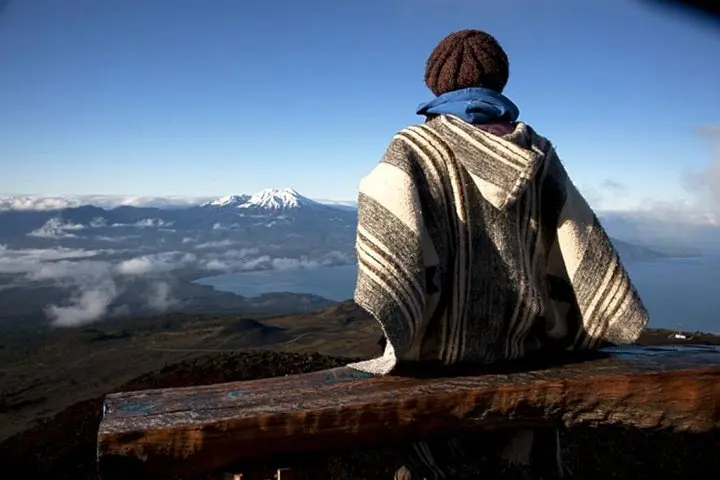
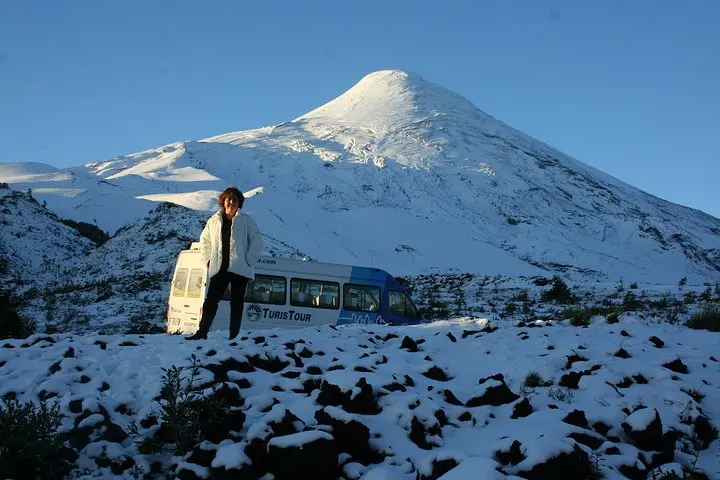
On the flat, silver face of Lake Llanquihue, the Osorno cone appears like a drawn compass needle—white-capped, sharply angled—calling visitors out of Puerto Varas and up toward thin air. The half-day trip begins with a stretch of road through dairy pastures and the scalloped edge of the Vicente Pérez Rosales National Park; by the time the bus pulls into the base area, the volcano has shifted from distant landmark to a gradient of scree, snow, and lichen-streaked rock.
Verified experiences and guided adventures in the surrounding area.
Operated by Turistour · Puerto Varas, Los Lagos
On the flat, silver face of Lake Llanquihue, the Osorno cone appears like a drawn compass needle—white-capped, sharply angled—calling visitors out of Puerto Varas and up toward thin air. The half-day trip begins with a stretch of road through dairy pastures and the scalloped edge of the Vicente Pérez Rosales National Park; by the time the bus pulls into the base area, the volcano has shifted from distant landmark to a gradient of scree, snow, and lichen-streaked rock.
Osorno is a classic stratovolcano, formed by successive lava and ash layers that give it the near-perfect conical profile photographers chase. Spanish colonists and Mapuche communities long used the peak and nearby Llanquihue as orientation points; nineteenth-century travelers cataloged it as the gateway to Chilean Patagonia. Geologically, its symmetry hides recent activity—glacially carved flanks and small summit glaciers record cycles of eruption and ice.
Culture along the route is quietly rural: red barns, grazing cattle, and small artisan stands selling curanto-style smoked cheeses on market days. The Vicente Pérez Rosales park protects the lower slopes and a network of trails that reveal the volcano’s ecological gradient—from temperate rainforest and coigüe stands at lower elevations to alpine tundra and volcanic scree higher up.
Practical guide: this is a guided, mixed-terrain outing best suited to hikers who can handle steady uphill walking and loose volcanic scree. The tour runs about 4–5 hours on-site (total booking time ~5 hours, with hotel pickup from Puerto Varas in the early afternoon). Expect a steady climb with sections of packed trail, switchbacks, and open scree fields; the guide times stops for photos and acclimatization at viewpoints facing Llanquihue and the neighboring Osorno glaciers.
Footwear with ankle support and a grippy sole is essential; poles help on scree. Layering is critical—coastal sun and a mountain wind can trade places in an hour. Bring at least 1.5–2 liters of water, high-energy snacks, sun protection, and a lightweight windproof. If you’re sensitive to altitude or balance, mention it when booking: guides adapt pace but the terrain can be exposed.
Logistics: departures typically meet at the Turistour office with hotel pickups across central Puerto Varas (pickup starts ~13:30). The operator provides round-trip shared transfer and a professional guide; confirm pickup details and weather contingency when you book. For photographers, aim for late-afternoon light when the cone picks up warm tones against the cool lake; for calmer conditions, ask guides about earlier pickup windows in shoulder seasons.
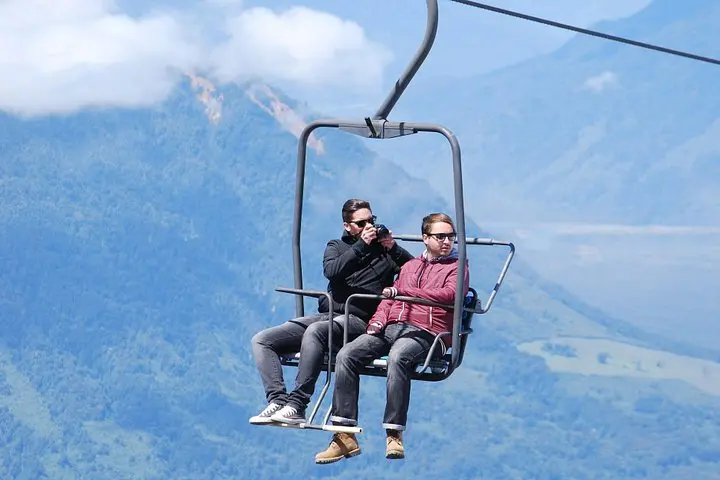
This is a concise, high-reward climb—less technical than mountaineering but more demanding than a simple walk—offering panoramas that justify the effort and a direct, physical connection to one of southern Chile’s most recognizable summits.
The route is moderate: steady uphill hiking with loose scree sections. Guides set a measured pace suitable for most fit walkers.
Yes—shared round-trip transfers and selected hotel pickup in Puerto Varas are included; confirm your pickup point when booking.
No technical mountaineering skills are required; basic hiking fitness and comfort on uneven ground are sufficient.
Pack layers, a windproof shell, sun protection, and at least 1.5–2 liters of water; conditions can shift quickly near the summit.
Children can participate but must be accompanied by an adult; evaluate their stamina for several hours of uphill walking.
Operators may cancel for safety if conditions are unsafe; check the 24-hour cancellation policy and confirm alternatives if weather closes access.
Turistour operates guided outdoor trips and adventures with an emphasis on safety, stewardship, and memorable experiences.
On the flat, silver face of Lake Llanquihue, the Osorno cone appears like a drawn compass needle—white-capped, sharply angled—calling visitors out of Puerto Varas and up toward thin air. The half-day trip begins with a stretch of road through dairy pastures and the scalloped edge of the Vicente Pérez Rosales National Park; by the time the bus pulls into the base area, the volcano has shifted from distant landmark to a gradient of scree, snow, and lichen-streaked rock.
On the flat, silver face of Lake Llanquihue, the Osorno cone appears like a drawn compass needle—white-capped, sharply angled—calling visitors out of Puerto Varas and up toward thin air. The half-day trip begins with a stretch of road through dairy pastures and the scalloped edge of the Vicente Pérez Rosales National Park; by the time the bus pulls into the base area, the volcano has shifted from distant landmark to a gradient of scree, snow, and lichen-streaked rock.
Osorno is a classic stratovolcano, formed by successive lava and ash layers that give it the near-perfect conical profile photographers chase. Spanish colonists and Mapuche communities long used the peak and nearby Llanquihue as orientation points; nineteenth-century travelers cataloged it as the gateway to Chilean Patagonia. Geologically, its symmetry hides recent activity—glacially carved flanks and small summit glaciers record cycles of eruption and ice.
Culture along the route is quietly rural: red barns, grazing cattle, and small artisan stands selling curanto-style smoked cheeses on market days. The Vicente Pérez Rosales park protects the lower slopes and a network of trails that reveal the volcano’s ecological gradient—from temperate rainforest and coigüe stands at lower elevations to alpine tundra and volcanic scree higher up.
Practical guide: this is a guided, mixed-terrain outing best suited to hikers who can handle steady uphill walking and loose volcanic scree. The tour runs about 4–5 hours on-site (total booking time ~5 hours, with hotel pickup from Puerto Varas in the early afternoon). Expect a steady climb with sections of packed trail, switchbacks, and open scree fields; the guide times stops for photos and acclimatization at viewpoints facing Llanquihue and the neighboring Osorno glaciers.
Footwear with ankle support and a grippy sole is essential; poles help on scree. Layering is critical—coastal sun and a mountain wind can trade places in an hour. Bring at least 1.5–2 liters of water, high-energy snacks, sun protection, and a lightweight windproof. If you’re sensitive to altitude or balance, mention it when booking: guides adapt pace but the terrain can be exposed.
Logistics: departures typically meet at the Turistour office with hotel pickups across central Puerto Varas (pickup starts ~13:30). The operator provides round-trip shared transfer and a professional guide; confirm pickup details and weather contingency when you book. For photographers, aim for late-afternoon light when the cone picks up warm tones against the cool lake; for calmer conditions, ask guides about earlier pickup windows in shoulder seasons.
This is a concise, high-reward climb—less technical than mountaineering but more demanding than a simple walk—offering panoramas that justify the effort and a direct, physical connection to one of southern Chile’s most recognizable summits.