THE ADVENTURE COLLECTIVE® · Independent discovery and booking for outdoor travel

A compact, scenery-dense day trip from Puerto Varas that pairs the glacier-ringed cone of Osorno with the basalt-forged cascades of Petrohué and an optional boat across Todos los Santos lake. Perfect for photographers and first-time visitors to Chile's Lake District.
A compact, scenery-dense day trip from Puerto Varas that pairs the glacier-ringed cone of Osorno with the basalt-forged cascades of Petrohué and an optional boat across Todos los Santos lake. Perfect for photographers and first-time visitors to Chile's Lake District.
You pull away from Puerto Varas before the town has fully stirred, the bus windows framing a slow-motion postcard: Llanquihue Lake laid out like glass, the cone of Osorno looming with glacier-bright highlights, Calbuco's silhouette across the basin. Air at the lakeshore is sharp, smelling of cold water and pine; by the time you reach Ensenada the road begins to climb and the volcano seems to lean forward, as if to examine you.
Verified experiences and guided adventures in the surrounding area.
Operated by Ruta Chile · Puerto Varas, Los Lagos
You pull away from Puerto Varas before the town has fully stirred, the bus windows framing a slow-motion postcard: Llanquihue Lake laid out like glass, the cone of Osorno looming with glacier-bright highlights, Calbuco's silhouette across the basin. Air at the lakeshore is sharp, smelling of cold water and pine; by the time you reach Ensenada the road begins to climb and the volcano seems to lean forward, as if to examine you.
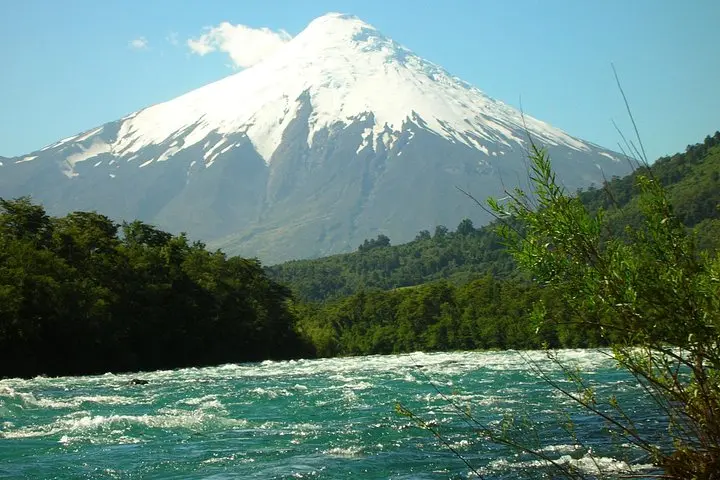
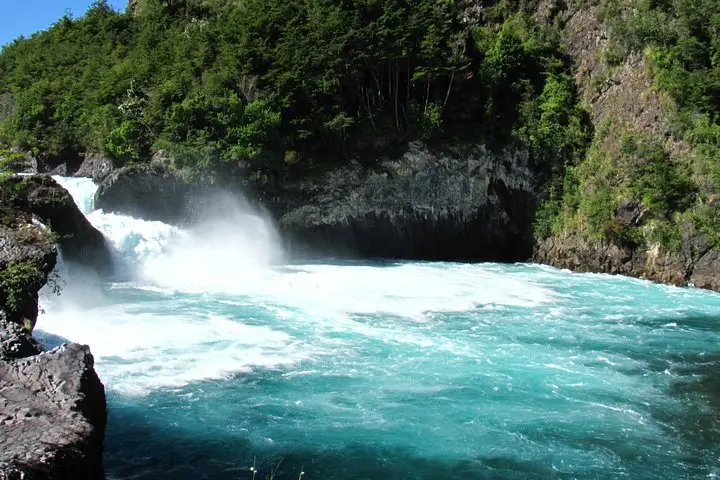
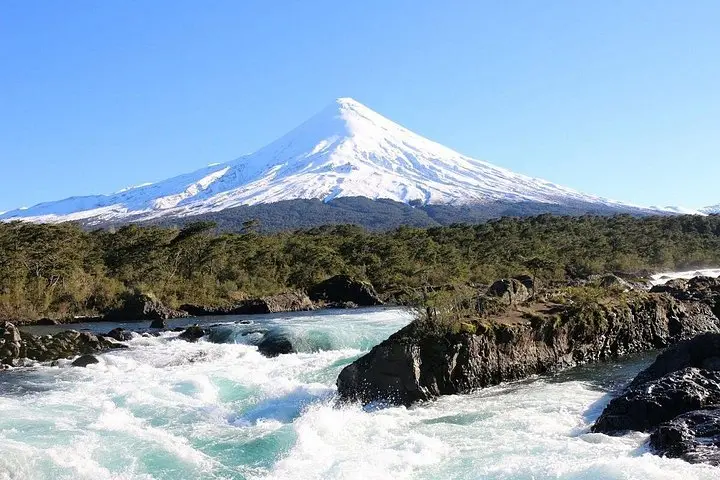
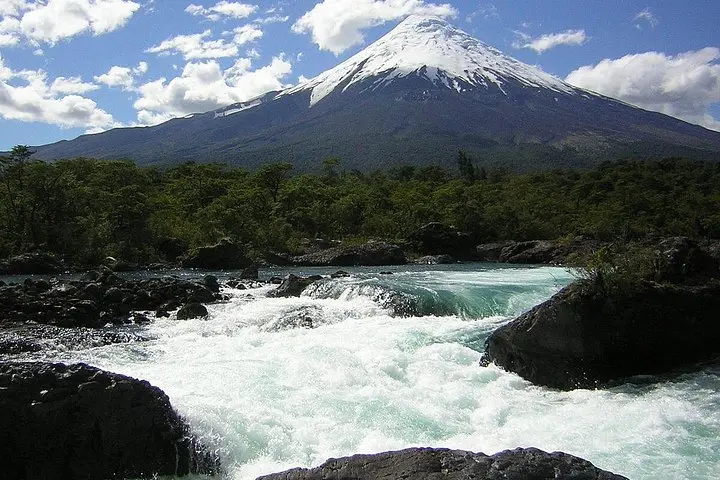
This full-day loop threads together three geological signatures of southern Chile: the ice-scoured cone of Volcán Osorno, the basalt teeth at Saltos del Petrohué, and the jade sweep of Todos los Santos lake. Osorno is a young, steep stratovolcano carved by recurring glaciers, its flanks striped with lava flows and permanent snowfields that catch the light like knives. Petrohué’s cataracts have formed where rivers meet hardened lava — the water dares the rock, cutting and polishing channels through volcanic columns. These places also sit within the longer human story: Mapuche and Huilliche peoples who read the land differently than arriving German settlers, and the 19th-century conservation push that created Vicente Pérez Rosales National Park to protect these dramatic waters and peaks.
On the ground the tour is practical and unhurried. You’ll pause at the Osorno ski center at roughly 1,240 meters for panoramic views; there’s time for coffee or an optional chairlift that gains another few hundred meters for even broader perspectives. Petrohué’s boardwalks route you right to the basalt outcrops and foaming channels — a photographer’s playground and an instructive lesson in volcanic resistance. The itinerary often finishes with a short boat ride on Todos los Santos, the lake’s clear water reflecting evergreen slopes and the volcanoes’ faces.
Plan like a traveler who expects changeable mountain weather. Bring waterproof layers, sturdy shoes, and small bills for the national park entrance and optional lift or boat. The tour operator provides transport and a multilingual guide, but time at each stop is finite; keep snacks and water handy if you want to stay longer at viewpoints. If you’re aiming for crisp photos, early departures yield clearer skies and calmer lake surfaces; afternoons see more cloud build-up.
This trip balances spectacle with accessibility — you’ll learn how fire and ice shaped this corner of the southern Andes, stand where a river tests ancient lava, and finish the day back on the lake shore with the sun sliding behind volcanic shoulders. It’s an efficient, sensory-rich introduction to Chile’s lake-and-volcano circuit, perfect for anyone wanting big landscapes without a multi-day commitment.
The tour is approximately 8 hours and typically starts in the morning; confirm your exact pickup time with the local operator the day before.
Boat rides may be offered as an optional activity at an extra cost; availability can depend on season and water conditions.
No—this is a sightseeing tour with short walks on well-maintained trails and boardwalks suitable for most visitors.
Yes, Saltos del Petrohué requires a national park entrance fee payable on-site, usually in cash or local card depending on season.
Yes, the lift is optional and requires an additional fee; it provides access to higher vista stations when operating.
Children are welcome but must be accompanied by an adult; keep a close eye near water and rocky edges at the falls.
Ruta Chile operates guided outdoor trips and adventures with an emphasis on safety, stewardship, and memorable experiences.
You pull away from Puerto Varas before the town has fully stirred, the bus windows framing a slow-motion postcard: Llanquihue Lake laid out like glass, the cone of Osorno looming with glacier-bright highlights, Calbuco's silhouette across the basin. Air at the lakeshore is sharp, smelling of cold water and pine; by the time you reach Ensenada the road begins to climb and the volcano seems to lean forward, as if to examine you.
You pull away from Puerto Varas before the town has fully stirred, the bus windows framing a slow-motion postcard: Llanquihue Lake laid out like glass, the cone of Osorno looming with glacier-bright highlights, Calbuco's silhouette across the basin. Air at the lakeshore is sharp, smelling of cold water and pine; by the time you reach Ensenada the road begins to climb and the volcano seems to lean forward, as if to examine you.
This full-day loop threads together three geological signatures of southern Chile: the ice-scoured cone of Volcán Osorno, the basalt teeth at Saltos del Petrohué, and the jade sweep of Todos los Santos lake. Osorno is a young, steep stratovolcano carved by recurring glaciers, its flanks striped with lava flows and permanent snowfields that catch the light like knives. Petrohué’s cataracts have formed where rivers meet hardened lava — the water dares the rock, cutting and polishing channels through volcanic columns. These places also sit within the longer human story: Mapuche and Huilliche peoples who read the land differently than arriving German settlers, and the 19th-century conservation push that created Vicente Pérez Rosales National Park to protect these dramatic waters and peaks.
On the ground the tour is practical and unhurried. You’ll pause at the Osorno ski center at roughly 1,240 meters for panoramic views; there’s time for coffee or an optional chairlift that gains another few hundred meters for even broader perspectives. Petrohué’s boardwalks route you right to the basalt outcrops and foaming channels — a photographer’s playground and an instructive lesson in volcanic resistance. The itinerary often finishes with a short boat ride on Todos los Santos, the lake’s clear water reflecting evergreen slopes and the volcanoes’ faces.
Plan like a traveler who expects changeable mountain weather. Bring waterproof layers, sturdy shoes, and small bills for the national park entrance and optional lift or boat. The tour operator provides transport and a multilingual guide, but time at each stop is finite; keep snacks and water handy if you want to stay longer at viewpoints. If you’re aiming for crisp photos, early departures yield clearer skies and calmer lake surfaces; afternoons see more cloud build-up.
This trip balances spectacle with accessibility — you’ll learn how fire and ice shaped this corner of the southern Andes, stand where a river tests ancient lava, and finish the day back on the lake shore with the sun sliding behind volcanic shoulders. It’s an efficient, sensory-rich introduction to Chile’s lake-and-volcano circuit, perfect for anyone wanting big landscapes without a multi-day commitment.