THE ADVENTURE COLLECTIVE® · Independent discovery and booking for outdoor travel

Leave Phnom Penh for a full-day journey to Oudong: an easily walked royal hill with centuries-old stupas, a meditation retreat, and artisan villages. This practical guide covers what you’ll see, how to prepare, and the small customs that make the day smoother.
Leave Phnom Penh for a full-day journey to Oudong: an easily walked royal hill with centuries-old stupas, a meditation retreat, and artisan villages. This practical guide covers what you’ll see, how to prepare, and the small customs that make the day smoother.
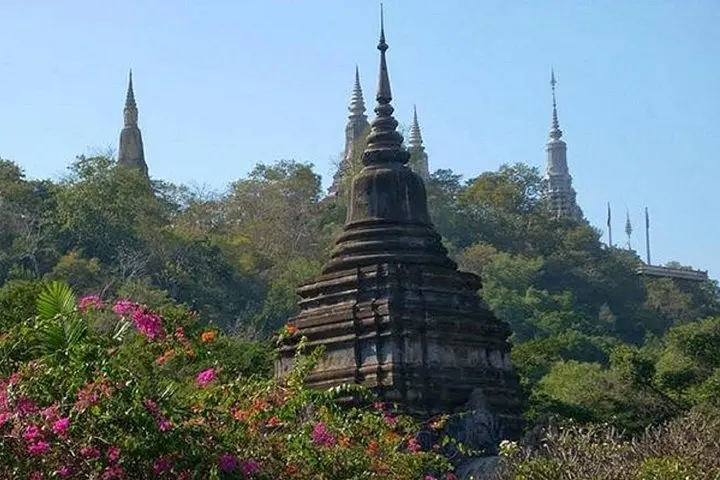
The van slips out of Phnom Penh before dawn and the city noises thin to the soft susurrus of rice fields. By the time you reach the base of Oudong, the hill’s stupa-capped ridgeline cuts a simple silhouette against the sky; steps climb like a patient invitation and the wind seems to carry the voices of centuries.
Verified experiences and guided adventures in the surrounding area.
Operated by Tour East Cambodia · Oudong, Kandal Province
The van slips out of Phnom Penh before dawn and the city noises thin to the soft susurrus of rice fields. By the time you reach the base of Oudong, the hill’s stupa-capped ridgeline cuts a simple silhouette against the sky; steps climb like a patient invitation and the wind seems to carry the voices of centuries.
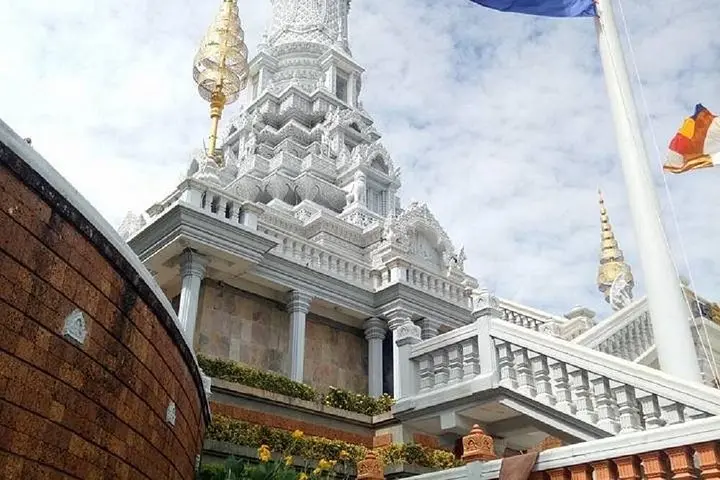
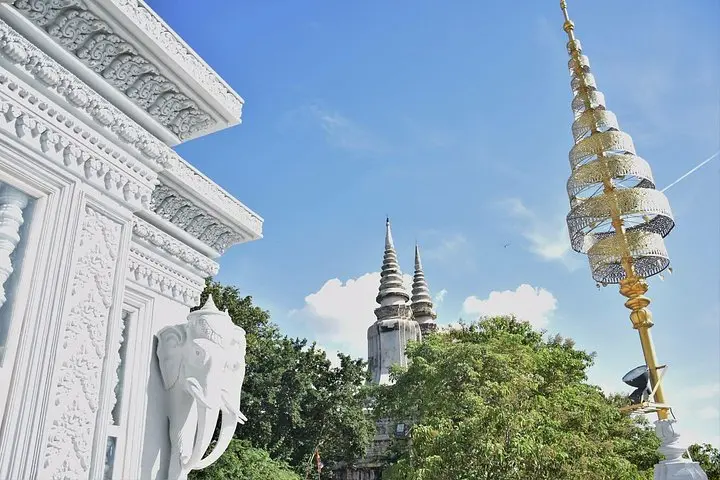
Oudong was Cambodia’s royal seat from 1618 to 1866, and the summit is a compact record of that era: clustered stupas dedicated to kings, crumbling stone reliefs and ritual offerings. Geologically the site is a modest sandstone outcrop rising above the surrounding Mekong floodplain, which gives the summit unexpectedly wide views across cultivated lowlands. Culture is present in small gestures — monks chanting at the meditation retreat, artisans hammering silver in Kompong Luong — and in the strict temple dress codes that govern behavior on sacred ground.
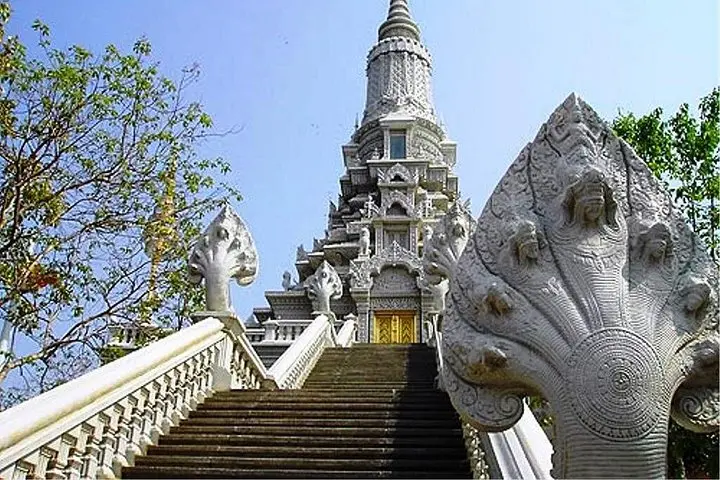
Expect a short but steady climb to the high stupas (several flights of stone steps, roughly 150–250m elevation gain depending on your route) and a paced, full-day itinerary that includes a visit to Vipassana Dhura meditation center, the jade Buddha and a local silversmith village. The day balances quiet reflection with tangible craft — a chance to watch artisans and sample local snacks.
Practical notes: leave early to avoid midday heat, bring modest clothing that covers shoulders and knees for temples, carry water and cash for lunch and small purchases, and wear grippy shoes for stepped paths. Guides often include hotel pickup and return; the drive is roughly 40 km each way and the tour runs about eight hours. Respect sacred spaces, move deliberately on narrow steps, and you’ll come away with clearer views and quieter footing.
The tour covers about 40 km each way; expect roughly 1–1.5 hours of driving each direction depending on traffic.
The summit requires climbing several flights of stepped paths; it’s not technical but does involve sustained stair climbing—suitable for most fitness levels.
Lunch is typically at your own expense; guides will suggest local spots but plan to carry cash for food.
Many temple areas have steep steps and uneven ground; visitors with mobility limits should check with the operator about specific access or alternative viewpoints.
Tour East Cambodia operates guided outdoor trips and adventures with an emphasis on safety, stewardship, and memorable experiences.
The van slips out of Phnom Penh before dawn and the city noises thin to the soft susurrus of rice fields. By the time you reach the base of Oudong, the hill’s stupa-capped ridgeline cuts a simple silhouette against the sky; steps climb like a patient invitation and the wind seems to carry the voices of centuries.
The van slips out of Phnom Penh before dawn and the city noises thin to the soft susurrus of rice fields. By the time you reach the base of Oudong, the hill’s stupa-capped ridgeline cuts a simple silhouette against the sky; steps climb like a patient invitation and the wind seems to carry the voices of centuries.
Oudong was Cambodia’s royal seat from 1618 to 1866, and the summit is a compact record of that era: clustered stupas dedicated to kings, crumbling stone reliefs and ritual offerings. Geologically the site is a modest sandstone outcrop rising above the surrounding Mekong floodplain, which gives the summit unexpectedly wide views across cultivated lowlands. Culture is present in small gestures — monks chanting at the meditation retreat, artisans hammering silver in Kompong Luong — and in the strict temple dress codes that govern behavior on sacred ground.
Expect a short but steady climb to the high stupas (several flights of stone steps, roughly 150–250m elevation gain depending on your route) and a paced, full-day itinerary that includes a visit to Vipassana Dhura meditation center, the jade Buddha and a local silversmith village. The day balances quiet reflection with tangible craft — a chance to watch artisans and sample local snacks.
Practical notes: leave early to avoid midday heat, bring modest clothing that covers shoulders and knees for temples, carry water and cash for lunch and small purchases, and wear grippy shoes for stepped paths. Guides often include hotel pickup and return; the drive is roughly 40 km each way and the tour runs about eight hours. Respect sacred spaces, move deliberately on narrow steps, and you’ll come away with clearer views and quieter footing.