THE ADVENTURE COLLECTIVE® · Independent discovery and booking for outdoor travel

Escape Marrakech for a day in the High Atlas—river trails, cascading waterfalls, and Berber cooperatives await. This private drive-and-walk tour combines landscape views with cultural stops and a riverside lunch.
Escape Marrakech for a day in the High Atlas—river trails, cascading waterfalls, and Berber cooperatives await. This private drive-and-walk tour combines landscape views with cultural stops and a riverside lunch.
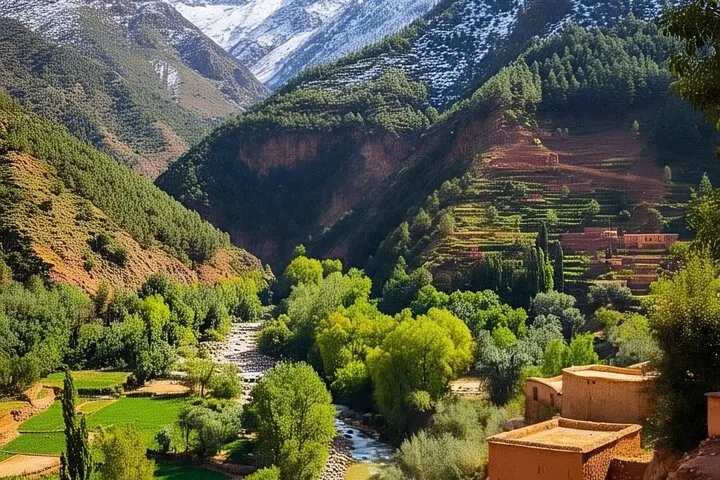
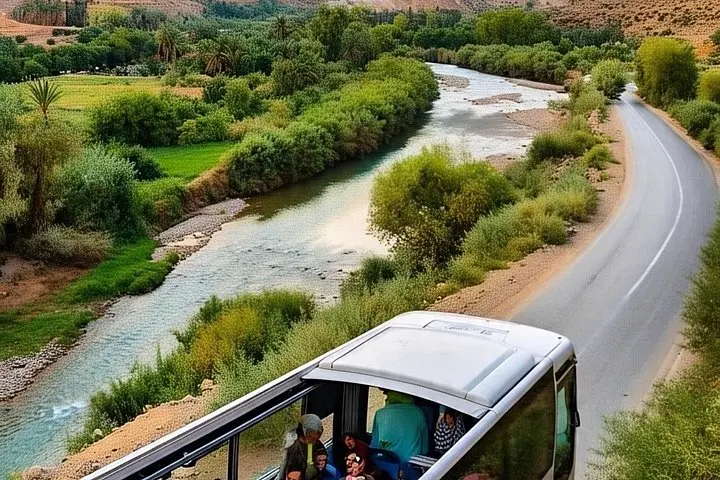
A morning drive peels away Marrakech’s ochre edges and climbs into the High Atlas, where the road curls over ridgelines and drops into a green cleft carved by the Oued Ourika. Sunlight skips off the river; terraces and mule tracks write human history into the slopes. By mid-morning you’ve left traffic noise behind and the valley’s air, cool and sharp, dares you to slow down.
Verified experiences and guided adventures in the surrounding area.
Operated by Excursions Tours Marrakech · Ourika Valley, Marrakech-Safi
A morning drive peels away Marrakech’s ochre edges and climbs into the High Atlas, where the road curls over ridgelines and drops into a green cleft carved by the Oued Ourika. Sunlight skips off the river; terraces and mule tracks write human history into the slopes. By mid-morning you’ve left traffic noise behind and the valley’s air, cool and sharp, dares you to slow down.
The Ourika Valley has long been home to Amazigh (Berber) communities who farm along the river and trade argan oil, honey, and woven goods at cooperatives. Geologically, the valley is a glacial-carved channel through folded schist and limestone; the persistent flow of the Ourika makes it one of the few perennial rivers feeding southern Marrakech, which explains the dense riparian growth and layered fields.
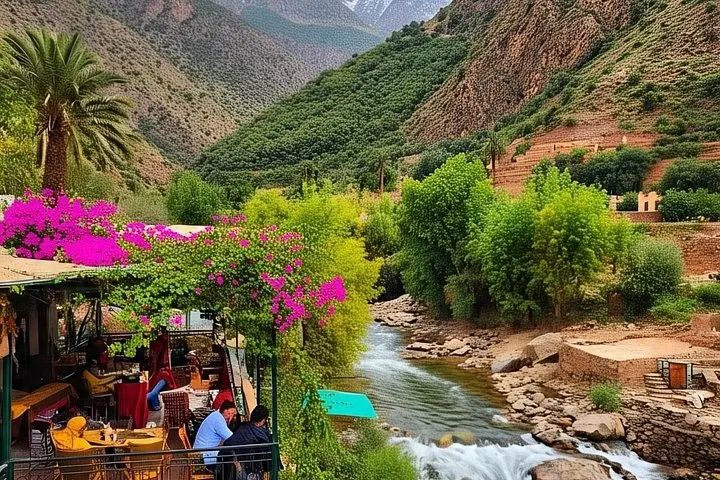
Culturally, expect active markets, simple restaurants beside the creek, and small cooperative workshops where locals press argan and sell handcrafts. A short guided walk to Setti Fadma’s waterfalls gives you a close-up of the valley’s mechanics: stepped cascades, moss-lined pools, and rock strata exposed like pages.
Practical guidance: wear sturdy walking shoes for uneven trails, bring a refillable water bottle, and plan for a full day (9–12 hours) including drive time. If you prefer quiet, head upstream early; for a gentler outing, choose the lower falls and riverside cafes. Support local cooperatives directly and keep waste packed out—the valley is fertile but fragile.
Expect 45–75 minutes each way depending on traffic; the full tour lasts about 9–12 hours including stops and walks.
The main path involves uneven stone steps and slippery sections near cascades—moderate mobility and proper footwear are recommended.
Lunch is included on this private tour; menus typically feature local salads, tagines, and river views—inform the operator of dietary needs in advance.
Transportation options are wheelchair accessible for much of the route, but the waterfall paths are not fully wheelchair friendly.
Excursions Tours Marrakech operates guided outdoor trips and adventures with an emphasis on safety, stewardship, and memorable experiences.
A morning drive peels away Marrakech’s ochre edges and climbs into the High Atlas, where the road curls over ridgelines and drops into a green cleft carved by the Oued Ourika. Sunlight skips off the river; terraces and mule tracks write human history into the slopes. By mid-morning you’ve left traffic noise behind and the valley’s air, cool and sharp, dares you to slow down.
A morning drive peels away Marrakech’s ochre edges and climbs into the High Atlas, where the road curls over ridgelines and drops into a green cleft carved by the Oued Ourika. Sunlight skips off the river; terraces and mule tracks write human history into the slopes. By mid-morning you’ve left traffic noise behind and the valley’s air, cool and sharp, dares you to slow down.
The Ourika Valley has long been home to Amazigh (Berber) communities who farm along the river and trade argan oil, honey, and woven goods at cooperatives. Geologically, the valley is a glacial-carved channel through folded schist and limestone; the persistent flow of the Ourika makes it one of the few perennial rivers feeding southern Marrakech, which explains the dense riparian growth and layered fields.
Culturally, expect active markets, simple restaurants beside the creek, and small cooperative workshops where locals press argan and sell handcrafts. A short guided walk to Setti Fadma’s waterfalls gives you a close-up of the valley’s mechanics: stepped cascades, moss-lined pools, and rock strata exposed like pages.
Practical guidance: wear sturdy walking shoes for uneven trails, bring a refillable water bottle, and plan for a full day (9–12 hours) including drive time. If you prefer quiet, head upstream early; for a gentler outing, choose the lower falls and riverside cafes. Support local cooperatives directly and keep waste packed out—the valley is fertile but fragile.