THE ADVENTURE COLLECTIVE® · Independent discovery and booking for outdoor travel

Escape Marrakech for a day and follow the Ourika River into the heart of the High Atlas. Visit a Berber house, stroll palm-lined riverbanks, and hike to the Setti Fatma waterfalls on a moderate, scenic outing.
Escape Marrakech for a day and follow the Ourika River into the heart of the High Atlas. Visit a Berber house, stroll palm-lined riverbanks, and hike to the Setti Fatma waterfalls on a moderate, scenic outing.
You leave Marrakech mid-morning and the city’s ochre buildings slide behind you as the road climbs toward the High Atlas. In an hour the air cools, olive and argan trees edge the highway, and the Ourika River begins to dictate the line of the valley — a restless ribbon daring you to follow it.
Verified experiences and guided adventures in the surrounding area.
Operated by Morocco Incoming Services · Setti Fatma, Marrakesh-Safi
You leave Marrakech mid-morning and the city’s ochre buildings slide behind you as the road climbs toward the High Atlas. In an hour the air cools, olive and argan trees edge the highway, and the Ourika River begins to dictate the line of the valley — a restless ribbon daring you to follow it.
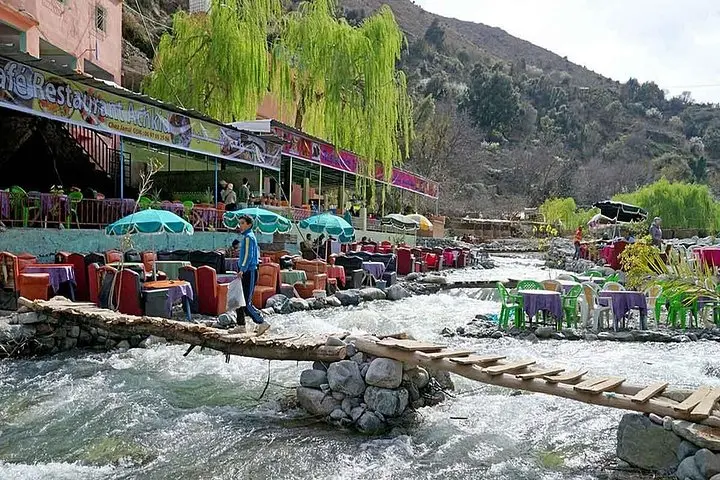
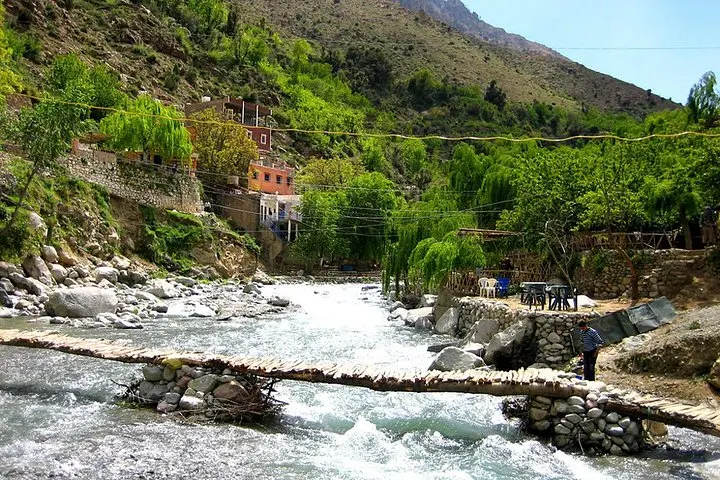
The day centers on Setti Fatma and the palm-lined terraces of the Ourika Valley, where local guides lead you to low waterfalls framed by cliffs. The valley sits on the southern flank of the High Atlas, a folded range of sedimentary rock weathered into steep ravines and plunging streams; the river carved the route that farmers turned into stepped orchards and summer homes.
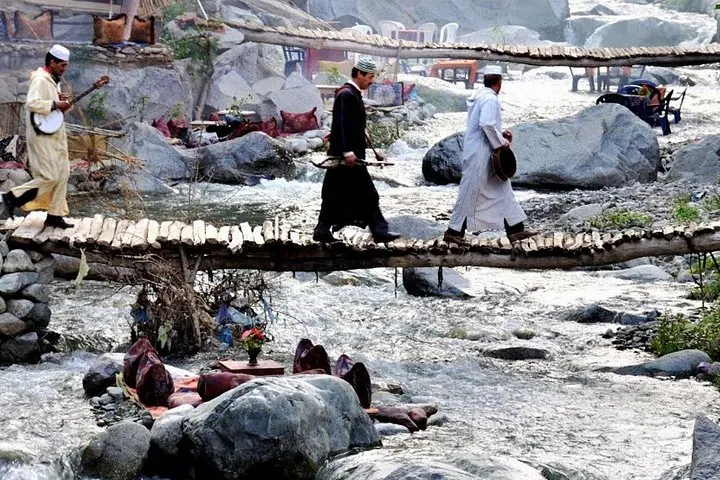
Culturally, the valley is Amazigh (Berber) country: homes with flat roofs, terraced fields of fruit trees, and women’s cooperatives selling argan oil and woven goods. Stop at a family house to share mint tea and learn about mountain life shaped by water and stone. Geologically, expect layered shale and limestone cliffs punctuated by cascades that swell after winter rains.
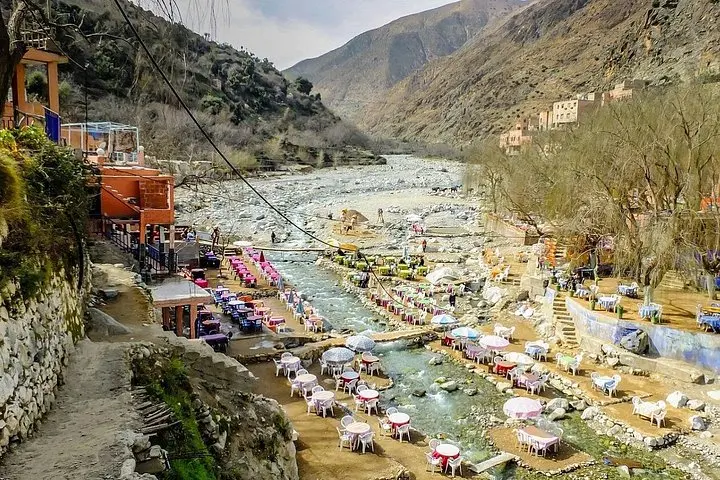
Practically: the full excursion is about eight hours from Marrakech with roughly an hour’s drive each way and a moderate hillside walk to several waterfall viewpoints (plan on 3–4 km round-trip and ~200–350 m of ascent depending on which falls you reach). Footing can be rocky and slippery; sturdy shoes, 2 liters of water, sun protection, and layers are sensible. Start early, respect private terraces, and budget time for river-side lunch — the valley rewards slow, careful exploration.
Expect about a 45–75 minute drive depending on traffic and your pickup point in Marrakech.
Older children who handle uphill walking and uneven terrain will manage; infants should remain in laps during the drive and aren’t suited for the steeper sections.
Small local access fees or costs for guides at specific waterfall viewpoints can apply; confirm with the operator before departing.
A moderate fitness level — the hikes are not technical but include uphill sections and uneven ground requiring balance and stamina.
Morocco Incoming Services operates guided outdoor trips and adventures with an emphasis on safety, stewardship, and memorable experiences.
You leave Marrakech mid-morning and the city’s ochre buildings slide behind you as the road climbs toward the High Atlas. In an hour the air cools, olive and argan trees edge the highway, and the Ourika River begins to dictate the line of the valley — a restless ribbon daring you to follow it.
You leave Marrakech mid-morning and the city’s ochre buildings slide behind you as the road climbs toward the High Atlas. In an hour the air cools, olive and argan trees edge the highway, and the Ourika River begins to dictate the line of the valley — a restless ribbon daring you to follow it.
The day centers on Setti Fatma and the palm-lined terraces of the Ourika Valley, where local guides lead you to low waterfalls framed by cliffs. The valley sits on the southern flank of the High Atlas, a folded range of sedimentary rock weathered into steep ravines and plunging streams; the river carved the route that farmers turned into stepped orchards and summer homes.
Culturally, the valley is Amazigh (Berber) country: homes with flat roofs, terraced fields of fruit trees, and women’s cooperatives selling argan oil and woven goods. Stop at a family house to share mint tea and learn about mountain life shaped by water and stone. Geologically, expect layered shale and limestone cliffs punctuated by cascades that swell after winter rains.
Practically: the full excursion is about eight hours from Marrakech with roughly an hour’s drive each way and a moderate hillside walk to several waterfall viewpoints (plan on 3–4 km round-trip and ~200–350 m of ascent depending on which falls you reach). Footing can be rocky and slippery; sturdy shoes, 2 liters of water, sun protection, and layers are sensible. Start early, respect private terraces, and budget time for river-side lunch — the valley rewards slow, careful exploration.