THE ADVENTURE COLLECTIVE® · Independent discovery and booking for outdoor travel

Escape Marrakech for a 7–8 hour journey into the Ourika Valley to visit Berber villages, a women-led argan cooperative and the Setti Fatma waterfalls. This accessible day trip pairs cultural stops with easy riverside walks and orchard views.
Escape Marrakech for a 7–8 hour journey into the Ourika Valley to visit Berber villages, a women-led argan cooperative and the Setti Fatma waterfalls. This accessible day trip pairs cultural stops with easy riverside walks and orchard views.
A thin ribbon of road drops out of Marrakech and into an olive-studded valley where the Ourika river dares you to slow down. Within an hour the city’s heat and honking traffic are replaced by terraced fields, riverside cafes and villages clinging to sun-warmed slopes. The day trip centers on Setti Fatma’s waterfalls, a handful of cascades that send cool spray into the air and draw Marrakech residents seeking relief from the plains.
Verified experiences and guided adventures in the surrounding area.
Operated by ALIBABA TOURS · Setti Fatma, Marrakech-Safi
A thin ribbon of road drops out of Marrakech and into an olive-studded valley where the Ourika river dares you to slow down. Within an hour the city’s heat and honking traffic are replaced by terraced fields, riverside cafes and villages clinging to sun-warmed slopes. The day trip centers on Setti Fatma’s waterfalls, a handful of cascades that send cool spray into the air and draw Marrakech residents seeking relief from the plains.
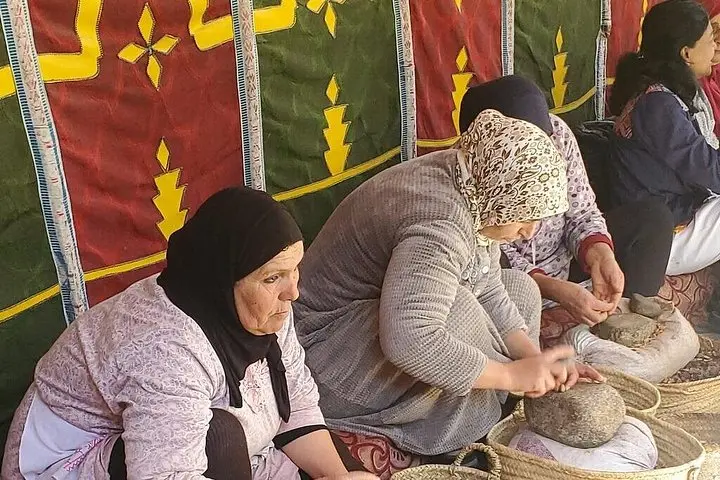
The valley lies at the northern foothills of the High Atlas; its stone houses and stepped terraces date back centuries and reflect traditional Amazigh (Berber) land use. Geologically the valley is carved from soft sedimentary layers and older metamorphic outcrops, producing pockets of fertile soil where orchards and almond trees thrive. Local culture is visible in small souks, a women-run argan cooperative producing press-fresh oil, and family-run riverside restaurants serving tagines beside fig trees.
Practically, expect a full 7–8 hour day with 2–3 hours of driving round-trip. Much of the walking is on uneven village paths and flagged trails to the falls — good footwear and steady knees help. Plan for midday shade, carry at least 1–1.5 liters of water, and bring cash for market purchases and tips. Visit on a market day for a livelier roadside souk; arrive earlier to avoid peak tourist hours at the main cascades. Respect private spaces when entering Berber homes and support local cooperatives to keep tourism benefits on the valley’s side.
Expect approximately 45–90 minutes each way depending on traffic and exact route; the operator typically spends 2–3 hours in transit overall.
Most standard day trips do not require an entrance fee to visit the trails, but guided hikes to upper cascades or mule rides may cost extra locally.
Yes—families can join; infant seats are sometimes available on request but walking to the higher falls can be steep for small children.
Visits to Berber houses are common on these tours; always ask permission, remove shoes if requested and keep visits brief and respectful.
ALIBABA TOURS operates guided outdoor trips and adventures with an emphasis on safety, stewardship, and memorable experiences.
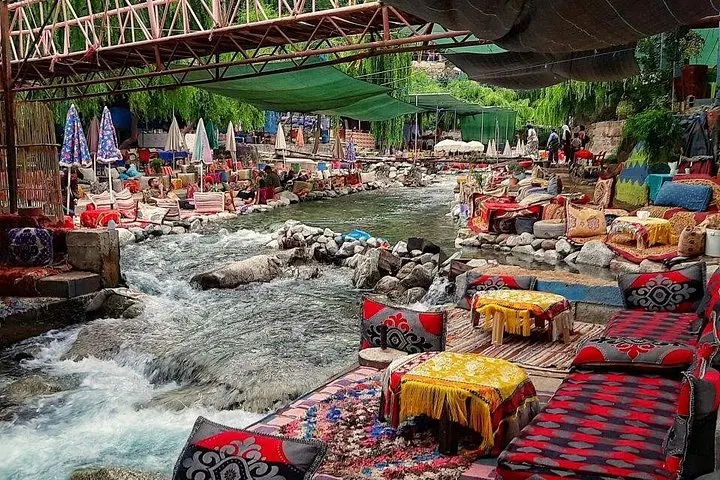
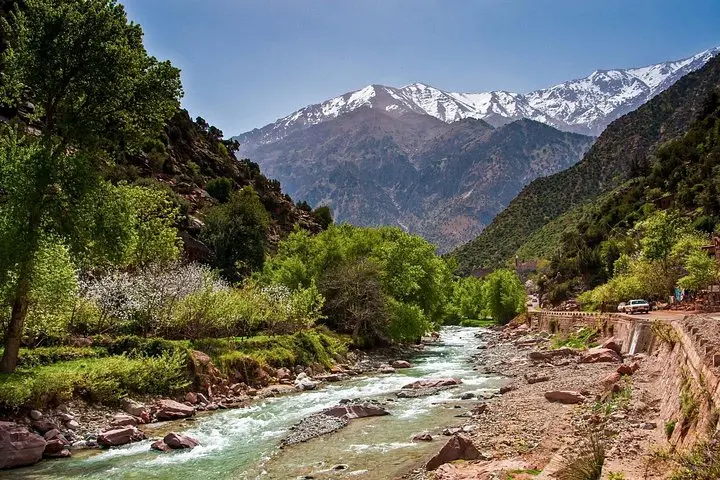
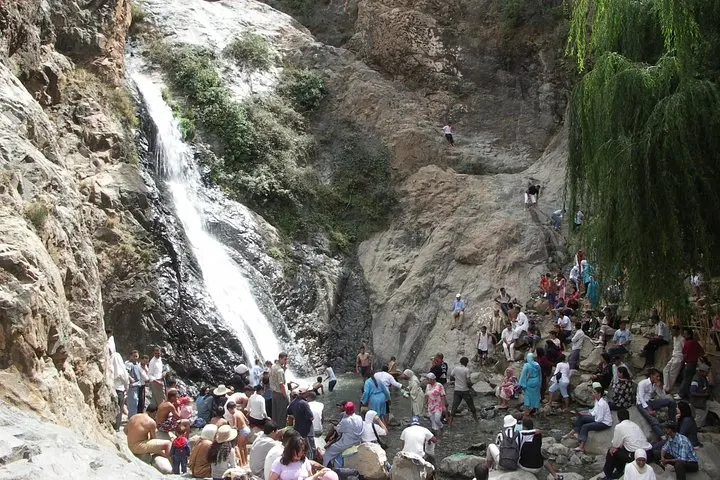
A thin ribbon of road drops out of Marrakech and into an olive-studded valley where the Ourika river dares you to slow down. Within an hour the city’s heat and honking traffic are replaced by terraced fields, riverside cafes and villages clinging to sun-warmed slopes. The day trip centers on Setti Fatma’s waterfalls, a handful of cascades that send cool spray into the air and draw Marrakech residents seeking relief from the plains.
A thin ribbon of road drops out of Marrakech and into an olive-studded valley where the Ourika river dares you to slow down. Within an hour the city’s heat and honking traffic are replaced by terraced fields, riverside cafes and villages clinging to sun-warmed slopes. The day trip centers on Setti Fatma’s waterfalls, a handful of cascades that send cool spray into the air and draw Marrakech residents seeking relief from the plains.
The valley lies at the northern foothills of the High Atlas; its stone houses and stepped terraces date back centuries and reflect traditional Amazigh (Berber) land use. Geologically the valley is carved from soft sedimentary layers and older metamorphic outcrops, producing pockets of fertile soil where orchards and almond trees thrive. Local culture is visible in small souks, a women-run argan cooperative producing press-fresh oil, and family-run riverside restaurants serving tagines beside fig trees.
Practically, expect a full 7–8 hour day with 2–3 hours of driving round-trip. Much of the walking is on uneven village paths and flagged trails to the falls — good footwear and steady knees help. Plan for midday shade, carry at least 1–1.5 liters of water, and bring cash for market purchases and tips. Visit on a market day for a livelier roadside souk; arrive earlier to avoid peak tourist hours at the main cascades. Respect private spaces when entering Berber homes and support local cooperatives to keep tourism benefits on the valley’s side.