THE ADVENTURE COLLECTIVE® · Independent discovery and booking for outdoor travel

A full-day private excursion from Marrakech that follows the Ourika River into the western High Atlas. Expect short river-trail hikes, village markets, a camel ride option and a traditional Berber lunch with sweeping valley views.
A full-day private excursion from Marrakech that follows the Ourika River into the western High Atlas. Expect short river-trail hikes, village markets, a camel ride option and a traditional Berber lunch with sweeping valley views.
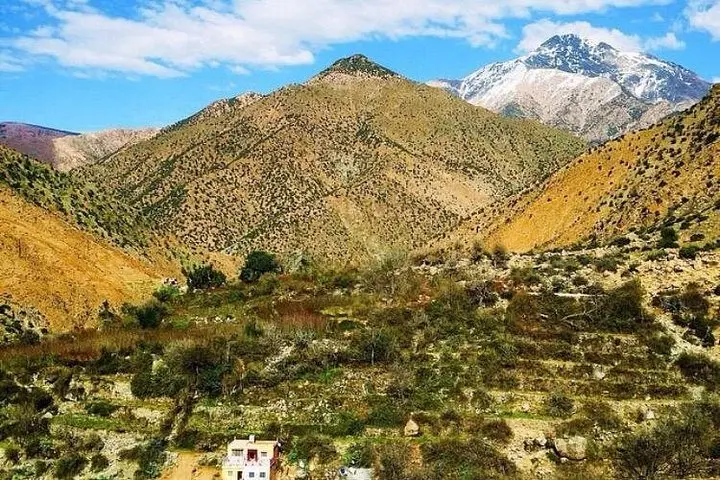
Morning light slides off Marrakech's ochre walls as a private minivan unhooks from the city and pushes toward the lower High Atlas. Roadside olive groves give way to terraced fields; the Ourika River begins as a clear silver line that dares you closer. By late morning the valley opens—rock ridges, stepped gardens, and stone villages clinging to slopes.
Verified experiences and guided adventures in the surrounding area.
Operated by Gold journey tours · Ourika, Marrakech-Safi
Morning light slides off Marrakech's ochre walls as a private minivan unhooks from the city and pushes toward the lower High Atlas. Roadside olive groves give way to terraced fields; the Ourika River begins as a clear silver line that dares you closer. By late morning the valley opens—rock ridges, stepped gardens, and stone villages clinging to slopes.
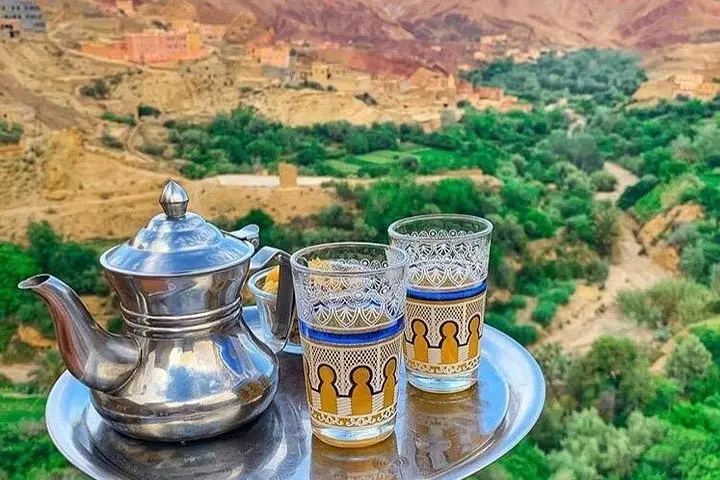
The Ourika has long been a route between Marrakech and Atlas communities. Geologically the valley is a western foothill system of the High Atlas, carved by seasonal runoff and punctuated by basalt and schist outcrops. Culturally the area is inhabited by Berber villages where hospitality centers on mint tea and tagine; the valley’s small markets sell woven textiles and argan oil from nearby cooperative workshops.
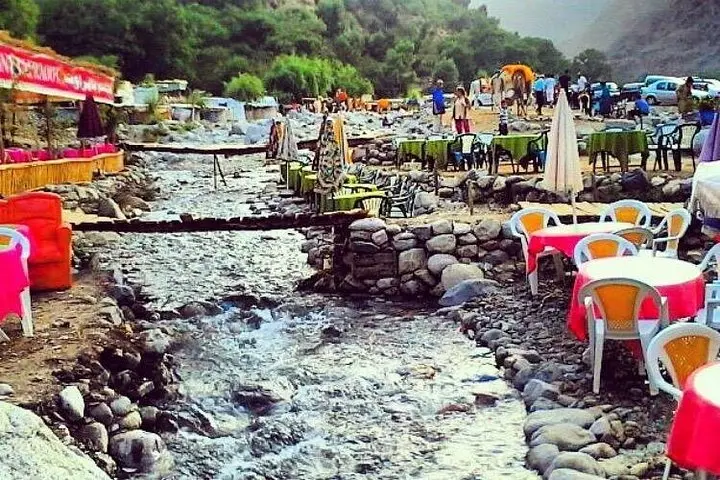
On a typical day trip visitors will drive roughly 30–45 km southeast of Marrakech (about 1–1.5 hours), stop in village markets, walk to Setti Fatma’s river trails and waterfalls, take a short camel ride in the lower valley, and sit for a traditional lunch. Trails vary from compact dirt paths and stone steps to steeper switchbacks; short hikes to cascades are usually 1–3 km round-trip with 100–400 m of ascent depending on how high you climb.
Practical edge: start early to beat heat and crowds, wear sturdy shoes for uneven river crossings, carry a refillable bottle and small local currency for tip and refreshments. The trip is suitable for most fitness levels and offers accessible village culture, clear river scenery, and front-row Atlas views without technical climbing.
The drive is typically 1 to 1.5 hours each way (about 30–45 km) depending on traffic and exact stops.
No—most walks to the main cascades are short (1–3 km round-trip) on uneven stone and dirt paths; modest fitness and steady shoes are sufficient.
This type of private day trip generally includes private transport, bottled water, and a traditional lunch—confirm specifics with the operator prior to booking.
Yes—many excursions include or offer camel rides in the lower valley; rides are short and intended for casual visitors rather than long treks.
Gold journey tours operates guided outdoor trips and adventures with an emphasis on safety, stewardship, and memorable experiences.
Morning light slides off Marrakech's ochre walls as a private minivan unhooks from the city and pushes toward the lower High Atlas. Roadside olive groves give way to terraced fields; the Ourika River begins as a clear silver line that dares you closer. By late morning the valley opens—rock ridges, stepped gardens, and stone villages clinging to slopes.
Morning light slides off Marrakech's ochre walls as a private minivan unhooks from the city and pushes toward the lower High Atlas. Roadside olive groves give way to terraced fields; the Ourika River begins as a clear silver line that dares you closer. By late morning the valley opens—rock ridges, stepped gardens, and stone villages clinging to slopes.
The Ourika has long been a route between Marrakech and Atlas communities. Geologically the valley is a western foothill system of the High Atlas, carved by seasonal runoff and punctuated by basalt and schist outcrops. Culturally the area is inhabited by Berber villages where hospitality centers on mint tea and tagine; the valley’s small markets sell woven textiles and argan oil from nearby cooperative workshops.
On a typical day trip visitors will drive roughly 30–45 km southeast of Marrakech (about 1–1.5 hours), stop in village markets, walk to Setti Fatma’s river trails and waterfalls, take a short camel ride in the lower valley, and sit for a traditional lunch. Trails vary from compact dirt paths and stone steps to steeper switchbacks; short hikes to cascades are usually 1–3 km round-trip with 100–400 m of ascent depending on how high you climb.
Practical edge: start early to beat heat and crowds, wear sturdy shoes for uneven river crossings, carry a refillable bottle and small local currency for tip and refreshments. The trip is suitable for most fitness levels and offers accessible village culture, clear river scenery, and front-row Atlas views without technical climbing.