THE ADVENTURE COLLECTIVE® · Independent discovery and booking for outdoor travel

Escape Marrakech for a day and follow the Ourika River into Atlas foothills where panoramic viewpoints, a Berber home visit and the multi-tiered Setti Fatma waterfalls await. This accessible day trip blends culture, light hiking and local craft demonstrations.
Escape Marrakech for a day and follow the Ourika River into Atlas foothills where panoramic viewpoints, a Berber home visit and the multi-tiered Setti Fatma waterfalls await. This accessible day trip blends culture, light hiking and local craft demonstrations.
Morning light slices across red-roofed Marrakech as the road climbs toward the Atlas foothills and the air cools. By the time you hit the vantage point above the Ourika Valley the city noise has fallen away and terraced fields unfurl below, the river daring you to follow it upstream. That first panoramic stop frames the day: mountains, orchards, and a route threaded with small villages.
Verified experiences and guided adventures in the surrounding area.
Operated by Marrakech Activities Expert · Setti Fatma, Marrakesh-Safi
Morning light slices across red-roofed Marrakech as the road climbs toward the Atlas foothills and the air cools. By the time you hit the vantage point above the Ourika Valley the city noise has fallen away and terraced fields unfurl below, the river daring you to follow it upstream. That first panoramic stop frames the day: mountains, orchards, and a route threaded with small villages.
The Ourika Valley has long been a seasonal lifeline for Berber communities. Geologically it’s carved from limestone and schist; streams have gouged narrow gorges and fed cascades for millennia. Culturally, villages here keep living traditions—mint tea rituals, argan pressing, and cooperative workshops—visible and tactile. At a Berber family home you’ll learn tea-making and daily rhythms firsthand; at a women’s cooperative you’ll see argan kernels cracked and oil pressed by hand.
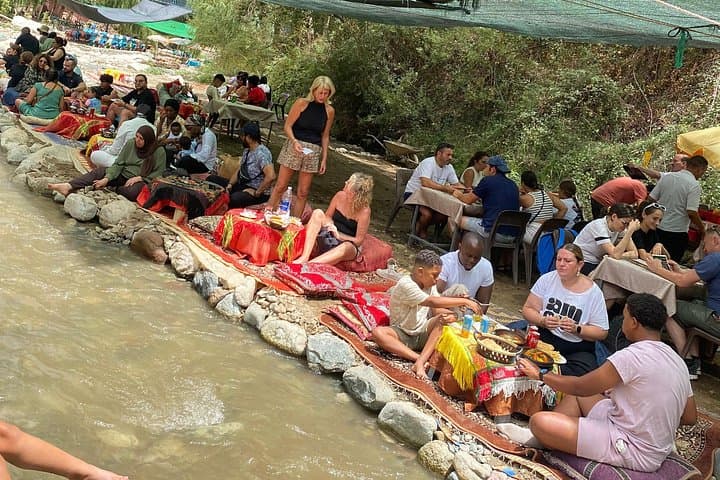
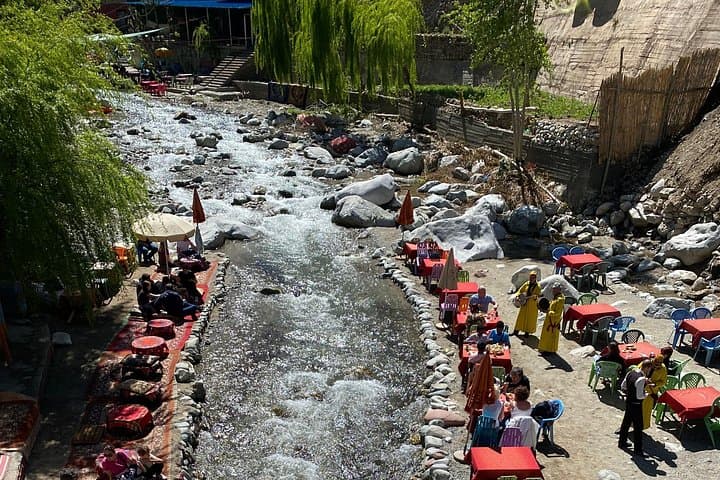
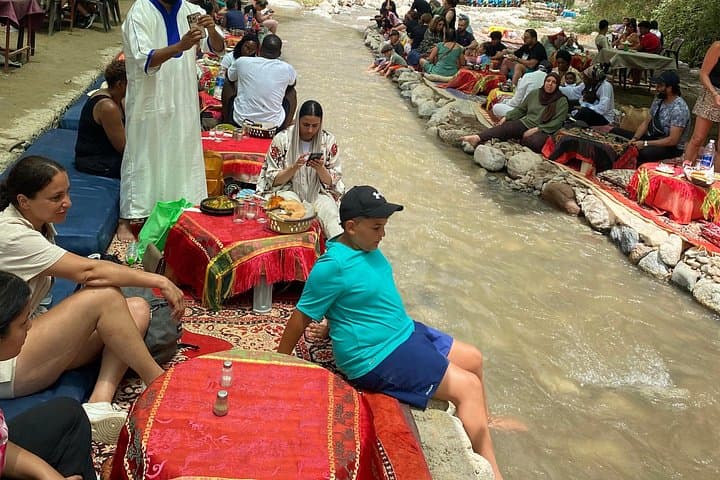
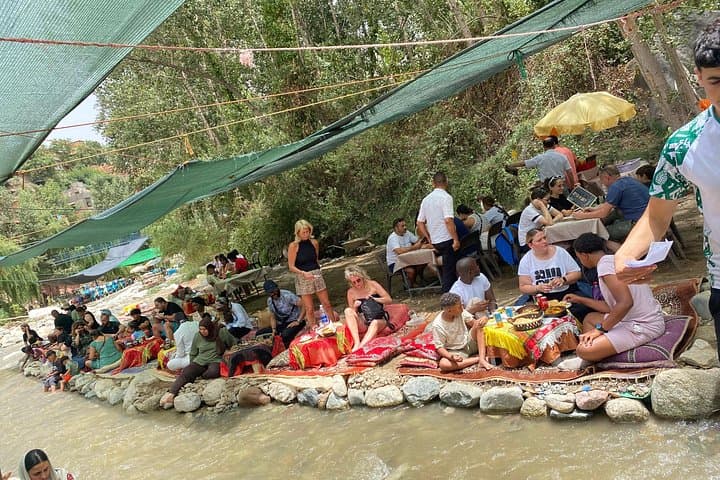
The hike to Setti Fatma’s waterfalls is a local highlight: a roughly 1.5–3 km climb over uneven, sometimes slippery trails, through shaded riparian scrub where Barbary macaques and songbirds hunt for sunlit breaks. The final falls arrive in stages—small pools and then a larger fall—rewarding steady effort with cool spray and riverside restaurants offering tagine.
Practical notes: plan for a 7–9 hour day including transfers, carry cash for small purchases and tips, and wear grippy shoes—the trail can be wet and rocky. Bring a refillable water bottle, sun protection, and a lightweight layer for higher-elevation breezes. Start early from Marrakech to beat crowds and maximize hiking time; respect private homes and ask before photographing people. The trip blends easy cultural access with a moderate outdoor leg—ideal for travelers who want both context and a short, satisfying hike.
The guided walk is usually 1.5–3 km one way depending on how many tiers you reach; allow 1.5–3 hours round trip including breaks.
Yes—most sections are family-friendly, though some steeper, rocky sections can be challenging; wheelchair access is limited at the waterfalls.
Yes, the visit to a women’s cooperative includes demonstrations and items for sale—bring cash and inspect products before purchasing.
They are wild animals; observe from a distance and avoid feeding them—bags and food can attract assertive individuals.
Marrakech Activities Expert operates guided outdoor trips and adventures with an emphasis on safety, stewardship, and memorable experiences.
Morning light slices across red-roofed Marrakech as the road climbs toward the Atlas foothills and the air cools. By the time you hit the vantage point above the Ourika Valley the city noise has fallen away and terraced fields unfurl below, the river daring you to follow it upstream. That first panoramic stop frames the day: mountains, orchards, and a route threaded with small villages.
Morning light slices across red-roofed Marrakech as the road climbs toward the Atlas foothills and the air cools. By the time you hit the vantage point above the Ourika Valley the city noise has fallen away and terraced fields unfurl below, the river daring you to follow it upstream. That first panoramic stop frames the day: mountains, orchards, and a route threaded with small villages.
The Ourika Valley has long been a seasonal lifeline for Berber communities. Geologically it’s carved from limestone and schist; streams have gouged narrow gorges and fed cascades for millennia. Culturally, villages here keep living traditions—mint tea rituals, argan pressing, and cooperative workshops—visible and tactile. At a Berber family home you’ll learn tea-making and daily rhythms firsthand; at a women’s cooperative you’ll see argan kernels cracked and oil pressed by hand.
The hike to Setti Fatma’s waterfalls is a local highlight: a roughly 1.5–3 km climb over uneven, sometimes slippery trails, through shaded riparian scrub where Barbary macaques and songbirds hunt for sunlit breaks. The final falls arrive in stages—small pools and then a larger fall—rewarding steady effort with cool spray and riverside restaurants offering tagine.
Practical notes: plan for a 7–9 hour day including transfers, carry cash for small purchases and tips, and wear grippy shoes—the trail can be wet and rocky. Bring a refillable water bottle, sun protection, and a lightweight layer for higher-elevation breezes. Start early from Marrakech to beat crowds and maximize hiking time; respect private homes and ask before photographing people. The trip blends easy cultural access with a moderate outdoor leg—ideal for travelers who want both context and a short, satisfying hike.