THE ADVENTURE COLLECTIVE® · Independent discovery and booking for outdoor travel

Escape Marrakech for a day and follow the Ourika River into the High Atlas to visit Tnine Ourika market, Berber villages and the cool cascades at Setti Fatma. This full-day trip mixes short village hikes, cultural stops and riverside lunch opportunities.
Escape Marrakech for a day and follow the Ourika River into the High Atlas to visit Tnine Ourika market, Berber villages and the cool cascades at Setti Fatma. This full-day trip mixes short village hikes, cultural stops and riverside lunch opportunities.
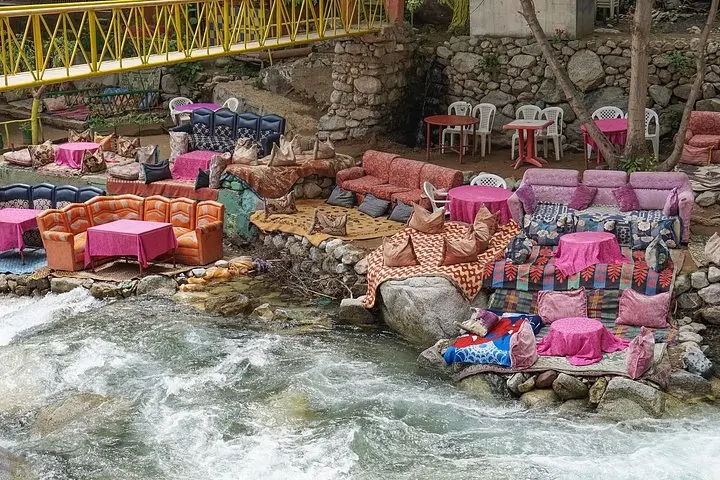
You leave Marrakech’s ochre walls before the city heat has fully set in, the road slicing through scrub and low argan trees until the High Atlas rises ahead. The Ourika River begins to speak — a steady silver line that dares you to follow — and the car drops you at Setti Fatma where cool water and mountain air replace the medina’s bustle.
Verified experiences and guided adventures in the surrounding area.
Operated by ItalyBestExcursions · Marrakech, Marrakech-Safi
You leave Marrakech’s ochre walls before the city heat has fully set in, the road slicing through scrub and low argan trees until the High Atlas rises ahead. The Ourika River begins to speak — a steady silver line that dares you to follow — and the car drops you at Setti Fatma where cool water and mountain air replace the medina’s bustle.
This valley has long been a summer refuge for Marrakech residents and a corridor of Berber villages whose stacked terraces and dry-stone walls reflect centuries of mountain agriculture. Geologically the valley is carved from uplifted sedimentary rock and alluvial fans; the river’s falls trace fault-lines and seasonal runoff, concentrating water into a string of cascades known locally as the seven waterfalls.
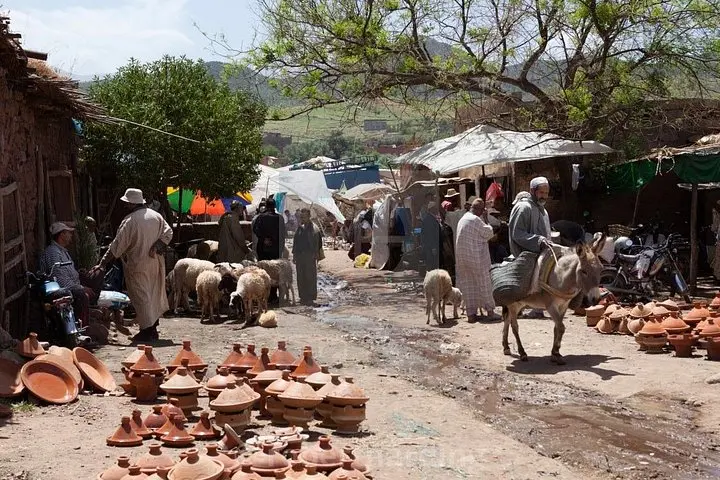
Culturally the area is driven by small-scale farming, argan cooperatives, and family-run restaurants by the river; markets in Tnine Ourika—especially on Mondays—still pulse with trade in textiles, produce and livestock.
Practically: plan for an 8-hour day with a driver/guide, a short village walk (roughly 4–6 km cumulative, up to 200–300 m total ascent depending on how far you climb toward the upper falls), and stretches of uneven stone and dirt paths. Wear sturdy shoes, bring 1–2 liters of water, cash for lunch and small purchases, and a light layer for changing mountain temperatures. Morning or late afternoon visits cut the crowd and keep light soft for photos. The route suits most fitness levels but expect rocky steps near the waterfalls and occasional slippery rocks after rain.
The drive typically takes 45–60 minutes each way depending on traffic and exact pickup point in Marrakech.
Lunch is not included; there are riverside restaurants in Setti Fatma where you can eat at your own expense.
Children can enjoy the lower falls and riverside areas, but supervise them on slippery rocks and near steep sections; some climbs to upper falls are steep.
Yes — there are private options that you can customize and shared options at lower cost with up to about 12 people per vehicle.
ItalyBestExcursions operates guided outdoor trips and adventures with an emphasis on safety, stewardship, and memorable experiences.
You leave Marrakech’s ochre walls before the city heat has fully set in, the road slicing through scrub and low argan trees until the High Atlas rises ahead. The Ourika River begins to speak — a steady silver line that dares you to follow — and the car drops you at Setti Fatma where cool water and mountain air replace the medina’s bustle.
You leave Marrakech’s ochre walls before the city heat has fully set in, the road slicing through scrub and low argan trees until the High Atlas rises ahead. The Ourika River begins to speak — a steady silver line that dares you to follow — and the car drops you at Setti Fatma where cool water and mountain air replace the medina’s bustle.
This valley has long been a summer refuge for Marrakech residents and a corridor of Berber villages whose stacked terraces and dry-stone walls reflect centuries of mountain agriculture. Geologically the valley is carved from uplifted sedimentary rock and alluvial fans; the river’s falls trace fault-lines and seasonal runoff, concentrating water into a string of cascades known locally as the seven waterfalls.
Culturally the area is driven by small-scale farming, argan cooperatives, and family-run restaurants by the river; markets in Tnine Ourika—especially on Mondays—still pulse with trade in textiles, produce and livestock.
Practically: plan for an 8-hour day with a driver/guide, a short village walk (roughly 4–6 km cumulative, up to 200–300 m total ascent depending on how far you climb toward the upper falls), and stretches of uneven stone and dirt paths. Wear sturdy shoes, bring 1–2 liters of water, cash for lunch and small purchases, and a light layer for changing mountain temperatures. Morning or late afternoon visits cut the crowd and keep light soft for photos. The route suits most fitness levels but expect rocky steps near the waterfalls and occasional slippery rocks after rain.